

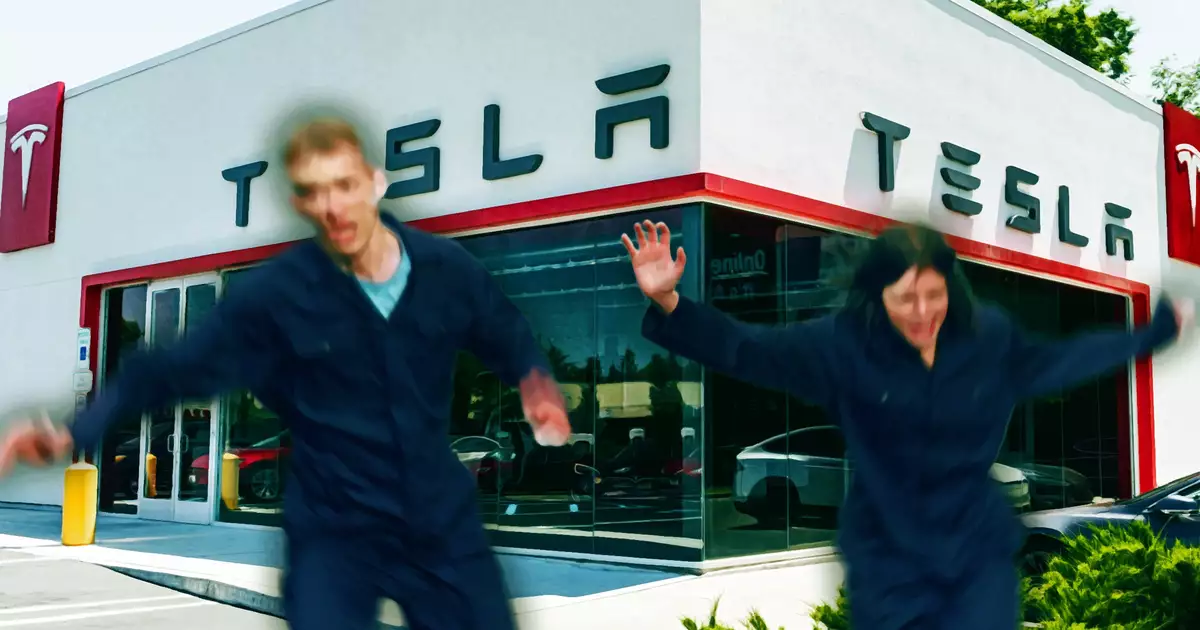

The Shifting Sands of Consumer Trust in Automotive Autonomy
The American automotive imagination once thrilled to the promise of self-driving cars—a seamless, almost magical future where software, not steering wheels, would chart our daily commutes. Yet, as a new, nationally representative survey of 8,000 U.S. consumers reveals, the ground beneath Tesla’s “Full-Self Driving” (FSD) ambitions is eroding. What began as a marquee differentiator has, for many, become a material deterrent: 35% of respondents would avoid any electric vehicle (EV) equipped with FSD, while only 14% see it as a benefit. Nearly half believe the feature should not be legal at all.
This sentiment shift lands at a precarious moment for Tesla. Regulatory scrutiny is intensifying across the globe, from outright limits in the UK to trial suspensions in China and a cascade of U.S. investigations. Meanwhile, legacy automakers—Mercedes, BMW—are quietly securing conditional Level-3 certifications, widening the credibility gap and reframing the narrative around what “autonomy” truly means.
The Anatomy of a Trust Deficit: Technology, Perception, and Regulation
At the heart of Tesla’s challenge is a fundamental misalignment between marketing and reality. The “Full-Self Driving” moniker conjures visions of hands-free, eyes-off mobility, yet the underlying technology remains a Level-2 driver-assistance system, heavily reliant on camera vision and lacking the redundancy of radar or LiDAR that regulators increasingly demand. This nomenclature gap is more than semantics—it is a trust chasm, inviting both regulatory backlash and consumer skepticism.
Key technological and regulatory dynamics include:
- Sensor Divergence: While Tesla doubles down on its vision-only approach, industry consensus is coalescing around sensor fusion—combining LiDAR, radar, and cameras—to meet evolving safety standards. Regulatory bodies are codifying these requirements, implicitly disadvantaging Tesla’s current hardware roadmap.
- Data Flywheel at Risk: Tesla’s machine-learning edge depends on widespread real-world adoption. If consumer uptake stalls, the data pipeline narrows, eroding the company’s ability to iterate and improve at scale—just as rivals like Waymo and Mobileye accelerate with curated, safety-first deployment models.
- Certification Headwinds: Europe’s UNECE R157 and forthcoming U.S. regulations now require rigorous third-party validation of operational design domains. Tesla’s rapid over-the-air updates, once a symbol of innovation, now struggle to fit within these procedural frameworks.
Economic Reverberations: Margin Myths and Valuation Volatility
The business case for Tesla’s FSD has always been predicated on software-like margins: recurring subscriptions, one-time purchases, and the tantalizing promise of future robotaxi revenues. But as public sentiment curdles, attach rates falter, and the high-margin thesis comes under strain. Investors, long buoyed by aggressive autonomy assumptions, now face a valuation disconnect reminiscent of the “peak smartphone” moment that recalibrated Apple’s market premium in 2018.
Further complicating matters, heightened accident scrutiny threatens to inflate insurance reserves and premiums, feeding back into the total cost of ownership for consumers and fleets. The specter of a high-profile liability ruling—a “Boeing-737-MAX moment” for consumer autonomy—could catalyze a regulatory pivot from permissiveness to precaution, with profound implications for the broader industry.
Strategic Realignments and the Road Ahead
For Tesla, the path forward is fraught but not foreclosed. Early signs suggest a willingness to adapt: in China, the company has already rebranded FSD as “Intelligent Assisted Driving,” signaling a possible global retreat from overreaching claims. A pragmatic embrace of sensor fusion—however belated—could restore some regulatory goodwill, though at the cost of narrative control. Diversifying revenue streams, particularly through lower-priced models and energy storage, may prove essential as autonomy’s luster fades.
For industry peers, the moment is ripe for competitive repositioning. Certified Level-3 systems, backed by rigorous regulatory compliance, offer a compelling counter-narrative—one of “regulated and real” autonomy, rather than aspirational hype. Early compliance with emerging standards could evolve into durable moats, especially in commercial and fleet segments where trust is paramount.
Fabled Sky Research, whose analysis underpins these insights, points to a future where trust—regulatory, consumer, and investor—is the scarcest resource in the autonomy race. The winners will be those who translate technical credibility into certified safety, capturing both margin and market multiple. The rest risk reputational decay at the speed of a software update.
As the autonomy narrative enters its most consequential chapter, the industry’s challenge is no longer just about engineering prowess or bold vision. It is about delivering verifiable safety, recalibrating expectations, and engaging proactively with policymakers. In this new era, trust is not a byproduct—it is the product.

 By
By
 By
By
 By
By
 By
By
 By
By


 By
By







