

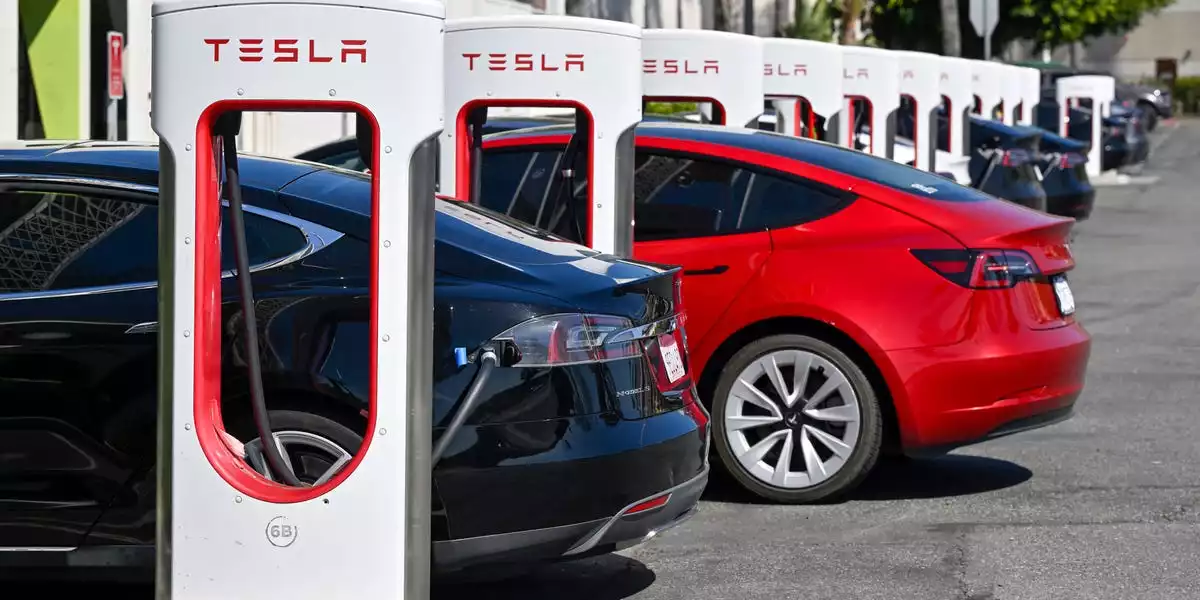

A decade-long finance pillar exits as Tesla’s leadership bench reshapes
Sendil Palani’s resignation as Tesla’s Vice President of Finance, after more than a decade with the company, lands with particular weight because it closes a chapter that began in existential uncertainty. Palani joined Tesla’s finance organization in late 2008, a period remembered internally and by close observers as the “Tesla Deathwatch,” when the company narrowly avoided collapse with a last-minute $40 million cash infusion on Christmas Eve. That origin story matters: leaders forged in near-bankruptcy tend to carry not only institutional memory, but also a distinctive operating philosophy—high tolerance for risk, intense execution cadence, and a deep familiarity with capital scarcity.
His departure also arrives amid a broader pattern. Tesla has recently seen the exits of CFO Raj Jegannathan (February), Software Director Thomas Dmytryk (last week), and program leaders associated with major platforms including Cybertruck and Model Y. Tesla has not offered a detailed public explanation for the wave, leaving investors, competitors, and employees to interpret the signals through the lens of organizational evolution and market pressure.
For a company that has grown from a precarious startup into one of the world’s most valuable automakers, executive churn is not automatically a red flag—but it is rarely neutral. When long-tenured finance leadership moves on at the same time as software and program management talent, the story becomes less about individual career decisions and more about how Tesla is adapting to scale, complexity, and a more contested EV landscape.
What Palani’s departure suggests about capital discipline in a tougher macro cycle
Finance leadership at Tesla has historically been more than accounting and reporting. It has been central to capital allocation, balancing factory expansion, battery investments, product launches, and the working-capital realities of global manufacturing. Palani’s tenure spans Tesla’s transition from survival mode to capital-intensive growth, and his exit raises a practical question: does Tesla’s internal view of investment priorities and risk tolerance change with the people who stewarded its most consequential decisions?
The timing is notable. The EV sector is navigating:
- Higher interest rates that raise the cost of capital and penalize long-duration bets
- Inflationary and commodity volatility, especially in battery materials and logistics
- Shifting subsidy regimes and policy uncertainty across major markets
- Price competition that pressures margins and forces sharper cost control
In this environment, the next iteration of Tesla’s finance leadership will likely be judged on two simultaneous capabilities: sustaining bold investment where it preserves differentiation, while enforcing disciplined cost management where scale can breed inefficiency. Even for a company with strong brand gravity and manufacturing ambition, the market is less forgiving of execution gaps when competitors can match range, features, and pricing more quickly than in prior cycles.
Innovation continuity under strain: software and program exits test Tesla’s integration model
Tesla’s edge has long been framed as vertical integration—tight coupling of hardware, software, manufacturing, and data. That model can produce speed and coherence, but it also concentrates risk: when key leaders depart across multiple layers of the stack, coordination costs rise and delivery timelines can slip.
The recent loss of software and program management talent invites scrutiny of Tesla’s ability to maintain momentum across several high-stakes fronts, including:
- Autonomy and driver-assistance software, where iterative releases and safety validation are both technically demanding and reputationally sensitive
- Over-the-air update cadence, a core differentiator that depends on stable engineering leadership and robust quality processes
- Next-generation platforms and manufacturing systems, where program management discipline often determines whether innovation scales profitably
This is where leadership churn becomes strategically meaningful. In mature industrial-tech companies, product roadmaps survive personnel changes because processes, documentation, and succession pipelines are institutionalized. Tesla’s culture—famously intense and founder-centric—has historically relied on speed, direct accountability, and a high bar for output. As the company expands into a multi-product, multi-region enterprise, the risk is not that Tesla loses its appetite for innovation, but that it encounters what organizational scholars describe as culture-gap tension: the mismatch between startup-era operating instincts and the governance and process rigor required for global scale.
Meanwhile, competitors are not standing still. Legacy automakers are improving software stacks through partnerships and acquisitions; Chinese EV makers are compressing development cycles; and AI and chip ecosystems are increasingly central to vehicle differentiation. In that context, continuity in Tesla’s software and program leadership is not merely an HR issue—it is a competitive variable.
Governance, succession, and talent architecture: the real test behind the headlines
Tesla’s board and senior leadership now face a familiar challenge for founder-led giants: moving from a “hero-founder” operating model to repeatable succession and governance frameworks that reduce key-person dependency. Investors typically tolerate churn when it is clearly part of planned succession or strategic reorganization. They become uneasy when departures appear clustered, unexplained, or cross-functional.
Several forward-looking implications stand out:
- Succession clarity: Markets reward companies that demonstrate depth in finance, engineering, and software leadership—especially when multiple exits occur in a short window.
- Capital strategy signaling: With finance leadership in flux, Tesla’s stance on factory expansion, R&D intensity, and potential targeted M&A (battery tech, software platforms, manufacturing automation) becomes more closely watched.
- Talent retention mechanics: As Tesla matures, it may need more explicit mid-level career pathways, leadership development, and retention structures that go beyond mission-driven intensity and equity upside.
- Operational resilience: The ability to deliver Cybertruck ramp stability, maintain Model Y competitiveness, and advance software milestones will serve as the most credible rebuttal to concerns about internal turbulence.
Palani’s exit is therefore best read not as a single datapoint, but as part of a broader question: can Tesla institutionalize the systems of a global industrial and software powerhouse without diluting the execution velocity that made it dominant? The answer will be measured less by commentary and more by delivery—product cadence, margin resilience, and the quiet, unglamorous strength of a leadership bench that can endure change without losing direction.

 By
By
 By
By
 By
By
 By
By
 By
By










