

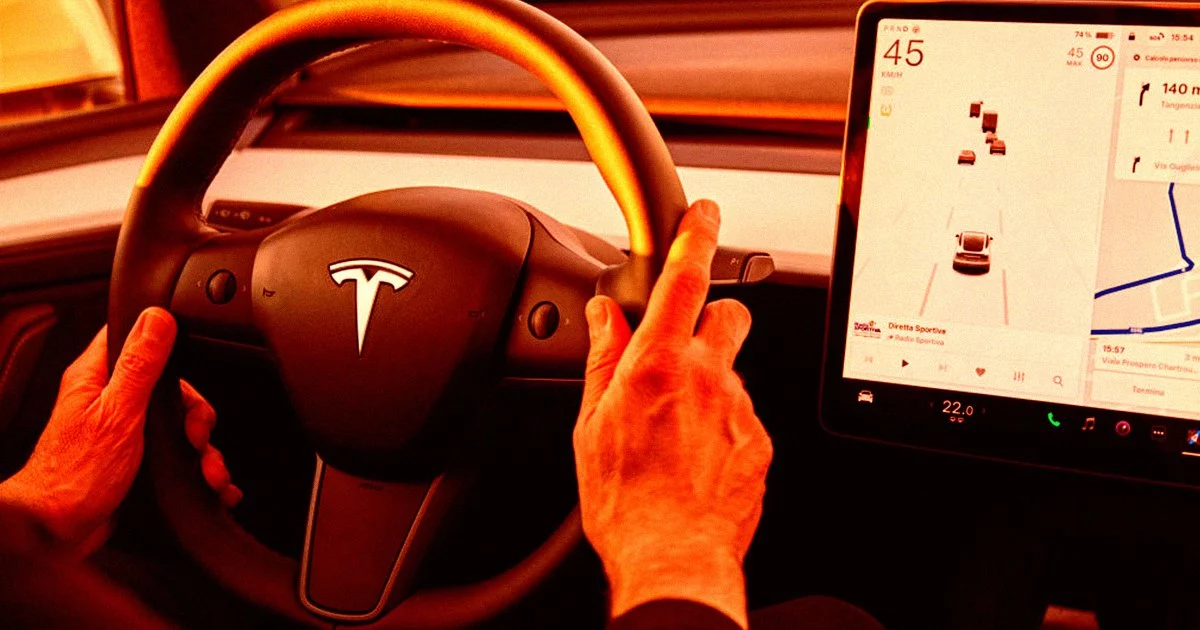

Tesla’s Subscription Pivot: The End of “Autopilot” and the Dawn of Monetized Driver Assistance
Tesla’s abrupt discontinuation of its “Autopilot” bundle in North America marks a profound inflection point for the automotive and technology sectors. The company’s decision to repackage formerly free driver-assistance features behind a $99 monthly subscription wall—effective February 14—arrives amid mounting legal scrutiny, regulatory pressure, and shifting financial imperatives. This move is not merely a product update; it is a signal flare for the entire industry, illuminating the converging forces of compliance, recurring revenue, and the hard realities of autonomous vehicle development.
The Anatomy of a Strategic Retrenchment
The unraveling of Autopilot is as much about regulatory necessity as it is about financial engineering. Tesla now faces the aftermath of a court ruling that found its Autopilot marketing deceptive—a verdict that, paired with ongoing NHTSA and NTSB investigations into crash fatalities, created an urgent need to rebrand and restructure its offerings. The company’s response is surgical:
- Immediate discontinuation of the “Autopilot” name and bundled features in the U.S. and Canada.
- Resegmentation of driver-assistance: basic safety features remain gratis, while autosteer and lane-keeping migrate to a new $99/month paywall. The more ambitious Full Self-Driving (FSD) tier persists at a premium.
- Alignment with executive incentives: Elon Musk’s compensation is now tethered to the number of paid driver-assistance subscribers, making recurring revenue a strategic imperative.
This pivot is not isolated. It echoes a broader industry reality: advanced driver-assistance systems (ADAS) have plateaued at SAE Level-2, far from the hands-off, eyes-off autonomy that once seemed imminent. Tesla’s camera-only sensor suite, bounded by physics and edge-case unpredictability, has run up against the limits of current technology. Yet the costs of R&D for higher levels of autonomy continue to climb, making software subscriptions the only scalable offset for both Tesla and its competitors.
Monetization, Data, and the New Economics of ADAS
Tesla’s shift from one-time vehicle sales to subscription-based software revenue is a masterclass in business model adaptation. On a North American fleet of 2.3 million vehicles, even a modest 10% subscription rate at $99 per month translates to $273 million in incremental annualized revenue—a meaningful buffer against eroding margins and recent price cuts. This recurring revenue not only smooths Tesla’s cash flow, but also burnishes its “software multiple” narrative for Wall Street, even as hardware demand softens.
Yet, the implications run deeper:
- Consumer price sensitivity is now on full display. Charging for features that were once standard tests the elasticity of demand for ADAS as a utility, providing invaluable data for future tiering strategies.
- Data flywheel risk emerges as a subtle but significant consequence. Subscription opt-outs will shrink Tesla’s real-world driving dataset, potentially slowing the AI training loops that underpin its autonomy ambitions.
- Operational agility remains a Tesla hallmark. Its decade-long culture of over-the-air (OTA) updates allows for rapid feature gating and reconfiguration—an edge few OEMs can match.
Regulatory Reverberations and Industry-Wide Ramifications
The legal and regulatory landscape is shifting beneath automakers’ feet. The court’s deceptive-marketing ruling against Tesla is more than a slap on the wrist; it is a precedent likely to accelerate global standardization of ADAS terminology. Germany already bans “Autopilot” references, and both China’s Ministry of Industry and Information Technology and Europe’s UNECE are scrutinizing autonomy claims. Tesla’s retrenchment may preemptively align it with these evolving cross-border frameworks.
At the same time, the unbundling of driver-assistance features subtly reframes liability, returning responsibility to drivers and potentially blunting class-action risks. Yet, this strategic distancing from bold autonomy promises may open a branding gap competitors will exploit—especially as rivals like Mercedes, GM, and Ford double down on sensor diversification and clearer safety narratives.
The industry’s pivot toward software-defined vehicles (SDV) is unmistakable. As Tesla, and by extension its peers, lean into subscription models, the arms race is no longer just about hardware or AI—it is about who can best monetize, regulate, and scale the promise of autonomy without overstepping the bounds of technological reality or public trust.
The Road Ahead: Trust, Incentives, and the Software-Defined Future
Tesla’s rollback of Autopilot is a watershed moment, not just for the company but for the entire mobility ecosystem. The move crystallizes three imperatives for automakers, suppliers, investors, and regulators:
- Autonomy claims must be grounded in demonstrable capability, not aspirational rhetoric.
- Recurring-revenue models are the new lifeblood for funding the relentless march of R&D.
- Transparent, standardized terminology will be enforced by regulators, not left to marketing departments.
For executives, the lesson is clear: product roadmaps, incentive structures, and capital allocation must be recalibrated for a world where software, safety, and trust are inseparable. As the industry navigates this new era, those who adapt with rigor and transparency will define the next chapter of the automotive revolution—one subscription, and one hard-earned mile, at a time.

 By
By
 By
By
 By
By
 By
By
 By
By


 By
By







