

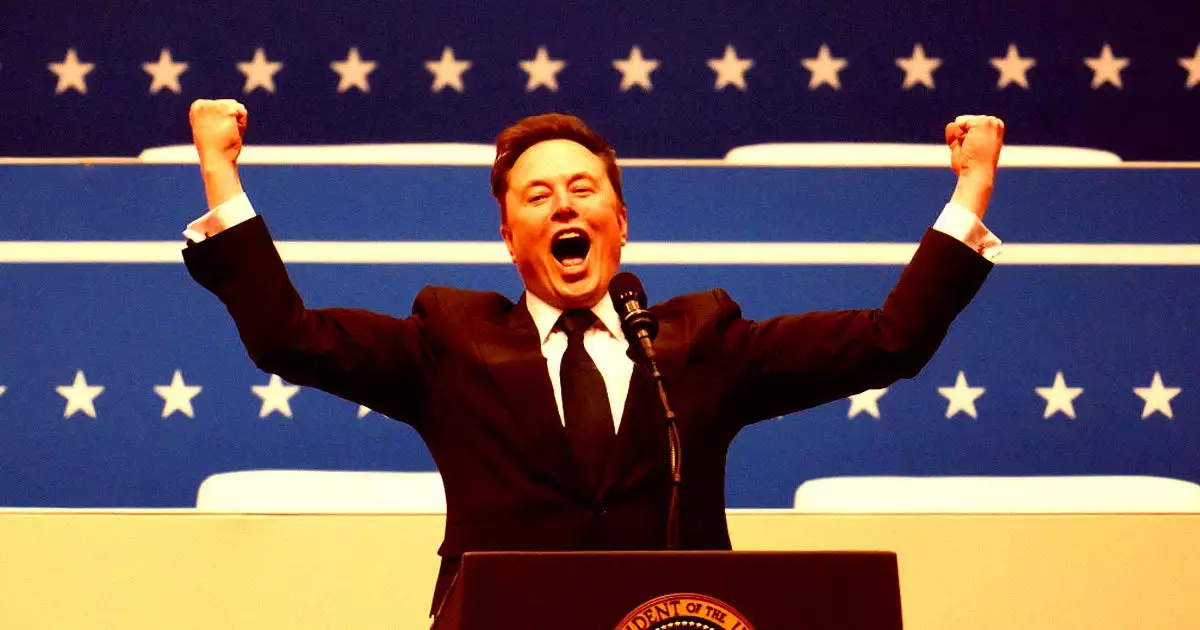

Tesla’s High-Stakes Wager: Equity, AI, and the Cult of Musk
Tesla’s boardroom has become the stage for one of the most consequential acts in modern corporate governance—a high-wire attempt to tether the company’s fate to its singular, polarizing founder. By awarding Elon Musk 96 million restricted shares, valued at nearly $29 billion, the board seeks to restore the gravitational pull Musk exerts over Tesla’s trajectory, even as a Delaware court’s intervention casts a long shadow over founder-centric compensation in Silicon Valley.
This move is more than a headline-grabbing pay package; it is a strategic recalibration at a moment when Tesla’s ambitions and vulnerabilities are equally outsized. As the electric vehicle pioneer pivots from hardware to AI-driven mobility, the board’s actions illuminate the complex interplay between vision, governance, and the unforgiving logic of capital markets.
Navigating the Founder Paradox: Premiums, Discounts, and Legal Crosswinds
Tesla’s valuation has always been a referendum on Musk’s capacity to conjure new technology curves—from mass-market EVs to the tantalizing promise of robotaxis and humanoid robots. The board’s latest equity grant is an explicit defense of this “founder premium,” a psychological and financial bet that Musk’s involvement is irreplaceable.
Yet, this gambit deepens the “governance discount” invoked by critics. Delaware’s nullification of Musk’s prior $56 billion package has emboldened activists and institutional investors to challenge the unchecked power of charismatic founders. Tesla’s situation echoes Apple’s 2011 response to Steve Jobs’ health crisis, when the board quietly accelerated Tim Cook’s equity. But unlike Apple, Tesla lacks the dual-class share structure that insulates tech giants like Meta and Alphabet from external legal scrutiny. The result is a precarious balance—defending visionary leadership while navigating heightened judicial oversight.
The board’s simultaneous pursuit of reinstating the original 2018 package signals a willingness to test the boundaries of shareholder democracy and legal precedent. This legal overhang is not just a Tesla story; it is a harbinger for all founder-led firms facing the transition from hyper-growth to institutional maturity.
The AI Arms Race and the Shifting Sands of Competitive Advantage
Tesla’s strategic pivot is unmistakable: the focus has shifted from incremental EV launches to long-horizon bets on robotaxis and humanoid robotics. This evolution is not merely a branding exercise—it is a recognition that the competitive frontier is no longer defined by battery chemistry or manufacturing scale, but by software, fleet-level data, and vertical AI stacks.
- AI Talent Magnetism: The board’s rhetoric around Musk’s “extraordinary talent” is a tacit admission that Tesla cannot currently match the compensation and cachet offered by AI juggernauts like OpenAI, Anthropic, or sovereign-backed autonomous driving startups. Retaining Musk is, in effect, a defensive play in the global AI talent arms race.
- Robotaxi and Regulatory Hurdles: The commercial viability of robotaxis remains hostage to evolving regulatory frameworks. With California DMV disengagement data and NHTSA probes intensifying, the timeline for regulatory approval may well outlast the vesting schedule of Musk’s new award—raising questions about incentive alignment.
- Humanoid Robotics Supply Chain: Tesla’s foray into humanoid robotics places it in direct competition with defense contractors and warehouse automation firms, all vying for dominance in AI-robot convergence. The company’s investment in in-house actuators and proprietary compute (notably Dojo) is as much a supply-chain play as it is a technological one.
For legacy automakers, Tesla’s shift is a clarion call: the commoditization of EV hardware is accelerating, and the locus of value is migrating toward software and AI. Incumbents still outsourcing these capabilities risk obsolescence.
Governance, Capital Allocation, and the Future of Founder-Led Innovation
The implications of Tesla’s latest maneuver reverberate far beyond Palo Alto. Delaware’s ruling has set a precedent, emboldening activists to scrutinize mega-grants and demand independent negotiation. Compensation committees at other founder-dominant enterprises—especially those straddling the line between growth and cash-flow generation—face mounting pressure to embed dynamic performance triggers and sunset clauses.
Tesla’s incremental share issuance is a calculated trade-off: sacrificing near-term free cash flow for the optionality of AI-driven, software-like margins. Suppliers and partners should brace for a reordering of priorities, as capital is redirected from traditional vehicle tooling to AI compute and data-center build-outs. Policy makers, meanwhile, are likely to encounter intensified lobbying for immigration and tax incentives to address the acute scarcity of specialist AI engineers.
For investors, the message is clear: the market’s tolerance for dilution in exchange for “AI optionality” is finite. The credibility of Tesla’s commercialization milestones will be scrutinized as closely as its technological ambition.
In doubling down on Musk, Tesla’s board has chosen continuity over caution, betting that the founder’s vision can transcend the legal, regulatory, and market headwinds gathering on the horizon. Whether this strategy yields extraordinary returns or magnifies systemic risk will depend less on courtroom victories and more on Tesla’s ability to deliver on its audacious promises—before the winds of macroeconomic change shift yet again.

 By
By
 By
By

 By
By
 By
By
 By
By

 By
By







