
Miami’s Courtroom as a Crucible for Autonomous Driving’s Next Act
In a Miami courtroom, the future of automotive autonomy is undergoing a public stress test. Tesla, the perennial lightning rod of the mobility revolution, faces a product-liability trial that could redefine the commercial, regulatory, and ethical calculus of advanced driver-assistance systems (ADAS). At stake is not only the company’s balance sheet but the very narrative arc of autonomous vehicles—one that has, until now, been propelled as much by Silicon Valley bravado as by incremental engineering.
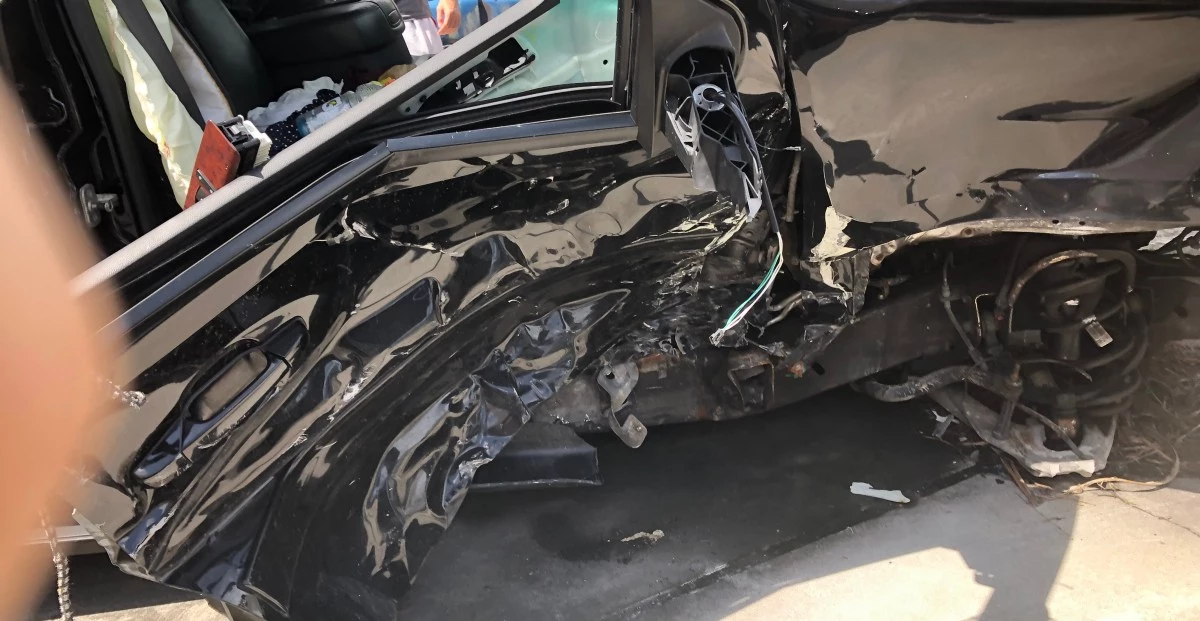
The case centers on a 2019 fatal collision in which Tesla’s Autopilot allegedly failed to warn the driver and disregarded a stop sign. Plaintiffs argue this constitutes “reckless disregard for human life.” Tesla, for its part, maintains that Autopilot is a Level-2 assist feature—demanding constant human vigilance—and that the driver overrode the system by accelerating. The trial’s most consequential twist: the judge has permitted the jury to consider punitive damages, elevating the risk profile far beyond prior Autopilot litigation. The outcome will ripple through boardrooms, regulatory agencies, and R&D labs across the globe.
The Technology Fault Line: Where Vision Meets Liability
Tesla’s Autopilot, lauded for its camera-centric, neural-net-driven architecture, is now under the microscope for precisely the edge-case scenarios that have long haunted the field: stationary-object detection and the reliability of human-machine interfaces (HMI). The Miami case exposes a persistent gap between Level-2 ADAS—where human supervision is mandatory—and the fully autonomous, Level-4/5 future Tesla has promised for 2025.
Key technical vulnerabilities have emerged:
- Perception Limitations: Autopilot’s camera-dominant stack struggles with certain stationary objects, a known Achilles’ heel in the industry.
- Driver Monitoring: Tesla’s reliance on wheel-torque sensors for driver engagement is beginning to look antiquated as competitors like GM and Ford deploy camera-based gaze tracking.
- Software Update Liability: The very feature that sets Tesla apart—over-the-air updates—may become a legal double-edged sword. Plaintiffs could argue that iterative software patches are tacit admissions of previous shortcomings, a liability risk unique to software-defined vehicles.
As regulatory bodies sharpen their focus—Euro NCAP’s 2026 protocols, NHTSA’s recent requests for information—Tesla’s approach is under increasing scrutiny. The competitive landscape is shifting: traditional automakers’ investments in lidar and HD-mapping now look less like technological conservatism and more like prudent risk management.
Strategic and Economic Reverberations Across the Industry
The Miami trial’s implications extend well beyond Tesla’s immediate legal exposure, touching every node of the automotive value chain:
- Litigation Risk: A punitive verdict could set a precedent, raising the discount rate on autonomy narratives and forcing higher legal reserves industry-wide.
- Insurance and Residual Values: Insurers may respond with higher premiums or restricted coverage for vehicles equipped with Autopilot, impacting total cost of ownership and used-vehicle prices.
- Capital Allocation: Legal and regulatory uncertainty may force a rebalancing of R&D budgets, prioritizing safety validation—redundant sensors, simulation—over moonshot robotaxi ambitions.
- Competitive Signaling: Should Tesla’s camera-only approach be found wanting, OEMs advocating multi-modal sensor suites gain rhetorical and financial leverage, potentially redirecting capital flows across the sector.
There are less obvious, but equally profound, second-order effects:
- Regulatory Hedging: A plaintiff victory in Florida could embolden other Sunbelt states—early adopters of AV tech—to impose stricter liability standards, reshaping deployment economics.
- Supply Chain Shifts: If Tesla pivots to add lidar or radar, Tier-1 suppliers stand to benefit, potentially triggering a cascade of new semiconductor and sensor investments.
- ESG and Talent Dynamics: Product safety, once a governance footnote, could become a material ESG risk, influencing index inclusion and cost of capital. High-profile litigation may also steer top AI talent toward firms perceived as safety-first.
Navigating the New Terrain: Strategies for Decision-Makers
For industry leaders, the Miami trial is a clarion call to reassess both risk and opportunity in the age of software-defined vehicles. Forward-thinking organizations are already:
- Expanding Scenario Planning: Incorporating a wider range of legal outcomes into autonomy program ROI models and insurance negotiations.
- Upgrading Compliance: Investing in advanced driver monitoring and robust audit trails for software updates to pre-empt discovery vulnerabilities.
- Refining Investor Messaging: Differentiating between near-term ADAS revenue and the more speculative economics of robotaxi deployment.
- Reimagining Partnerships: Exploring joint ventures that segregate software liability from hardware exposure, echoing the aviation sector’s risk management playbook.
- Shaping Regulation: Engaging proactively with NHTSA, state DMVs, and international homologation bodies to influence the next generation of performance-based standards.
The Miami proceedings are more than a legal drama—they are a referendum on how society balances innovation with accountability in the race toward autonomy. Whether the jury finds for Tesla or the plaintiffs, the verdict will recalibrate how capital markets, regulators, and technologists chart the next phase of mobility. For those charting strategy in this space, the message is clear: the era of experimental deployment is giving way to one of formalized responsibility, and the stakes have never been higher.
 By
By
 By
By
 By
By

 By
By
 By
By
 By
By