

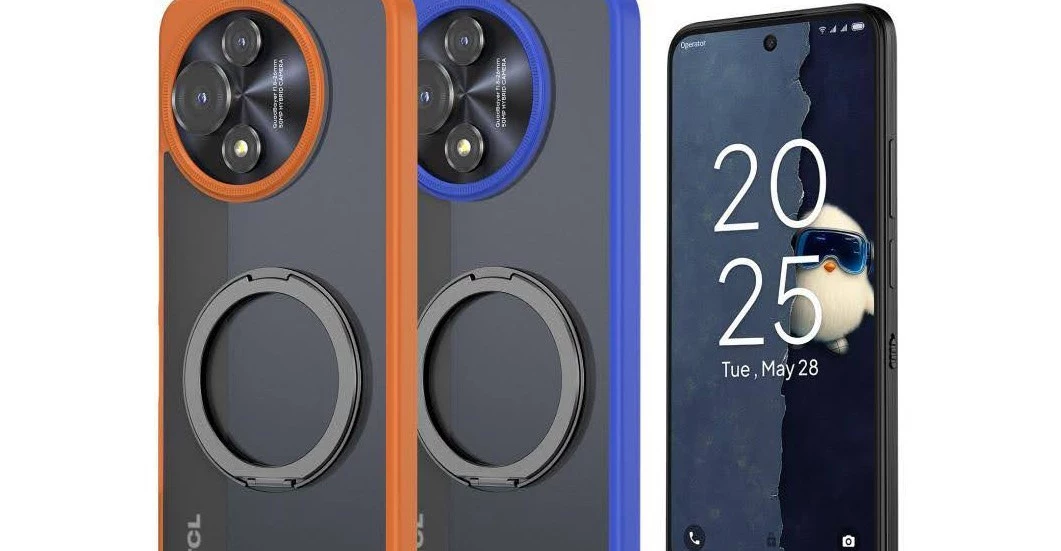

Reimagining the Smartphone: Eye-Health, Child Safety, and the New Hardware Frontier
In a market saturated with incremental upgrades and undifferentiated devices, TCL’s recent unveiling at IFA signals a rare, calculated pivot. The debut of the Nxtpaper 5G Junior and Nxtpaper 60 Ultra is not merely an expansion of product lines—it is a strategic foray into the confluence of digital wellness, regulatory anticipation, and the evolving economics of mobile hardware. TCL’s approach, blending proprietary display innovation with embedded parental controls, is poised to redraw the competitive map for both the children’s handset market and the broader mid-tier device segment.
The Science and Storytelling of Nxtpaper Displays
At the heart of TCL’s new offerings lies its fourth-generation Nxtpaper display technology, a matte-laminated LCD that subverts the glossy, high-saturation screens dominating today’s devices. The “Max Ink Mode” is a technical sleight of hand: a firmware-driven LUT transforms a full-color LCD into a monochrome, E-Ink-like interface on demand. This feature is more than a party trick. It channels the perceived ocular benefits of e-paper—reduced eye strain, lower blue-light exposure—without the cost or performance trade-offs of true electrophoretic displays.
The Nxtpaper 5G Junior, targeted squarely at children, and the 60 Ultra, a stylus-ready productivity device, both tout a 35% reduction in reflected luminance and a marked decrease in PWM flicker. These metrics are not just spec-sheet fodder; they are a direct challenge to the “eye comfort” narratives advanced by Samsung’s Vision Booster and Apple’s ProMotion. TCL’s display subsidiary, CSOT, gives it a vertical integration advantage, internalizing costs and allowing aggressive pricing—a crucial lever in a market where OLED contract pricing remains volatile.
Digital Well-being as a Strategic Moat
TCL’s integration of Google Family Link at the OEM level is a subtle but significant move. By embedding parental controls directly into the device firmware, TCL reduces friction for parents and sidesteps the limitations of third-party apps. The “Digital Detox” feature, a usage throttle built into the system, foreshadows a regulatory future where well-being APIs may be mandated under the EU Digital Services Act for minors.
This dual emphasis on hardware and software creates a defensible moat. In a sector where many Chinese OEMs compete solely on price, TCL’s wellness-centric differentiation is both a regulatory hedge and a value proposition to anxious parents—72% of whom, according to Eurobarometer, worry about screen time. The AI Genius Squad, a suite of gamified characters, is more than a whimsical touch; it is the seed of a potential subscription learning platform, echoing Amazon’s FreeTime and Apple’s Learning Kits.
Market Dynamics: Monetizing Wellness and Regulation
The children’s first-phone market, with an estimated 95 million annual global shipments, has long been the domain of ODM feature phones and entry-level Android devices. TCL’s pricing—nestled in the €200–€300 range—hits the discretionary sweet spot for parents, enabling carrier bundles without subsidy strain. The 60 Ultra, meanwhile, fills a high-margin niche left vacant by Huawei’s retreat from Europe, offering large-format productivity under €500.
TCL’s margin structure is engineered for resilience. By leveraging matte-laminated LCDs and mid-range silicon, likely from MediaTek’s Dimensity 700 series, the company preserves gross margins north of 22% even as handset ASPs deflate. Bundled accessories—protective cases, optional styluses—open ancillary revenue streams while reinforcing the “safe for kids / tool for creators” narrative.
For telecom operators, the opportunity is clear: bundle “first phone” plans with built-in detox quotas, upsell to family packages, and use screen-time compliance data as a churn-reduction tool. Content and EdTech players should note the early-mover advantage of TCL’s AI Genius Squad, which could become prime real estate for gamified learning content before OTT competitors arrive.
The Road Ahead: Regulation, ESG, and the Next Revenue Streams
The smartphone replacement cycle is lengthening, with IDC reporting a global refresh rate surpassing 40 months. In this context, wellness-oriented features offer a new reason to upgrade, especially as 5G and camera innovations plateau. Devices that explicitly reduce eye strain and encourage digital detox are also ESG-friendly, aligning with the priorities of green-bond investors and responsible procurement officers.
For hardware vendors, the message is unmistakable: adjustable monochrome modes and low-gloss laminations may soon become table-stakes in the sub-€300 segment. As EU directives tighten around under-13 data privacy, devices with embedded controls will outpace those reliant on aftermarket apps. Component suppliers should anticipate rising demand for matte nano-texture coatings and low-reflective polarizers, with capacity reservations for the coming cycle already advisable.
TCL’s Nxtpaper 5G Junior and 60 Ultra are not just new devices; they are a blueprint for the next phase of smartphone differentiation—one that fuses regulatory foresight, supply-chain leverage, and a nuanced understanding of parental and societal anxieties. As the industry braces for a new era of wellness and compliance, those who read the signals and adapt swiftly will define the contours of tomorrow’s mobile landscape.

 By
By
 By
By

 By
By
 By
By


 By
By







