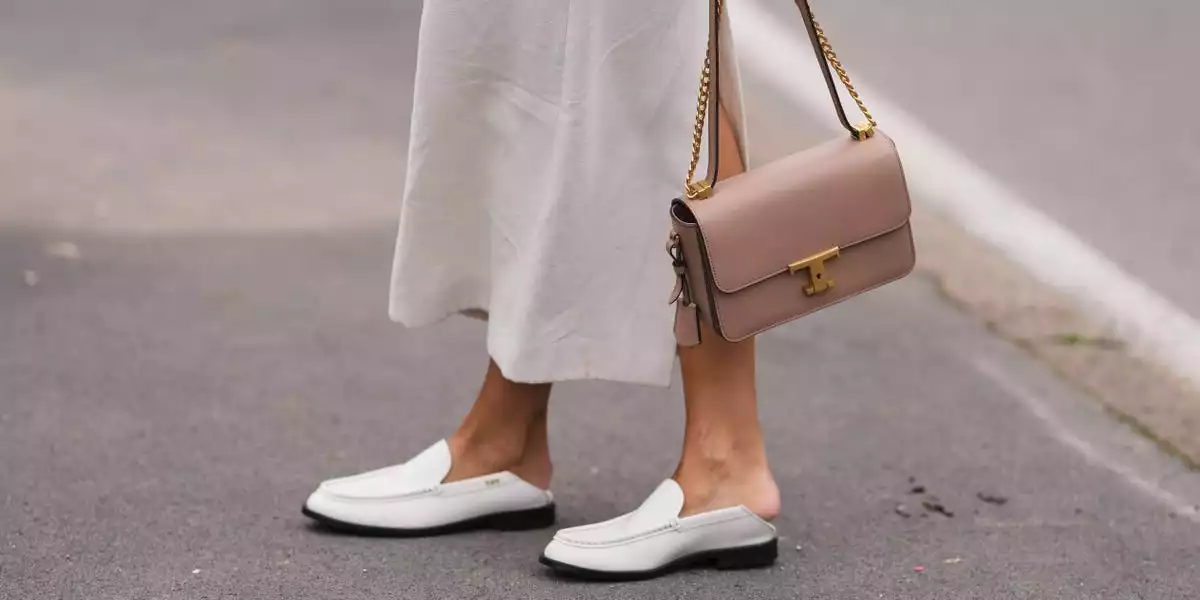

A spring footwear reset: from “safe” minimalism to intentional style signals
Professional stylists are describing a clear inflection point in the spring footwear market: the long reign of minimalist staples and dress–sneaker hybrids is losing momentum, replaced by shoes that communicate personality, comfort, and unmistakable purpose. This is not merely a seasonal refresh; it reflects a broader recalibration in how consumers define “versatile” in an era shaped by hybrid work, persistent inflation, and digitally accelerated trend cycles.
Several silhouettes now sit at the center of this shift because they solve a modern wardrobe equation—polish without rigidity, expressiveness without impracticality:
- Loafer mules that combine slip-on ease with a closed-toe, office-ready profile
- Statement shoes featuring embellishments, bold prints, and experimental materials that function as outfit anchors
- Vintage-inspired clogs with cork or wooden soles and earthy palettes, signaling craft and tactility
- Low-profile sneakers that read as streamlined lifestyle footwear rather than performance gear
- Block and sculpted heels replacing extreme stilettos, preserving visual impact while improving wearability
- Soft neutrals (off-white, light gray) displacing stark-white sneakers for broader styling compatibility
The common thread is a move away from “one-shoe-fits-all” minimalism toward footwear that is deliberately chosen—and visibly so. In practical terms, shoes are becoming the most efficient way to update a look without rebuilding an entire wardrobe, a dynamic that tends to intensify when consumers feel budget pressure but still want novelty.
Materials, manufacturing, and the tech stack behind the new silhouettes
What looks like a style story is also a technology and operations story. As brands lean into cork, wood, bio-based leathers, and more complex ornamentation, they are implicitly raising the bar on materials engineering, traceability, and production agility.
Key technological implications stand out:
- Material innovation and sustainable sourcing at scale
The renewed interest in cork and sustainably harvested wood points to growing consumer comfort with natural and alternative materials—provided they meet expectations for durability and finish. For manufacturers, the challenge is scaling these inputs without sacrificing consistency. This is where composite design, improved adhesives and coatings, and supply-chain traceability systems (including distributed ledgers in some cases) become commercially relevant—not as buzzwords, but as tools to verify provenance and reduce reputational risk.
- Digital design and mass customization economics
Embellishments and sculpted heels are not only aesthetic choices; they are production variables. Brands that adopt 3D prototyping and additive manufacturing for components (or even just for rapid iteration) can compress development cycles and test bolder designs with less upfront tooling risk. Meanwhile, digital patterning and modular design systems make it easier to offer controlled personalization—colorways, hardware, textures—without exploding SKU complexity.
- Omnichannel fit confidence and virtual try-on
As shapes become more distinctive—mules, clogs, sculpted heels—fit uncertainty rises, and with it, e-commerce return risk. This elevates the strategic value of AR try-on and computer-vision sizing tools, not simply as conversion boosters but as margin protectors. Retailers that can credibly communicate fit, comfort, and scale across devices will be better positioned as consumers increasingly shop footwear online while expecting near in-store certainty.
In effect, the spring trend cycle is rewarding brands that treat design, materials, and digital commerce as a single integrated system rather than separate departments.
The business logic: inflation, hybrid work, and a new definition of “value”
The economic and behavioral drivers behind these trends are unusually coherent. Consumers are not abandoning style; they are re-prioritizing what “worth it” means.
- Inflation and the durability premium
In a high-cost environment, shoppers gravitate toward footwear that promises longevity and repeat wear. Block heels, low-profile sneakers, and refined neutrals fit this logic: they reduce outfit friction and extend cost-per-wear value. Even statement shoes, when chosen carefully, can function as high-impact multipliers—one bold pair that refreshes multiple basics.
- Hybrid work dissolving old dress codes
The decline of rigid dress–sneaker hybrids and ultra-high stilettos mirrors the reality that many professionals now move between home, office, and social settings in the same day. The winners are shoes that transition cleanly across contexts: loafer mules that read polished on video calls and in meetings, or sleek sneakers that pair with tailoring without looking like gym gear.
- Generational self-expression over logo signaling
Gen Z and Millennials continue to favor identity cues over overt status markers. Statement footwear offers a relatively low-commitment way to project individuality—more flexible than a head-to-toe trend and more visible than subtle accessories. This aligns with the broader shift toward personalization across apparel, beauty, and consumer tech: people want products that feel chosen, not assigned.
For brands, this means “comfort” is no longer a defensive claim; it is part of the premium narrative—especially when paired with craftsmanship, material provenance, and ergonomic design.
Competitive strategy: fast-fashion speed vs. premium credibility in a complex supply chain
The competitive landscape is poised for a familiar clash—speed versus substance—but with higher operational stakes due to material diversity and construction complexity.
Fast-fashion players can rapidly replicate embellishments and prints, capturing short-term demand. The risk is that hyper-accelerated trend chasing can lead to quality inconsistency, higher returns, and brand dilution, especially when comfort and durability are central to the value proposition.
Premium and heritage brands, by contrast, have an opening to differentiate through:
- Craftsmanship and comfort engineering presented as measurable product attributes
- Sustainable sourcing credibility, backed by verifiable supplier relationships
- Curated neutral palettes (off-white, light gray, earth tones) that outlast seasonal churn
- Limited-edition “personality capsules” layered over evergreen core silhouettes
Direct-to-consumer brands sit in a particularly advantaged position if they operationalize first-party data—purchase history, fit feedback, and virtual try-on interactions—to refine micro-segments and reduce inventory risk. In a market moving toward small-batch releases and localized preferences, agility becomes a moat.
Ultimately, the spring footwear pivot is less about abandoning minimalism than about raising expectations: consumers want shoes that feel good, look intentional, and align with personal values. The brands that win will be those that can translate that demand into scalable materials innovation, digitally enabled design, and resilient supply chains—delivering personality not as a gimmick, but as a repeatable business model.


 By
By
 By
By
 By
By

 By
By
 By
By
 By
By