

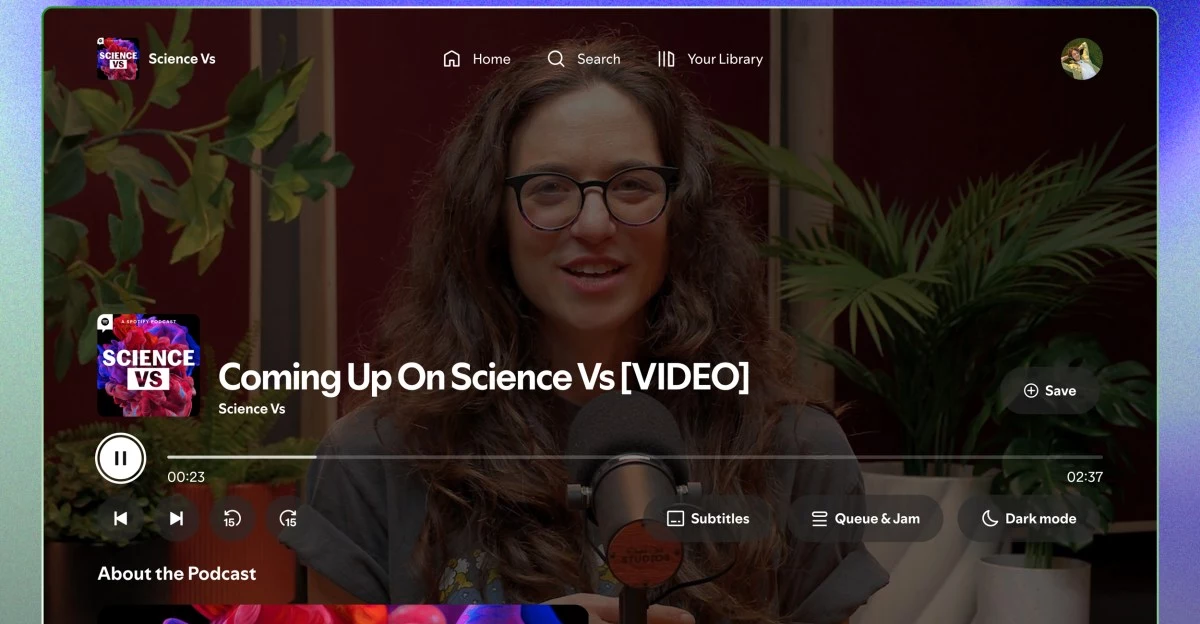

Spotify’s Living-Room Renaissance: Video, AI, and the Battle for the Big Screen
Spotify’s latest overhaul of its Apple TV application is not merely a technical update—it’s a clarion call for the future of converged media. The streaming giant has reimagined its living-room experience with a suite of features that blur the boundaries between audio and video, individual and household, passive listening and immersive viewing. This transformation, quietly radical in its implications, signals a new era in which the television is no longer a vestige of linear programming but the nucleus of a multi-modal, data-driven entertainment ecosystem.
Key innovations in the update include:
- Video podcasts and music videos—finally bringing visual storytelling to the big screen.
- AI-powered personalization that adapts not just to solitary listening, but to the social, communal rhythms of the living room.
- Seamless mobile integration via Spotify Connect, turning every smartphone into a remote, a playlist curator, and a data capture device.
The Architecture of Convergence: Technology as Strategy
At the heart of this transformation is a unified codebase—a modular, cloud-rendered UI that allows Spotify to iterate rapidly across devices. This is not simply a matter of aesthetic consistency. By running video playback, lyrics, and the AI DJ through a single recommendation engine, Spotify is constructing a multi-format content graph. Every play, skip, and search—whether on a phone, TV, or set-top box—feeds the same algorithmic brain, sharpening its ability to predict and personalize.
The technical leap is especially pronounced in video delivery. Leveraging Apple TV’s 4K/HDR capabilities, Spotify has shifted from compressed audio streams to high-bitrate music videos that rival the visual fidelity of YouTube or Apple Music. Meanwhile, two-way device control via Spotify Connect sidesteps the data silos of third-party operating systems, giving Spotify a direct line to user behavior and preferences.
The introduction of the AI DJ on television is particularly noteworthy. It reframes generative curation from a solitary commute or workout companion to a facilitator of group dynamics—an algorithm that learns not just what you like, but how you listen together. This expansion of contextual data is a goldmine for machine learning, and a harbinger of deeper, more nuanced personalization.
Economic Stakes: Monetization, Retention, and Strategic Alliances
Spotify’s move into video is as much about economics as it is about experience. By embedding music videos and video podcasts, the platform unlocks new ad inventory—pre-rolls and in-stream spots that command premium CPMs, especially in markets resistant to subscription hikes. The global rollout of music-video rights, covering 97 markets outside the US and Canada, is a calculated play: lower licensing costs, higher monetization potential, and a proof-of-concept for future negotiations with major US labels.
The living-room pivot also addresses a perennial pain point: churn. By targeting multi-viewer environments, Spotify increases the stickiness of family plans and premium upgrades, while feature parity across platforms like Google TV and Apple TV eliminates friction that has long been a source of user attrition.
Perhaps most intriguing is the nascent alliance with Netflix and The Ringer. The promise of Netflix-branded video podcasts—slated for 2026—signals a cross-pollination of intellectual property that could redefine sports and entertainment advertising. As live sports rights fragment and digital niches proliferate, Spotify is positioning itself as the connective tissue between leagues, advertisers, and audiences.
The Competitive Chessboard: Data, Ecosystem, and the Next Battleground
Spotify’s strategy is a masterclass in counter-positioning. By integrating video, the company steps onto YouTube’s turf, but with a rights-cleared, subscription-first model that sidesteps the chaos of user-generated content. On Apple’s own hardware, Spotify delivers high-value video without ceding revenue to Apple’s in-app purchase fees—a subtle but significant flanking maneuver, especially as regulatory winds shift in the EU and US.
The deeper play, however, is ecosystem lock-in. Multi-modal consumption—audio, video, AI-curated playlists—enriches Spotify’s data moat, creating a defensible advantage over hardware-tethered rivals like Amazon’s Alexa or Apple’s HomePod. The richness of behavioral data, spanning devices and contexts, is both an asset and a liability; as EU and US privacy regulations tighten, proactive compliance will become a competitive differentiator.
For decision-makers, the signals are clear. Rights negotiations will become more complex but also more lucrative. Advertising budgets will migrate from broadcast and YouTube to platforms that offer cross-format, data-driven targeting. The specter of a “super-app”—layering live events, merchandise, even betting—looms on the horizon, especially as partnerships with sports leagues mature.
Spotify’s Apple TV relaunch is not just a facelift—it is a statement of intent. The battle for the living room has begun, and control of the TV screen—and the data it generates—will define the next chapter of the streaming wars. For those tracking the future of media, this is the front line.


 By
By
 By
By
 By
By
 By
By
 By
By

 By
By







