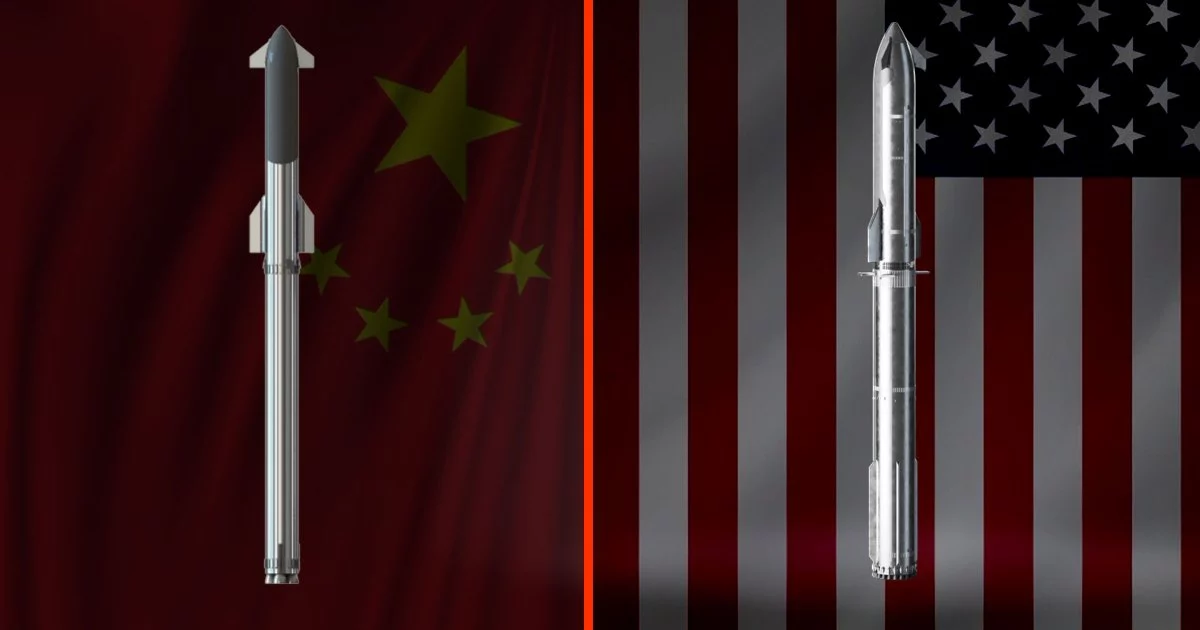

The New Arena of Super Heavy Reusability: Launch Economics and Global Power
SpaceX’s Starship/Super Heavy system stands at the fulcrum of a new era in space launch—a technological and economic crucible whose outcome will reverberate far beyond the launchpad. Having already upended the market with the partially reusable Falcon 9, SpaceX now faces the daunting challenge of making full reusability routine at scales never before attempted. The stakes are immense: Starship is not only the linchpin for Starlink’s next phase but also a critical pillar of NASA’s Artemis lunar ambitions. Yet, as the world watches, a cadre of Chinese contenders—ranging from Beijing Leading Rocket to Cosmoleap and Astronstone—are unveiling their own Starship analogs, seeking to leapfrog into the heavy-lift future.
The contest is not merely about who can reach orbit first, but who can master the economics of rapid, low-cost, heavy-lift reusability. The victor will set the terms for downstream markets: sovereign megaconstellations, cislunar logistics, and even the nascent promise of point-to-point terrestrial cargo. As launch margins compress, the gravitational center of value creation will shift, redrawing the boundaries of the space economy.
Propulsion, Iteration, and the Anatomy of Industrial Learning
At the heart of this contest lies a formidable technological bottleneck: propulsion. SpaceX’s Raptor engine—a full-flow staged-combustion methane powerhouse—remains the only flight-proven example of its kind. Achieving this feat required breakthroughs in metallurgy, turbomachinery, and real-time controls, disciplines where even China’s vast aerospace complex faces steep talent and supply-chain constraints. While the aesthetic of grid-fins and stainless steel tanks may be easy to imitate, the underlying performance gap is not so easily bridged—a pattern reminiscent of the jet engine races of the last century.
SpaceX’s advantage is not just technical but philosophical. Its “build-fly-fail-learn” development loop, enabled by private launch sites and a permissive regulatory environment in Texas, has allowed for a tempo of iteration that is difficult to match. By contrast, China’s more centralized and risk-averse safety regimes slow the cadence of testing and adaptation. This divergence in industrial culture may prove as decisive as any hardware innovation.
Economics, Capital, and the Shifting Geopolitical Chessboard
The economic implications are profound. Falcon 9 has already driven the marginal cost per kilogram to orbit down to around $1,500; Starship aims for a staggering sub-$200. This step-change could unlock entirely new markets—from mass deployment of optical-fiber-replacement satellites to in-orbit refineries and speculative orbital data centers. Chinese planners, acutely aware of the strategic leverage at stake, view heavy-lift reusability as essential for building a domestic broadband constellation to rival Starlink, securing data flows against geopolitical chokepoints.
Yet, the capital requirements are daunting. Starship has reportedly absorbed $5–6 billion, a figure softened by internal cash flows from Starlink launches. Chinese private entrants, by contrast, must navigate a tightening capital environment, with venture and provincial funds increasingly pulled toward semiconductor priorities. The window for competitors to achieve “good-enough” reusability before investor patience wanes is perilously narrow.
Geopolitical tech controls further complicate the landscape. U.S. export restrictions on advanced propulsion hardware and cryogenic metallurgy limit the tools and talent China can import, stretching indigenous R&D timelines. Meanwhile, any Starship delay that forces NASA to diversify toward Blue Origin’s New Glenn or ULA’s Vulcan could reinvigorate the broader U.S. commercial launch ecosystem, subtly shifting bargaining power away from SpaceX.
Industry Implications and Strategic Navigation
The implications for industry structure are stark:
- Market Concentration Risk: A successful Starship would double global heavy-lift capacity overnight, pressuring legacy rockets and raising the specter of single-provider dependence. Asset managers and satellite operators must reassess diversification strategies.
- Supply-Chain Realignment: The surge in demand for stainless-steel cryogenic tankage and methane will reshape metals and energy supply chains, with long-term offtake agreements supplanting spot aerospace cycles.
- Downstream Service Explosion: As launch costs plummet, the locus of value shifts to on-orbit data, manufacturing, and logistics. Early movers in edge compute, lunar resource mapping, and in-situ construction stand to capture disproportionate rents.
Strategically, the field faces several plausible scenarios. Should Starship achieve rapid reuse by 2025, launch prices will crater, compressing satellite platform margins and accelerating industry consolidation. Chronic delays, on the other hand, would see NASA diversify, while Chinese entrants gain time to close the methane propulsion gap. If Chinese firms achieve partial reuse first, launch prices could bifurcate along geopolitical lines, with state-subsidized megaconstellations proliferating across Belt-and-Road partners.
The race for reusable super heavy lift is not a simple duel between SpaceX and China, but rather a pivotal inflection in the industrial learning curve of the global space sector. Mastery will accrue to those who best integrate propulsion innovation, agile infrastructure, and diversified revenue streams. For decision-makers, launch capability is the lead indicator of a much broader space-industrial reordering—one that demands careful calibration of capital, supply chains, and geopolitical risk. The next chapter in space is being written not just by rockets, but by the systems and strategies that sustain them.

 By
By
 By
By


 By
By

 By
By
 By
By