
The Rise of Software-Defined Airpower: X-BAT and the New Era of Autonomous Combat Aviation
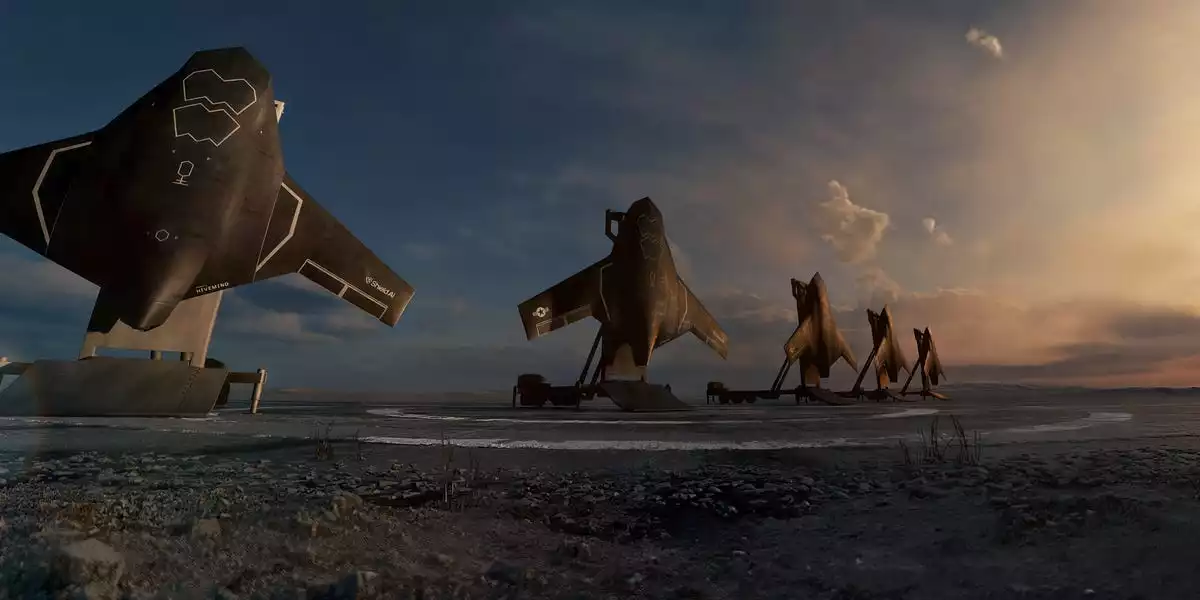
When Shield AI unveiled the X-BAT, it was not merely introducing another unmanned aerial vehicle to the crowded defense landscape. It was signaling a tectonic shift in how airpower is conceived, deployed, and sustained. The X-BAT—a runway-independent, AI-piloted fighter capable of 2,000-nautical-mile operations—embodies a convergence of technological innovation and strategic necessity that is poised to redefine the contours of modern conflict.
At its core, the X-BAT is a product of three intersecting revolutions: the ascendancy of software-driven autonomy, the reimagining of distributed maritime force posture, and a decisive move away from exquisite, scarce platforms toward affordable, scalable mass. These shifts are not merely incremental—they are transformative, and their implications ripple far beyond the defense sector.
Autonomous Edge Intelligence and Platform Agility
The heart of the X-BAT’s disruptive promise lies in its “Hivemind” AI pilot, an architecture that pushes decision-making to the tactical edge. Unlike legacy systems tethered to ground control stations or reliant on uninterrupted satellite links, Hivemind enables the X-BAT to maneuver and engage in complex air combat without GPS or assured communications. This is not just resilience; it is a paradigm shift. By moving autonomy to the edge, the platform reduces its electronic signature, mitigating exposure to adversary electronic warfare and datalink interdiction.
The platform’s vertical takeoff and landing (VTOL) capability, paired with container compatibility, turns any amphibious ship, merchant vessel, or remote airstrip into a launch site. This flexibility compresses the sensor-to-shooter chain, particularly in the Indo-Pacific’s labyrinthine archipelagoes, where traditional basing is both vulnerable and logistically taxing. Modular payload bays further amplify this adaptability, allowing for rapid reconfiguration between intelligence, surveillance, reconnaissance (ISR), electronic warfare, and kinetic strike roles. In effect, the X-BAT is less a single-purpose aircraft and more a software-defined combat node—one that can be re-coded and redeployed at the speed of relevance.
Economic Disruption and the New Industrial Order
Perhaps the most profound impact of the X-BAT lies in its economics. By targeting a price point at a fraction—less than 10–20%—of a crewed fifth-generation fighter, Shield AI is inverting the cost curve that has long governed airpower. This attritable pricing enables commanders to build fleets-in-depth, absorbing losses without strategic paralysis. The production model borrows liberally from the commercial drone sector: additive manufacturing, commercial off-the-shelf (COTS) avionics, and rapid iteration cycles. The result is a pressure cooker for traditional defense primes, who must now rethink margin structures and supply chain strategies.
Procurement, too, is evolving. The adoption of Other Transaction Authority (OTA)-driven, software-first acquisition models mirrors the agile sprints of Silicon Valley rather than the ponderous, decade-long programs of the past. Lifecycle spending is shifting away from pilot training and platform sustainment, toward data infrastructure and AI model governance. The “digital thread” of continuous AI retraining—leveraging synthetic environments—means that software, not hardware, becomes the locus of competitive advantage. Legacy fighters, with their years-long accreditation cycles, simply cannot match this tempo.
Strategic Ripples Across the Global Security Landscape
The X-BAT’s emergence dovetails with a broader doctrinal pivot in U.S. and allied defense strategy, particularly in the Indo-Pacific. Expeditionary Advanced Base Operations (EABO) and distributed maritime operations demand assets that are flexible, survivable, and rapidly deployable. The X-BAT’s ship-launched VTOL profile complicates adversary targeting calculus, while containerized launch modules blur the line between commercial and military vessels—a development likely to ignite debate over the Law of Armed Conflict and identification norms.
In the global competitive arena, the X-BAT stands apart. While China’s FH-97A and Australia’s MQ-28 Ghost Bat share “loyal wingman” DNA, Shield AI’s autonomy-first stack sidesteps the vulnerabilities inherent in RF-linked kill chains. Russia’s S-70 Okhotnik, still runway-dependent, cannot match the basing agility afforded by VTOL. The result is a new deterrence dynamic: massed AI-piloted assets that force adversaries into a targeting dilemma and threaten to exhaust their defensive magazines.
Beyond Defense: Cross-Sector Innovation and Forward Pathways
The technological advances underpinning the X-BAT have resonance far beyond the battlefield. GPS-denied navigation and edge AI are immediately relevant to offshore energy, arctic logistics, and even lunar or Martian landers. Containerized launch modules hint at a future where rapid drone deployment could transform disaster relief or commercial shipping.
For decision-makers, the implications are clear:
- Portfolio Rebalancing: R&D must pivot toward runway-independent and autonomous systems.
- Data as Moat: Proprietary flight data and simulation environments will define algorithmic superiority.
- Regulatory Foresight: Early compliance with evolving export controls and non-proliferation regimes is essential to avoid market lockout.
As the defense industry stands at the threshold of this autonomy-centric epoch, the X-BAT is less an outlier than a harbinger. Those who grasp the interplay of software, scale, and strategy will find themselves not just adapting to change—but shaping the very future of airpower.

 By
By
 By
By

 By
By

 By
By
 By
By
 By
By