
When a Lyric Becomes an Economic Catalyst: Saskatchewan’s Pop-Culture Inflection Point
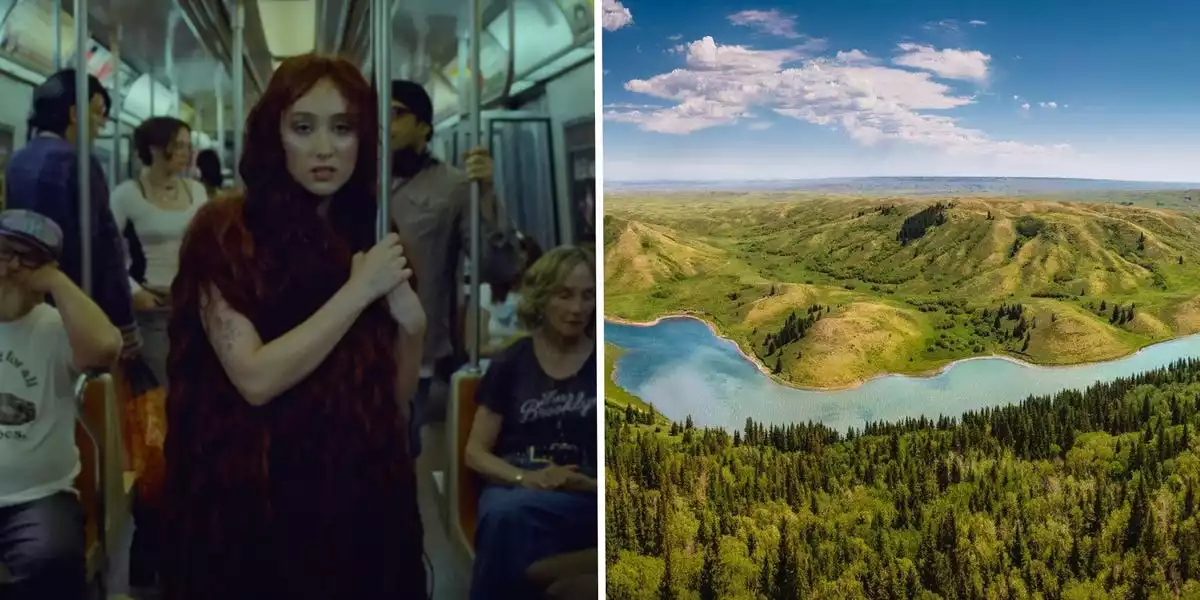
It began with a single line—Chappell Roan’s “The Subway,” released July 31st, slipped the word “Saskatchewan” into its chorus, and in doing so, triggered a digital phenomenon. For two years, American curiosity about the Canadian prairie province had lain dormant, a flatline on Google Trends. In the days following the song’s debut, that line spiked, mirrored by a surge of nearly 50,000 engagements across Tourism Saskatchewan’s digital channels. In the algorithmic age, it seems, a fleeting pop-culture reference can do what years of marketing cannot: thrust a little-known destination into the collective imagination of millions.
The Pop-Culture Demand Shock and the Algorithmic Feedback Loop
This is not the first time a work of pop culture has redrawn the map of travel demand. “Yellowstone” made Montana and Wyoming household names; “Game of Thrones” transformed the coastlines of Northern Ireland and Croatia into pilgrimage sites for fans. But music, with its repeatability and algorithmic stickiness, operates on a different frequency. A lyric is replayed, remixed, and resurfaced by playlist engines, creating a persistent echo in the digital ether.
The Saskatchewan case is a masterclass in how demand shocks now propagate:
- Algorithmic Amplification: The lyric leapt from TikTok’s viral snippets to Spotify’s recommendation engine, then into search indices, forming a closed feedback loop. Streaming, social discovery, and search intent now move in near-perfect synchrony.
- Real-Time Martech Orchestration: Within 24 hours, Tourism Saskatchewan’s analytics team detected the anomaly and launched song-themed landing pages—a rare display of agile, public-sector marketing.
- Geo-Targeted Outreach: Paid media was swiftly redirected toward U.S. zip codes over-indexing on Chappell Roan listenership, leveraging first-party data and fan-graph mapping.
This choreography, subtle but sophisticated, reveals a new truth: cultural moments are no longer random windfalls but signals to be detected, decoded, and deployed.
Economic Ripples: From Visitor Mix to Workforce Strain
The economic implications are neither trivial nor short-lived. U.S. travelers currently comprise just 10% of Saskatchewan’s arrivals. A modest increase to 15%—well within reach given the current surge—could yield an additional CAD $45–55 million in annual tourism receipts. The timing is fortuitous. North American leisure travel spend is already tracking 9–12% above pre-pandemic levels, buoyed by a strong U.S. dollar and the rise of hybrid work. Travelers, weary of long-haul flights and urban crowds, are seeking nature-centric itineraries that promise a psychological reset—a narrative Saskatchewan has deftly woven into its “cure for heartbreak” campaign.
But opportunity comes with operational friction:
- Seasonality Smoothing: The late-summer spike can be channeled into winter dark-sky experiences, helping to flatten Saskatchewan’s lopsided revenue curve.
- Labor and Infrastructure: A sustained influx will strain parks, hospitality, and border crossings—sectors already grappling with labor shortages. Public-private collaboration on temporary visas and skill redeployment will be essential.
- Conservation and Capacity: Saskatchewan’s vastness mitigates overtourism risk, but its dark-sky preserves are fragile. A “Dark Sky-Friendly” certification regime could harmonize growth with environmental stewardship.
Competitive Positioning and the Unfolding Cultural Narrative
Saskatchewan’s sudden relevance is not merely a quirk of the algorithm. Its landscape—open, unhurried, and visually resonant with the American Midwest—offers U.S. travelers a “familiar-yet-foreign” escape, much as Iceland once did for trans-Atlantic flyers. The province’s embrace of Chappell Roan’s drag-queen aesthetic also positions it as a rare, inclusive rural destination for LGBTQ+ travelers—a segment underserved by most prairie locales.
Looking further ahead, the metaverse looms as an unexpected ally. Photogrammetry of Saskatchewan’s dark-sky preserves could find new life in gaming environments, extending the province’s narrative beyond the song and into the digital playgrounds of younger cohorts.
Strategic Imperatives in the Age of Algorithmic Attention
The lesson for decision-makers is as clear as it is urgent. The attention economy rewards those who move at the speed of culture:
- Build Cultural Rapid-Response Units: Stand up microsites and programmatic buys within 48 hours of a pop-culture cue.
- Negotiate Streaming Data-Sharing: Secure early-warning analytics when place names trend in lyrics.
- Develop Thematic Travel Products: “Heartbreak to Healing” packages, dynamically priced, can capitalize on currency differentials and shoulder seasons.
- Pilot Immersive Experiences: Edge-compute-enabled AR overlays can turn natural assets into technology-augmented signatures.
Saskatchewan’s moment is a case study in how a nanosecond of lyrical airtime, when met with digital reflexes and strategic intent, can ignite an economic ripple that outlasts the song itself. In this new era, tourism boards, technology stacks, and pop-culture creators are not just observers but co-authors of demand. Those who recognize the pattern—and build to capture it—will shape the future of destination economics.

 By
By
 By
By
 By
By
 By
By
 By
By

 By
By