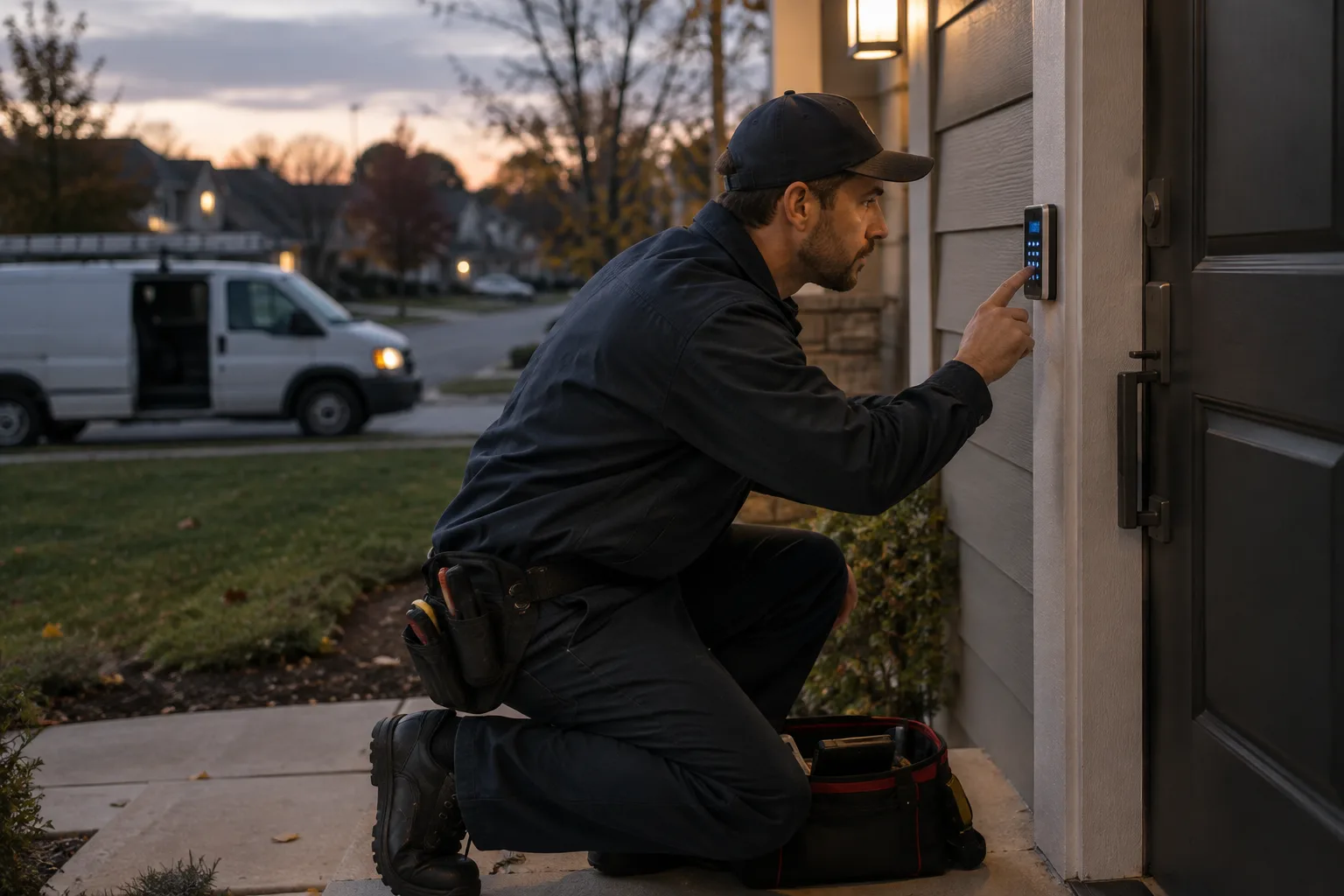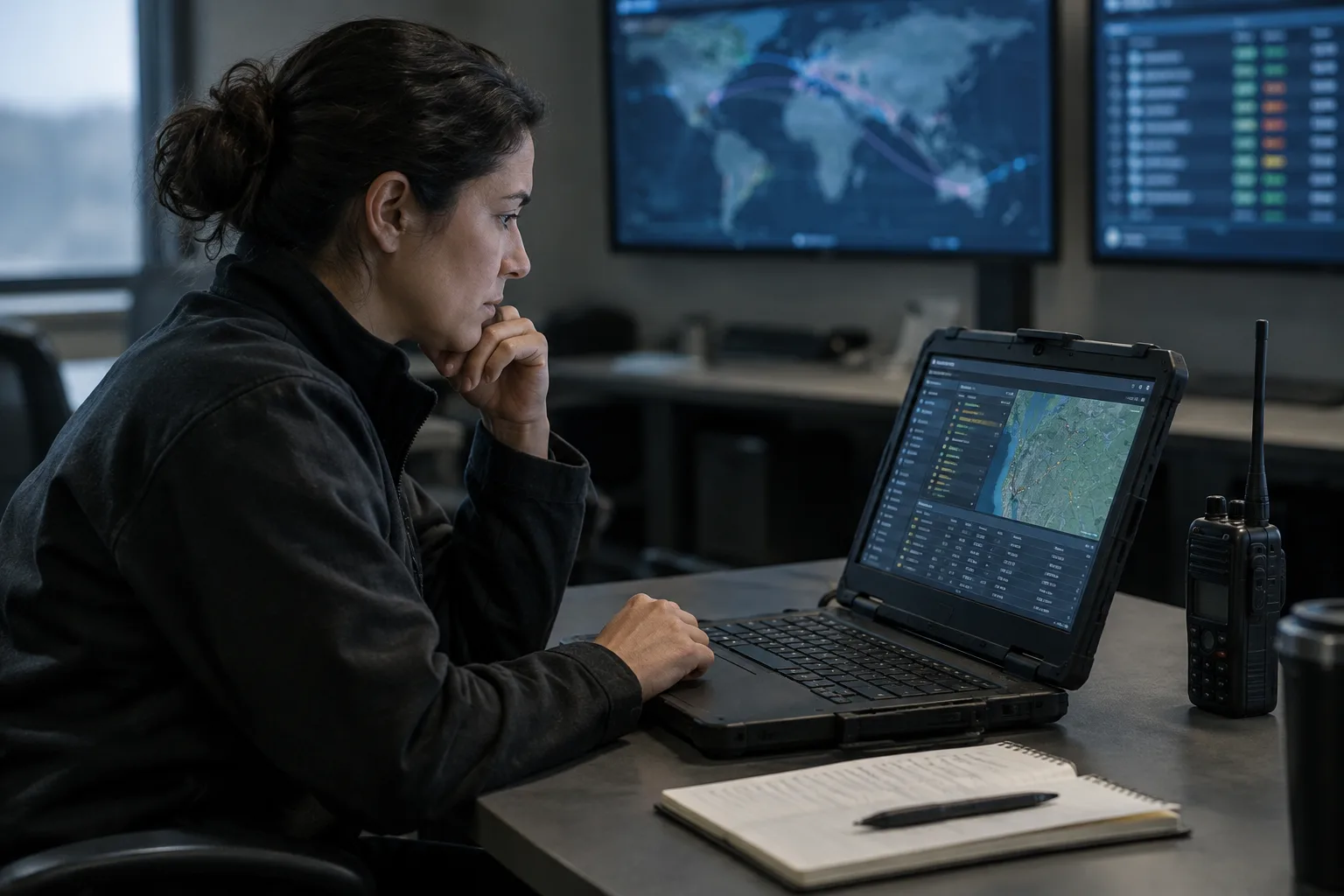

Salesforce has signed a definitive agreement to acquire Rune Technologies, a young defense-software company focused on military logistics in disconnected environments. The move matters because it pushes Salesforce further than back-office modernization and deeper into frontline operational decision support, where units may need to plan resupply, route movement, and allocate scarce resources with little or no reliable network connection.
That is the real question underneath the deal: does pairing Salesforce’s enterprise software with Rune’s edge-native tools create a credible logistics platform for denied, degraded, intermittent, or limited connectivity operations, or does it mostly give a large commercial vendor a new way to capture more defense workflow before hard evidence on reliability, integration, and operator control is public?
In its announcement, Salesforce said the acquisition would broaden its Missionforce portfolio with situational-intelligence capabilities for the tactical edge. The company expects the transaction to close in the fourth quarter of its fiscal 2027, subject to customary conditions. Salesforce did not disclose terms. A roughly $375 million price in cash and stock was reported by Resilience Media and repeated by TechCrunch, but that figure has not been confirmed by Salesforce.
Why this is more than another defense-AI acquisition
The significance is not simply that AI is moving “to the front.” Military logistics already runs across several information layers: headquarters systems of record, strategic planning systems, and the operational edge where field units decide what to move, repair, or request next. Those layers often break apart under poor connectivity. Rune’s pitch is that software at the edge can continue to function locally, make sense of the data it has, and synchronize with enterprise systems when links return.
That is a sharper proposition than generic automation. According to Salesforce, Rune combines information from enterprise systems with live operational data, forecasts demand and resupply needs, recommends resource allocation and transportation routes, and helps teams evaluate logistics plans before and during execution. In practice, the loop is straightforward: headquarters data and plans move toward the field; Rune maintains a usable local picture when the network is unreliable; algorithms generate recommendations; humans decide; and the system reconciles the field record later.
If that works as advertised, the value is obvious. Units can keep operating instead of waiting for a stable connection. Commanders and logisticians may get faster recommendations on what to prioritize. Agencies may also like the idea of fewer custom integrations between strategic software and edge tools.
But the appeal of the model is also what raises the stakes. Once the same vendor sits across more of the workflow, from enterprise record systems to tactical recommendations, buyers need to know exactly where decision support ends and operational authority begins.
What Salesforce gets, and what government buyers should still demand
Salesforce is not entering the sector from scratch. The company says Missionforce is growing 80% year over year, has customers across all six U.S. military branches, and is supported by a 10-year U.S. Army contract with a ceiling of $5.6 billion to modernize operations. Those are meaningful signals of public-sector momentum, but they are still company statements. They do not show how much of that ceiling has been obligated, how much Missionforce revenue is recurring software revenue, or whether deployments have produced better mission outcomes.
Rune gives Salesforce something more specific: a route from headquarters software into tactical logistics. Salesforce says Rune technology is already deployed with the U.S. Army and U.S. Marine Corps. Reuters separately confirmed the agreement, the DDIL use case, the military footprint, and the expected closing window. Washington Technology added that Rune developed TyrOS and related tools for tactical logistics without constant external-server connectivity.
For Salesforce, the incentive is clear. A company best known for CRM and enterprise workflow software can now argue that it offers a fuller operational stack for defense customers: systems of record at the top, strategic workflow in the middle, and logistics decision support at the edge. That can reduce integration friction for one buyer and create more opportunities to sell around large public-sector contracts.
For buyers, that same story should trigger a tougher diligence checklist. The key issues are not whether the edge matters; it clearly does. The issues are whether offline operation is dependable, whether synchronization after reconnection is orderly, whether stale or contradictory data is visible to users, whether recommendations remain accurate under degraded inputs, whether humans can easily override the system, and whether every step is logged for after-action review. Cybersecurity accreditation, data rights, interoperability with existing government systems, and the cost of switching vendors should be near the top of the list as well.
The strongest case for the deal is practical. So is the strongest caution.
The bullish case rests on a real operational problem rather than a vague promise. Logistics decisions do not stop when the network does. Software that can preserve continuity at the edge, then sync back into enterprise systems later, addresses a concrete pain point for military organizations and contractors supporting them. Rune was founded only in 2024 by David Tuttle and Peter Goldsborough, but the reported Army and Marine Corps use suggests it has already found a narrow problem worth solving.
The caution is just as practical. Edge software can preserve continuity without guaranteeing correct decisions. Speed can improve at the same time that bad data, weak model assumptions, cyber compromise, or unclear authority become more consequential. A frontline recommendation engine connected to enterprise records sounds efficient; it also concentrates trust in the software’s behavior when conditions are least forgiving.
That is why this acquisition should be read as a test of an operating model, not as proof that AI is ready to run warfare. The public record still leaves big gaps: Salesforce has not disclosed the purchase price or structure; the sources do not provide independent benchmarks for forecast accuracy, resupply outcomes, decision latency, synchronization conflicts, failure recovery, or cyber resilience; and there is no public detail on how Rune handles conflicting local and headquarters data or who can override recommendations in practice.
So the near-term answer is mixed. Salesforce has made a strategically coherent move, and Rune appears to solve a real edge-computing problem that enterprise platforms alone do not. That makes the acquisition consequential. Whether it becomes a credible edge-to-enterprise logistics platform, though, will depend less on the announcement than on what buyers can verify next: reliable offline performance, disciplined synchronization, clear human control, interoperable deployment, and procurement terms that do not turn operational readiness into long-term platform dependence.

 By
 By

 By



 By


 By