

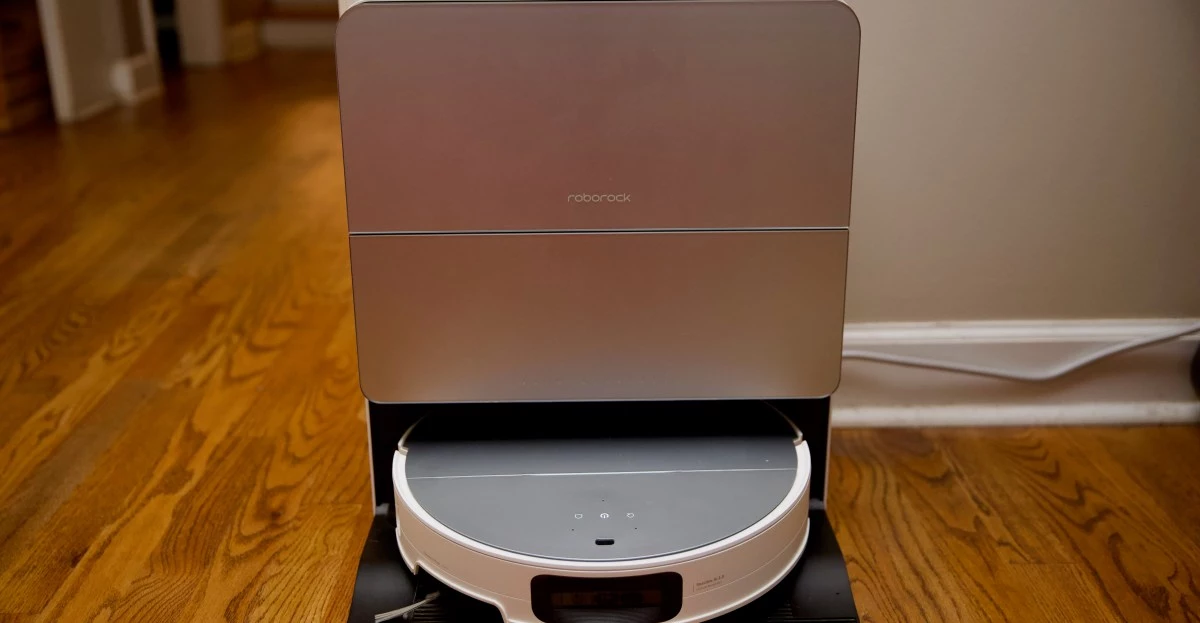

The Saros 10 Discount: A Catalyst in the Home Robotics Evolution
A $500 price drop rarely passes unnoticed in the premium consumer electronics market, but Roborock’s Saros 10 discount—31% off, landing at $1,099—signals more than mere post-holiday inventory management. It marks a pivotal moment in the home robotics sector, where technical sophistication, economic pressure, and the quiet rise of interoperability standards are converging to redraw the competitive map.
Engineering Ingenuity and the March Toward Autonomy
At the heart of the Saros 10’s value proposition lies a synthesis of sensor fusion and mechanical innovation. Its retractable LiDAR tower and 10 mm auto-lift chassis elegantly resolve the perennial “low-clearance versus perception” dilemma, allowing the robot to navigate under furniture without sacrificing spatial awareness. This feat, subtle yet profound, is poised to become the new baseline for high-end robotic vacuums, setting a pace that competitors will be hard-pressed to match in the coming product cycles.
The device’s on-board neural processing unit (NPU) powers both real-time obstacle recognition and localized SLAM mapping, while “Rocky,” Roborock’s proprietary voice assistant, operates natively on the device. This local processing not only reduces latency but also sidesteps reliance on big-tech voice platforms, capturing valuable usage data first-party and hinting at a future where home robots are less tethered to external cloud ecosystems.
Market Compression and the New Economics of Smart Home Devices
The Saros 10’s aggressive discounting strategy is not an isolated event—it is a harbinger of intensifying price compression across the premium segment. With average selling prices plateauing under consumer pressure, Roborock’s move is likely to trigger swift responses from rivals such as iRobot and Ecovacs, compressing margins and accelerating the commoditization of hardware at the top end.
Key market signals include:
- Global robovac market CAGR: 9–11% through 2027, even as price ceilings erode.
- Chinese OEM dominance: Over 55% global unit share, leveraging Shenzhen’s agile supply chains.
- Hybrid channel strategy: Roborock’s dual presence on Amazon and direct-to-consumer channels mirrors tactics seen in the broader consumer electronics sector, balancing reach with data ownership.
This environment favors vertically integrated manufacturers who can rapidly adjust bill-of-materials costs and hedge against demand volatility. The Saros 10’s discount, extending well beyond the holiday window, may be as much about preempting Q1 softness in North America as it is about clearing shelves.
Matter, Interoperability, and the Strategic Pivot to Platform Services
Perhaps the most consequential development is the Saros 10’s native compliance with Matter, the open interoperability standard rapidly gaining traction across the smart home landscape. Once a single-vendor appliance, the robot vacuum is now a node in a broader, software-upgradable ecosystem—one that promises seamless integration with Apple Home, Google Home, SmartThings, and Amazon Alexa.
For manufacturers, this transition unlocks new business models:
- From hardware margins to service monetization: As interoperability renders hardware less differentiated, value shifts to software—advanced scheduling, predictive maintenance, consumable subscriptions, and spatial data insights.
- Data as strategic asset: Every map generated by a home robot is a fragment of geospatial IP, feeding into the next generation of multi-modal AI models. This data beachhead could underpin future robotics applications, from indoor security to elder-care assistance.
Yet, with openness comes the challenge of differentiation. Vendors will increasingly compete on value-added layers atop the Matter standard, seeking to avoid the fate of commoditized hardware.
The Road Ahead: Strategic Imperatives and Emerging Contours
For decision-makers, the Saros 10’s repositioning crystallizes a set of imperatives:
- Prepare for a bifurcated market: Expect a clear split between sub-$500 commoditized units and $1,000+ “prosumer” robots bundled with evolving software subscriptions.
- Prioritize software innovation: Allocate R&D to AI-driven features, reserving hardware headroom for on-device large-language-model integration—enabling conversational, multi-step task chaining by 2025.
- Monitor regulatory headwinds: Data privacy statutes in the EU and U.S. will increasingly govern spatial mapping, making proactive compliance a potential trust differentiator, especially in commercial deployments.
- Anticipate consolidation: As regulatory turbulence reshapes the landscape, cash-rich appliance majors may seek to acquire robotics startups to complete their smart-home portfolios.
The Saros 10’s discount is not merely a fleeting sales tactic; it is a strategic inflection point. As advanced sensing, standards-based interoperability, and opportunistic pricing converge, the very foundations of competitive advantage in home robotics are being rewritten. For those charting the future of the connected home, the message is clear: agility, openness, and a relentless focus on software-driven value will define the next era.

 By
By
 By
By

 By
By
 By
By
 By
By

 By
By







