
Orbital Illumination: The Dawn of Commercial Sunlight and the Contest for the Night Sky
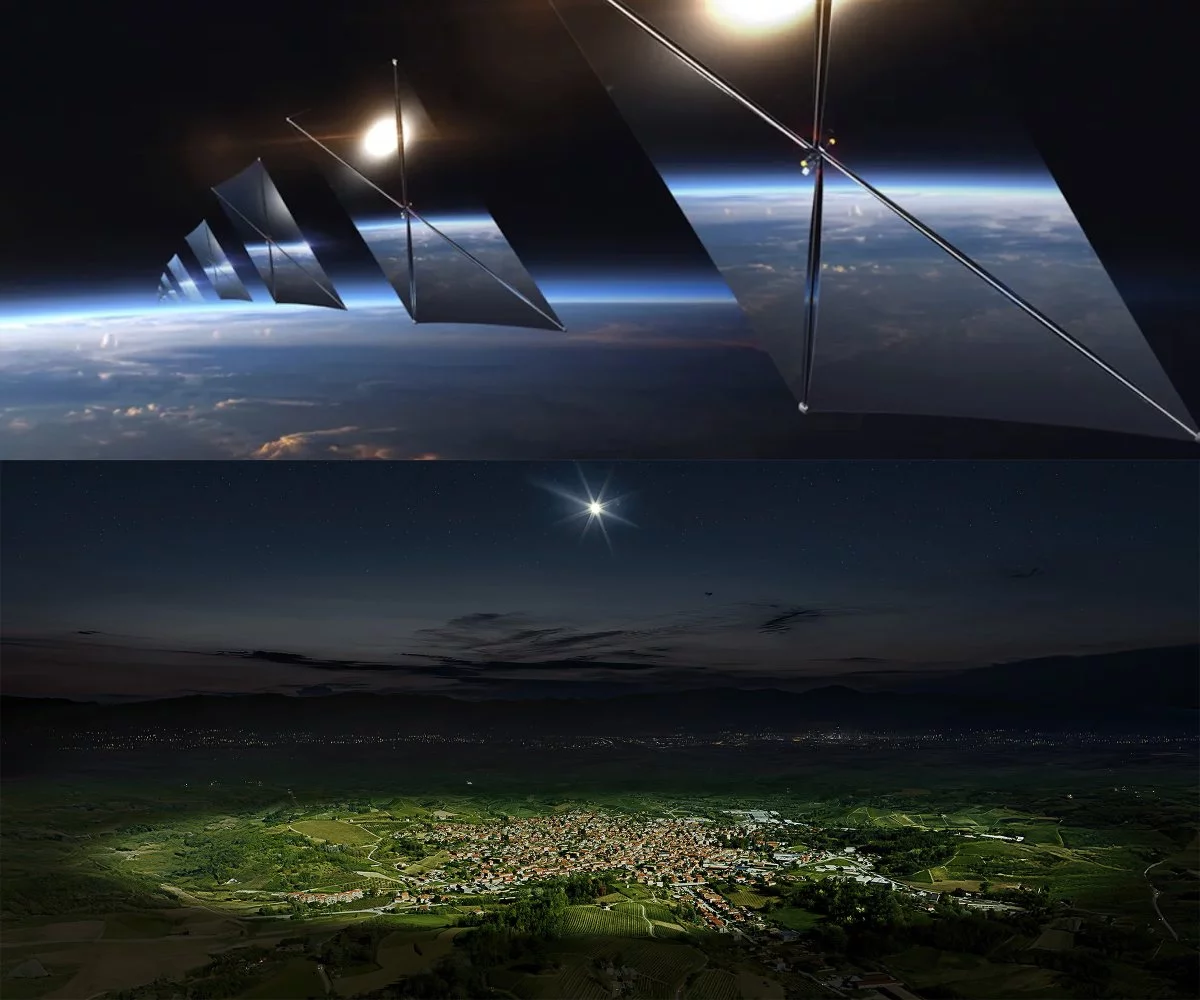
In the annals of technological ambition, few ventures have so viscerally challenged the boundary between the natural and the engineered as Reflect Orbital’s audacious plan to launch a constellation of 4,000 steerable mirrors into low Earth orbit. Their vision—redirecting sunlight to precise terrestrial locations on demand—heralds the birth of a new “illumination layer” in the space economy, one that promises to upend not only the lighting industry but also the very experience of night itself.
Engineering Daylight: The Technical Feats and Perils of Space-Based Mirrors
The technical challenge is formidable. Each satellite, a featherweight 50 kilograms, must maintain centimeter-scale formation flying across kilometer-wide phalanxes, orchestrating their reflective surfaces to focus sunlight onto a ground footprint as small as five kilometers in diameter. This ballet of precision rivals, and in some ways exceeds, the autonomous choreography of Starlink’s broadband satellites. The mirrors themselves must withstand the brutal thermal cycling of space while preserving optical quality—a materials science hurdle that lags behind the maturity of solar arrays.
The operational tempo is equally daunting. Reflect Orbital’s promise of “on-demand daylight” requires a cloud-to-orbit control loop measured in minutes, merging the real-time expectations of SaaS with the unforgiving latency of orbital mechanics. And the scale is staggering: 200 tons of hardware to low Earth orbit, at launch costs that even SpaceX’s rideshare rates cannot render trivial. The company’s recent $20 million Series A and a $1.25 million U.S. Air Force contract are but a down payment on a capital stack that will ultimately demand project-finance innovation and perhaps the blessing of multilateral development banks—assuming environmental, social, and governance (ESG) hurdles can be cleared.
Yet the most chilling technical consideration is security. A constellation of steerable mirrors is, by design, dual-use. In the wrong hands, it could become a tool for global-scale flash-blinding or denial-of-darkness operations, raising the specter of NATO-level cyber-physical threat modeling.
Market Creation and Disruption: Lighting as a Service in a Connected World
Reflect Orbital’s strategy is not merely to compete within the $286 billion satellite market, but to create an entirely new vertical: the commodification of ephemeral light. By selling “light spots”—over 260,000 pre-ordered from 157 countries—the company targets not only defense and infrastructure resilience, but also precision agriculture, tourism, and smart cities. The implications ripple across industries:
- Agriculture: Extended photoperiods for high-value crops could disrupt the $8 billion horticultural LED sector, while offering new tools for food security and yield optimization.
- Urban Experience: Municipalities seeking to boost night-economy activity may find value in tailored illumination, potentially reducing ground-level energy use and enhancing disaster response.
- Events and Tourism: The ability to summon daylight at will opens new frontiers for experiential marketing, festivals, and even emergency management.
This “experience-as-a-service” model challenges the very notion of what space infrastructure can deliver, inviting both partnership and resistance from entrenched lighting and ag-tech incumbents.
The Governance Gauntlet: Who Owns the Night?
The prospect of commercializing nighttime illumination has ignited a fierce debate among astronomers, environmentalists, and policymakers. The night sky, long a shared commons, now faces the prospect of privatization—its darkness auctioned off in five-kilometer increments. Critics warn of:
- Ecological Disruption: Altered circadian rhythms for wildlife, migration pattern shifts, and unforeseen impacts on nocturnal ecosystems.
- Astronomical Interference: Increased sky brightness threatens the integrity of ground-based telescopes and the pursuit of fundamental science.
- Regulatory Gaps: Existing frameworks—FCC spectrum coordination, NEPA, the Outer Space Treaty—offer only partial levers for managing visible-light externalities. Litigation and international norm-setting loom, with insurance markets struggling to price “light pollution liability.”
The U.S. Air Force’s engagement signals a strategic dimension: orbital lighting as tactical infrastructure, from runway recovery to psychological operations. Meanwhile, cities, biodiversity NGOs, and dark-sky reserves are mobilizing to shape the rules of engagement. The outcome will define not just commercial opportunity, but the very boundaries of the celestial commons.
The Stakes: Redefining Nighttime Economics or Testing the Limits of Privatization
Reflect Orbital’s foray into orbital illumination is a crucible for the next phase of the commercial space age. If the technical, financial, and ethical dilemmas can be navigated, the company could unlock new paradigms in urban resilience, agriculture, and global soft power—potentially serving as a proving ground for future space-based solar power initiatives. If not, the venture may stand as a cautionary tale: a bold attempt to monetize a shared planetary resource, checked by the intractable complexity of governance, ecology, and public trust.
As the world awaits the FCC’s ruling on the 2026 demonstrator, stakeholders across industry, government, and civil society would do well to monitor the unfolding drama. The right to darkness, once a philosophical abstraction, is now a boardroom and policy imperative. The future of the night sky—and the frontier of commercial space—hangs in the balance.

 By
By

 By
By
 By
By
 By
By

 By
By