
Shattering the Mass Gap: GW231123 and the New Industrial Physics
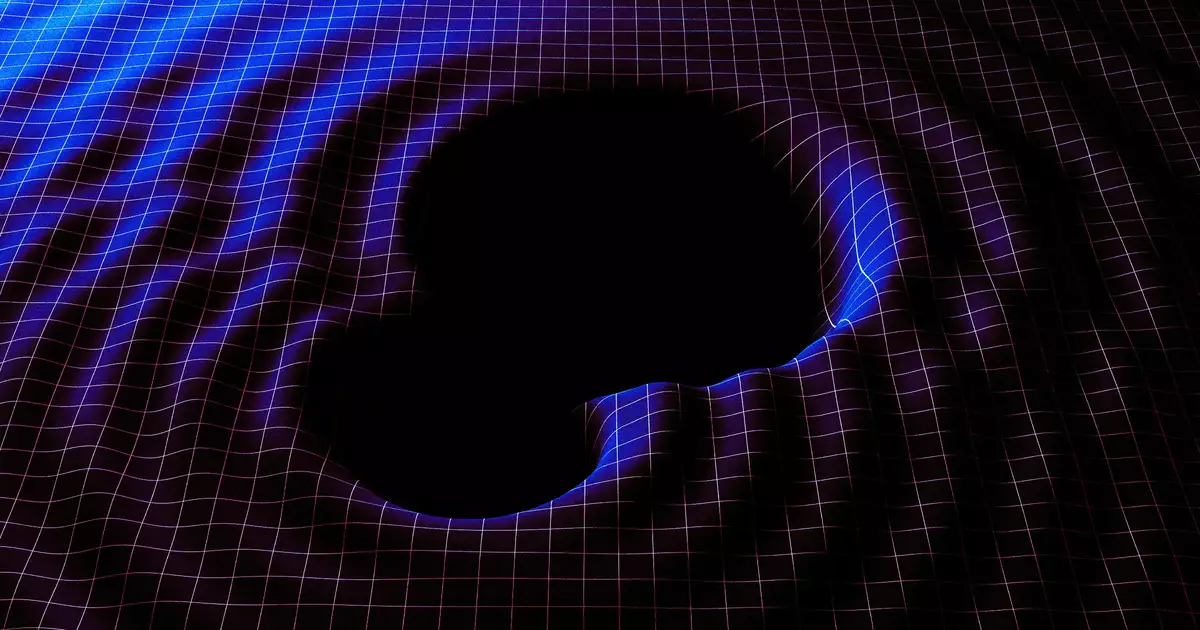
The recent detection of gravitational-wave event GW231123 is more than a milestone for astrophysics—it is a harbinger of industrial transformation, where the arcane becomes actionable, and the speculative, strategic. This event, chronicling the collision of two black holes spinning at nearly the speed of light and yielding a remnant of 225 solar masses, has ruptured the so-called “upper mass gap,” a theoretical boundary long believed to be impenetrable. The implications ripple far beyond the ivory tower, catalyzing innovation in photonics, quantum sensing, and algorithmic intelligence.
From Cosmic Cataclysm to Commercial Catalyst
The technical bravura behind GW231123 is staggering. LIGO’s interferometers, stretching across kilometers, registered a fleeting, sub-second signal—an echo from the merger of two black holes weighing in at approximately 137 and 103 solar masses, respectively. The resulting black hole, at 225 solar masses, defies the pair-instability limit, suggesting either our models are incomplete or nature prefers a more baroque choreography of sequential, or “hierarchical,” mergers.
This is not merely an astrophysical curiosity. The detection forced a reimagining of the entire algorithmic and hardware stack:
- Photonics and Sensing: LIGO’s sensitivity—detecting distortions in spacetime as small as one part in 10²¹—relies on squeezed-light sources, crystalline mirrors, and vibration isolation at the picometer scale. These technologies are now foundational in quantum sensing, 6G terahertz systems, and even extreme-UV lithography.
- High-Performance Computing and AI: The event’s high-spin parameters strained existing waveform libraries, catalyzing advances in reduced-order modeling and the adoption of transformer-based architectures, fine-tuned on synthetic datasets. The computational demands—approaching 100 petaflops per second—have driven the migration of these pipelines to GPU-rich cloud environments, aligning with hyperscalers’ ambitions in managed HPC.
- Quantum-Limited Metrology: Squeezed-state injection delivered a tangible quantum advantage, improving sensitivity by 3 dB. This is quantum photonics not as a future promise, but as present-day infrastructure, with cross-sectoral applications from semiconductor process control to inertial navigation.
Strategic Ripples: Capital, Supply Chains, and Geopolitics
The reverberations of GW231123 are being felt in boardrooms and ministries as much as in observatories. Deep-tech capital is already flowing, with the U.S. CHIPS and Science Act and its European counterparts earmarking over $300 billion for semiconductor and quantum ecosystems. Expect GW231123 to become a touchstone in grant proposals and public-private partnerships focused on photonic-integrated circuits and quantum-noise suppression.
Yet, the supply chain remains brittle. The fused-silica optics and ultra-low-expansion glass at the heart of LIGO’s detectors are sourced from a handful of specialty vendors, echoing the strategic vulnerabilities seen in extreme-UV photomask blanks. As prime contractors seek vertical integration, targeted acquisitions in this space are all but certain.
The space economy, too, is poised for transformation. Anomalies in black-hole mass distributions are directly informing the roadmaps of NASA and ESA, particularly for long-baseline space interferometers like LISA. Meanwhile, private space firms are eyeing gravitational-wave constellations as a new frontier for commercial science data services, emboldened by a market narrative that now feels both urgent and inevitable.
On the geopolitical front, the race for “gravitational-wave sovereignty” is intensifying. Chinese investment in the TianQin project and Japanese-led upgrades to KAGRA signal a multipolar contest reminiscent of the quantum computing arms race, with all the attendant export-control and regulatory complexities.
Cross-Sector Insights: From ESG to Fintech and Materials
The technological dividends of GW231123 extend well beyond astronomy:
- ESG and Climate Modeling: The same denoising algorithms developed for gravitational-wave signals are being repurposed to enhance ensemble climate simulations, improving the fidelity of net-zero verification frameworks.
- Financial Risk Systems: Real-time, high-throughput data pipelines pioneered for astrophysical triggers are architecturally analogous to those used in high-frequency trading. Open-source tools from LIGO are already being adapted for anomaly detection in fintech.
- Materials Discovery: Revised models of stellar nucleosynthesis, prompted by these observations, affect predictions of r-process element abundances—platinum, iridium—critical for fuel-cell catalysts and green hydrogen infrastructure.
Navigating the Next Decade: Strategic Imperatives for Industry Leaders
For executives and strategists, the message is clear: the boundary between frontier science and industrial application is dissolving. Capital should flow toward photonic-integrated circuits and quantum-noise suppression, with early movers poised to capture spillover intellectual property and preferential procurement. Partnerships with national labs and astrophysics groups will yield not just access to open waveform catalogs, but a rarefied talent pool fluent in both high-performance computing and quantum signal processing.
Regulatory vigilance is essential, particularly as export controls tighten around high-finesse optics and quantum detectors. Cyber-resilience, too, must be prioritized, as the value of scientific data and infrastructure attracts increasingly sophisticated threats.
GW231123 is a vivid demonstration that the most esoteric corners of physics can ignite industrial revolutions. Those who recognize the downstream potential of precision photonics, quantum-enhanced sensing, and physics-informed AI will be best positioned as gravitational-wave astronomy transitions from experimental frontier to an engine of economic and technological renewal.

 By
By
 By
By

 By
By
 By
By

 By
By