

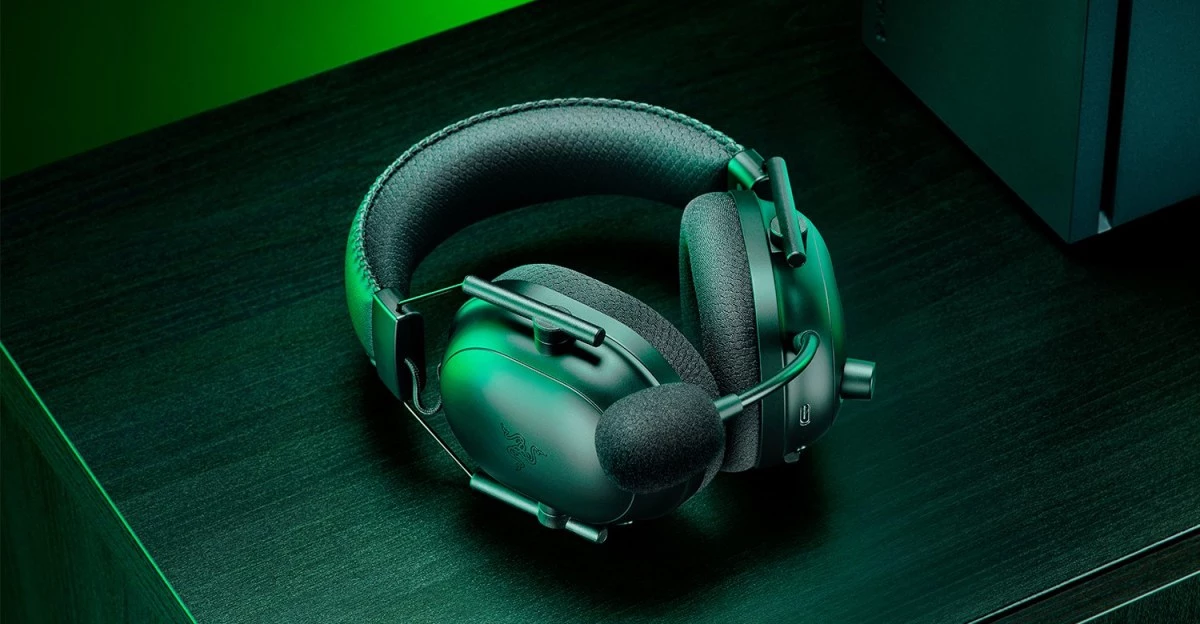

A steep price reset that reframes the Razer BlackShark V2 Pro’s market role
Razer’s BlackShark V2 Pro gaming headset is experiencing a notable repositioning moment: a product that carried a $199.99 premium price is now widely visible at $89.99 on Amazon, a 55% discount that effectively drops it into the most competitive band of the headset market. That shift matters not only for consumers hunting value, but for the broader gaming peripherals landscape, where pricing often signals strategy as much as it reflects cost.
At under $100, the BlackShark V2 Pro stops being a “considered purchase” and becomes an impulse-friendly upgrade for console players, students, and casual-to-competitive gamers. For Razer, the discount reads as more than a promotion—it looks like a deliberate attempt to expand the installed base and defend mindshare in a category where differentiation is increasingly difficult and buyers are increasingly price-sensitive.
Key elements of the offer that shape perception and demand include:
- Aggressive value positioning: premium-tier branding at a mass-market price point
- Channel leverage: Amazon’s promotional reach amplifies visibility and conversion
- Competitive pressure: sub-$100 pricing invites direct comparisons with high-volume rivals in the commoditized headset segment
Hybrid wireless design signals where gaming audio is heading
Technically, the BlackShark V2 Pro reflects a maturing approach to wireless audio: Bluetooth for everyday devices and a low-latency USB-C dongle for performance-critical gaming. This dual-mode architecture addresses a long-standing tradeoff in headsets—convenience versus responsiveness—by letting users move between contexts without switching products.
The headset is optimized for Xbox through the USB-C wireless dongle (with a USB-C-to-USB-A adapter), while also supporting Bluetooth connections for PCs, phones, tablets, and even the Nintendo Switch 2. That breadth matters in a world where gaming is no longer anchored to a single screen. Players increasingly expect a headset to follow them from console to handheld to mobile—often in the same day.
From a product design standpoint, Razer is emphasizing the features that most reliably translate into perceived quality:
- 50 mm drivers aimed at immersive, high-impact sound
- A detachable boom microphone, aligning with both competitive play and casual use
- On-ear volume and mute controls for low-friction adjustments mid-session
- A SmartSwitch button for real-time audio-profile switching, reinforcing the “multi-context” narrative
Just as important is the human-centered engineering. The headset is under one pound, built with an adjustable headband, breathable memory-foam ear cushions, and background-noise isolation. These are not cosmetic choices; they reflect how headset usage has expanded beyond short gaming sessions into streaming, esports practice blocks, and hybrid work calls. Comfort and fatigue reduction increasingly function as competitive differentiators—especially when audio performance alone is no longer enough to stand out.
Battery life is another strategic lever. With up to 70 hours per charge and USB-C fast charging, the BlackShark V2 Pro competes not only with gaming headsets but with the expectations set by consumer audio brands. Long endurance reduces friction, increases daily usage, and strengthens the likelihood that the headset becomes a default device rather than a situational accessory.
The economics behind the discount: volume, elasticity, and ecosystem gravity
A price drop of this magnitude inevitably raises questions about margins, inventory, and competitive intent. One plausible reading is margin compression in exchange for volume—a classic play in peripherals where scale can matter more than per-unit profit, particularly when a brand wants to expand its footprint and keep customers within its broader ecosystem.
Several market dynamics appear to be converging:
- Component cost normalization: declining costs for drivers, batteries, and RF modules make feature-rich headsets more viable at lower prices
- Demand elasticity testing: sub-$100 pricing probes how quickly fence-sitters convert when “premium” becomes “affordable”
- Channel and inventory optimization: Amazon promotions often align with lifecycle management, seasonal demand, and warehouse efficiency
For competitors, this kind of discount can function as a forcing mechanism. If a well-known premium gaming brand can deliver a recognizable flagship line at $89.99, it can reset consumer expectations and intensify price competition across the category. That, in turn, risks accelerating commoditization—unless brands can defend differentiation through software, tuning, firmware updates, and platform partnerships.
Razer’s brand calculus is particularly delicate because the BlackShark V2 Pro now undercuts parts of its own premium lineup. The upside is clear: a lower entry price expands reach, especially among price-sensitive demographics and potentially in emerging markets where sub-$100 headsets dominate. The risk is cannibalization—buyers who might have stretched to higher-end models may stop at “good enough,” especially if the discounted product checks the most visible boxes: wireless, comfort, long battery, detachable mic, and console compatibility.
What to watch next: differentiation moves beyond hardware
The BlackShark V2 Pro’s current moment highlights a broader truth in gaming audio: hardware advantages are increasingly transient, while software and services are where durable differentiation can be built. If price competition tightens, brands will need to defend value through features that improve over time—firmware refinements, smarter profile switching, better mic processing, and platform-level integrations.
Forward-looking signals worth tracking include:
- Firmware-based differentiation: continued iteration on SmartSwitch behavior, EQ presets, and low-latency performance
- Cross-platform co-marketing: deeper alignment with console ecosystems and mobile OS compatibility narratives
- Adjacent-market pull: positioning the detachable mic, noise isolation, and long battery life for remote work and collaboration, where demand is steady and replacement cycles are predictable
- Supply-chain resilience: battery and semiconductor volatility could quickly reshape the economics of aggressive discounting
Ultimately, the BlackShark V2 Pro’s discount is not just a deal—it’s a lens into how the gaming headset market is evolving: toward hybrid wireless expectations, comfort-first design, and pricing strategies that prioritize installed base and ecosystem gravity. If Razer can pair this expanded reach with sustained software-led differentiation, the headset becomes more than a promotional win—it becomes a platform for long-term customer retention in an increasingly crowded audio battlefield.

 By
By

 By
By


 By
By
 By
By
 By
By







