


When Rodents Meet Retro Gaming: The Unlikely Convergence of VR, Neuroscience, and the Next Tech Frontier
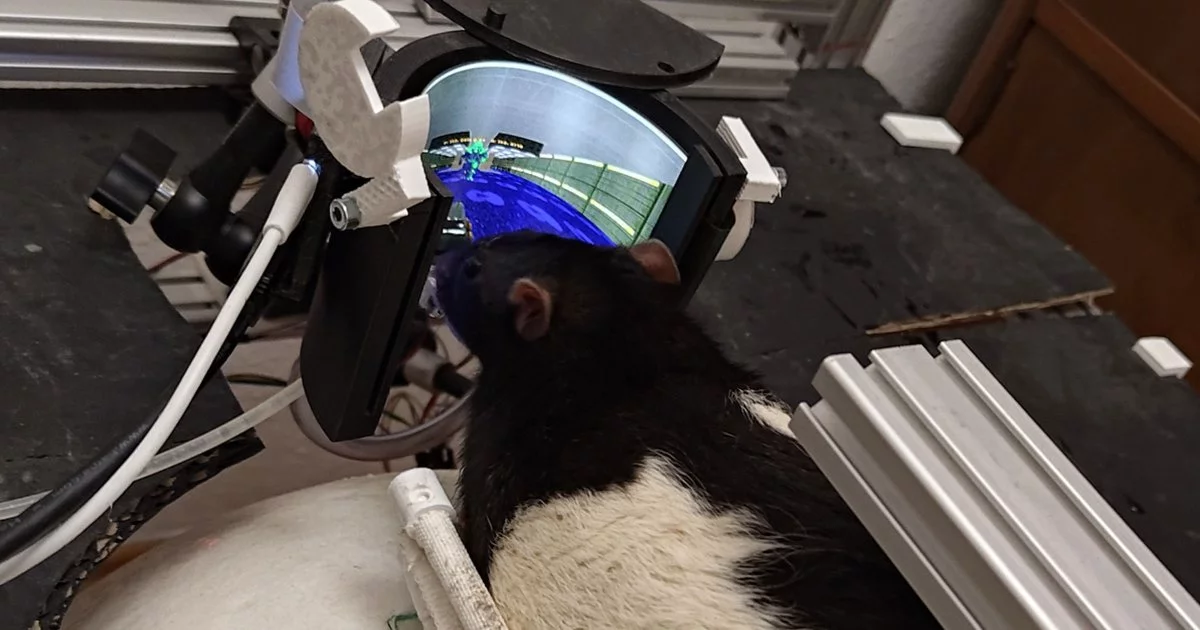
In a Budapest laboratory, a scene unfolds that feels equal parts cyberpunk and scientific curiosity: laboratory rats, harnessed into bespoke virtual reality rigs, navigate the pixelated corridors of Doom II. Their movements, mapped onto a polystyrene sphere, translate seamlessly into the game’s digital world. Each successful “shot” earns a sip of sugar water, while a gentle puff of air signals collision—a full-stack sensory experience for a creature whose ancestors once gnawed through the wiring of early computers. This is not a dystopian vignette, but a pioneering experiment in immersive extended reality (XR) for non-human subjects, and it may well presage the next disruptive wave in neurotechnology and behavioral science.
Disrupting the Cost Curve: From Military-Grade to Maker-Space
The technical ingenuity here is not merely in the spectacle of rodents playing video games, but in the democratization of the tools themselves. Leveraging off-the-shelf AMOLED displays and 3D-printed components, the research team has constructed a rodent-scale CAVE (Cave Automatic Virtual Environment) at a fraction of the cost of traditional academic apparatus. This shift mirrors the journey of drones—from defense budgets to consumer playrooms—and signals a similar broadening of access for neuroscience research.
- Affordable, Modular Design: The use of hobbyist-grade electronics and additive manufacturing slashes the entry barrier for small labs and startups, potentially expanding the total addressable market for research-grade neuro-hardware.
- Closed-Loop Sensorimotor Feedback: By coupling tactile air-puff cues with visual immersion and a reward loop, the system achieves a surprisingly robust simulation stack—one that could be retrofitted for real-time neural recording, inching closer to practical, high-throughput brain-computer interface (BCI) training grounds.
- Rapid Prototyping via Game Modding: Doom II’s open architecture enables fast scenario generation, echoing the synthetic data pipelines that now underpin much of machine learning’s progress.
The Business of Animal XR: New Markets, New Ethics
The implications extend far beyond the laboratory. As pharmaceutical giants increasingly turn to VR for in-silico trials, the prospect of animal-centric XR platforms promises to accelerate behavioral toxicology studies and compress pre-clinical R&D timelines. The convergence of gaming and life sciences is no longer theoretical; it is being played out—quite literally—by rats in virtual mazes.
- Democratized Neuro-Tooling: The falling cost of displays and microcontrollers could empower mid-tier universities and biotech startups, shifting the landscape from elite, grant-funded labs to a more distributed innovation ecosystem.
- Creator Economy Crossover: Imagine a Twitch channel where rodents speedrun Doom II, monetized through advertising and micro-donations—a whimsical yet plausible extension of the burgeoning pet content and esports markets.
- Regulatory and Ethical Overhang: As the EU and U.S. states tighten animal research regulations, demonstrating enriched, choice-driven environments could become a compliance advantage, converting regulatory burden into reputational capital.
Strategic Horizons: Synthetic Workforces, Digital Twins, and Beyond
The deeper, less obvious currents are perhaps the most consequential. Non-human gamers, for instance, can generate edge-case gameplay data that human testers might never encounter—an invaluable resource for reinforcement learning and AI model training. In the realm of digital health, VR rigs could host genetically modified rodents exhibiting neurological disease phenotypes, yielding rich, real-time behavioral data that outstrip today’s coarse open-field tests.
- Edge-Compute Validation: The low-latency demands of immersive animal XR dovetail with the capabilities of emerging edge-AI chips, offering a fertile sandbox for silicon validation before scaling to human-grade AR wearables.
- Cross-Species Experience IP: The skill trees and reward mechanics refined for rodents may find their way into enrichment products for companion animals—a market projected to surpass $9 billion by the end of the decade.
For forward-looking R&D leaders, the recommendations are clear:
- Allocate exploratory budgets to alternative XR platforms; early proprietary datasets will be prized by BCI and digital-therapeutic ventures.
- Forge partnerships with open-source hardware collectives to co-develop modular VR cages and secure supply-chain relationships before demand surges.
- Engage with regulators to codify XR-based enrichment as a best practice, transforming compliance cost into strategic advantage.
- Monitor tech-stack inflections—a 20% drop in AMOLED or micro-projector costs could make multi-species VR suites viable for a much broader swath of the research sector.
What might appear as a quirky, even whimsical, side project in a Hungarian lab is in fact a microcosm of three converging macro-trends: the democratization of hardware, the fusion of biological and digital domains, and the gamification of research and development. Those who dismiss such experiments as mere novelty risk overlooking the early signals of seismic shifts in neuroscience, compliance economics, and digital content monetization. The prudent, and perhaps visionary, course is to experiment, partner, and position now—while the entry costs are low, and the competitive landscape remains wide open.

 By
By
 By
By

 By
By
 By
By

 By
By
 By
By







