

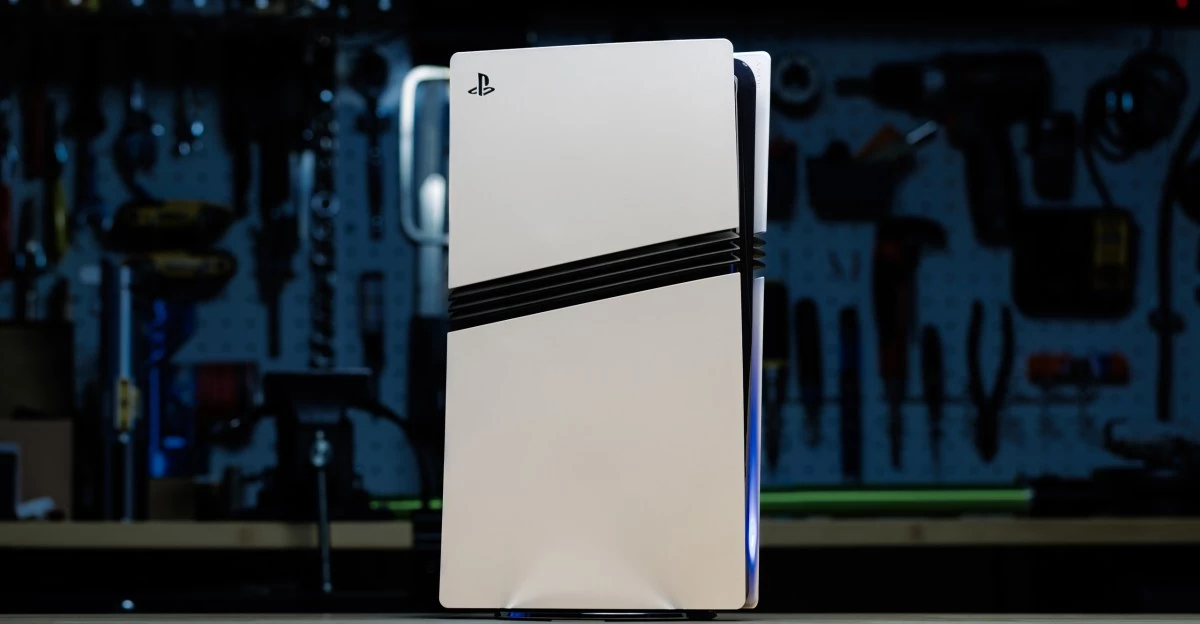

A Calculated Holiday Gambit: Sony’s PS5 Pro Discount and the New Economics of Gaming Hardware
Sony’s holiday season maneuver—a $100 price cut on its PlayStation 5 Pro through December 25—offers more than a fleeting deal for would-be gamers. It is a carefully orchestrated signal to the market, one that reveals the evolving calculus of platform economics, digital distribution, and hardware innovation in the console wars. The move not only reverses part of this year’s tariff-induced price hike but also underscores Sony’s commitment to expanding its digital ecosystem and flexing its proprietary AI upscaling technology, PlayStation Spectral Super Resolution (PSSR).
AI Upscaling, Digital-Only Futures, and the Half-Step Refresh
At the heart of the PS5 Pro’s value proposition is a convergence of silicon and software—a custom AI inference engine embedded in a larger GPU, enabling PSSR to deliver near-native 4K fidelity. This technology, reminiscent of NVIDIA’s DLSS, does more than enhance visuals. It quietly nudges third-party developers to optimize for Sony’s hardware, deepening the moat around the PlayStation platform and making it harder for rivals to replicate the experience.
Sony’s decision to default the Pro variant to a disc-less, 2TB configuration—relegating the optical drive to an $80 accessory—signals an accelerated push toward an all-digital ecosystem. This streamlines supply chains, reduces packaging waste, and, crucially, channels more transactions through the PlayStation Store. The implications are profound: higher attach rates for digital content, diminished relevance for the pre-owned game market, and a tighter grip on downstream revenue streams such as DLC, subscriptions, and micro-transactions.
The PS5 Pro itself is emblematic of a “generational half-step”—a mid-cycle refresh that sustains consumer excitement without the risk and cost of a full next-gen leap. In an era where semiconductor R&D and fabrication costs are ballooning, this approach hedges against capex inflation while keeping the platform technologically relevant.
Economic Elasticity, Tariffs, and the Shifting Consumer Landscape
Sony’s temporary markdown is not merely a concession to holiday cheer. It is a calculated response to the price elasticity of premium gaming hardware, especially in the wake of August’s tariff pass-through. By absorbing margin compression in the short term, Sony aims to secure a larger installed base for its digital storefront—a bet that recurring digital revenue will more than offset the upfront discount.
This strategy also reflects the realities of today’s macroeconomic environment. With interest rates at multi-decade highs, consumers are weighing tech purchases against high-yield savings and the costs of buy-now-pay-later financing. The holiday promotion is a deft navigation of these headwinds, providing an incentive to buy now without permanently resetting average selling price expectations.
Behind the scenes, Sony’s inventory strategy comes into focus. Channel checks indicate that PS5 Pro production was ramped up in anticipation of holiday demand. The discount serves a dual purpose: clearing inventory risk while yielding valuable data on consumer price sensitivity—insights that will inform future pricing and production models.
Industry Reverberations: Platform Power, Regulatory Scrutiny, and Ecosystem Shifts
The broader industry implications are unmistakable. As Sony’s digital attach rate climbs, publishers may find themselves renegotiating revenue shares, while the pre-owned game market faces further erosion. PSSR’s AI upscaling, once it reaches critical mass, will likely become a baseline expectation for developers, raising the bar for hardware competitors and sparking a GPU arms race akin to the mobile camera wars of the last decade.
Yet, the march toward a disc-less future is not without regulatory risk. Antitrust authorities, particularly in Europe and the U.K., are already scrutinizing the concentration of market power in digital storefronts. Sony’s optional disc drive may not be enough to placate concerns over consumer choice, foreshadowing policy debates reminiscent of those surrounding Apple’s App Store.
Meanwhile, the competitive landscape is shifting. Microsoft’s multi-tier Xbox strategy, with its all-digital Series S, faces new pressure to respond—either through price cuts, accelerated hardware refreshes, or deeper investment in cloud gaming and subscription services. The PS5 Pro’s enhanced GPU also ripples through the supply chain, benefiting advanced packaging and thermal solution vendors, and hinting at future roles for edge devices in hybrid cloud-streaming scenarios.
Strategic Inflection Points and the Road Ahead
Sony’s holiday discount is more than a seasonal promotion; it is an early indicator of how platform holders will wield pricing agility to accelerate the transition to digital and AI-powered gaming. For decision makers across the industry, several imperatives emerge:
- Hardware Road-Mapping: The success of “half-step” refreshes like the PS5 Pro will shape the timing and scale of future silicon transitions.
- Digital Revenue Mix: Monitoring attach rates post-discount will inform publisher negotiations and potential industry consolidation.
- AI IP Strategy: As console-embedded inference models proliferate, securing data pipelines and licensing frameworks becomes critical.
- Supply Chain Resilience: Diversifying assembly beyond traditional geographies will buffer against tariff volatility and geopolitical risk.
- Regulatory Engagement: Proactive compliance narratives around optional disc drives and open storefronts will be essential to preempt regulatory friction.
Sony’s latest move, then, is not just about winning the holiday sales race. It is a harbinger of the next phase in the platform wars—where digital dominance, AI innovation, and regulatory navigation will define the winners and losers in the evolving world of interactive entertainment.

 By
By
 By
By
 By
By

 By
By

 By
By








