


Cretaceous Courtship Unveiled: Dinosaur Ridge and the Dawn of Behavioral Analytics
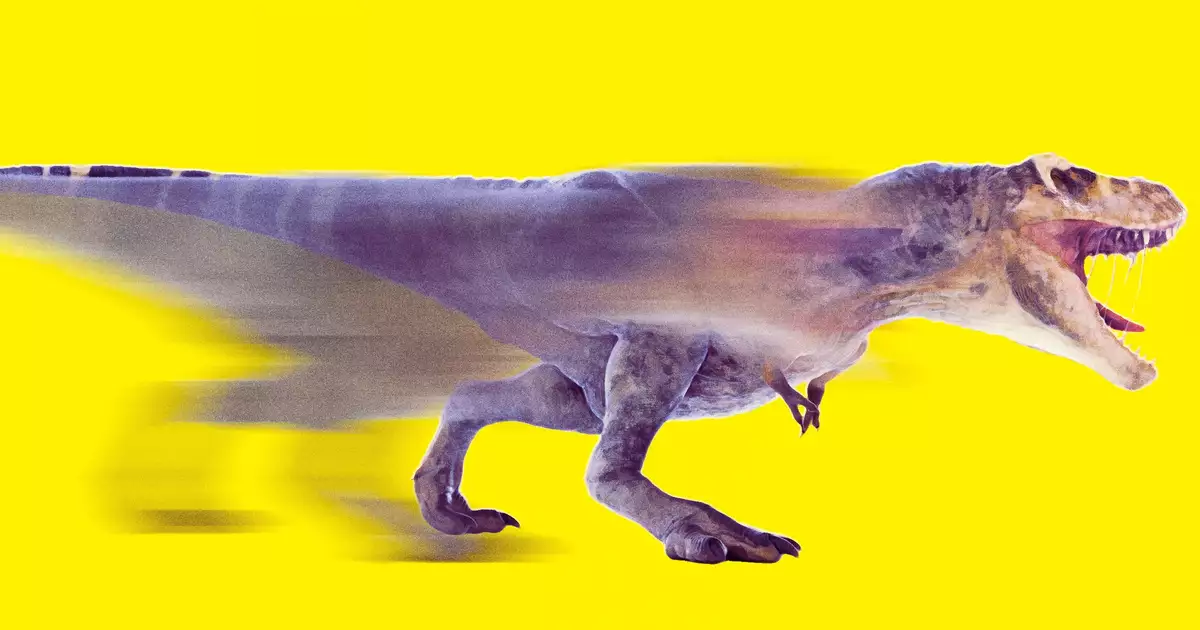
Beneath the sun-baked foothills west of Denver, a six-story tapestry of ancient footprints has yielded a revelation as profound as it is improbable: Colorado’s Dinosaur Ridge, long a mecca for fossil enthusiasts, was once the stage for a Cretaceous-era “lek”—a communal courtship arena where dinosaurs performed elaborate mating dances. The recent analysis of 35 newly scrutinized trackways not only illuminates the social choreography of prehistoric giants but also positions the site among a select trio of confirmed dinosaur leks globally, a distinction that amplifies both its scientific and cultural cachet.
From Fossil Scrapes to Digital Twins: The Tech Renaissance of Paleontology
The deciphering of these subtle backward, lateral, and rotational scrape marks was no feat of dusty guesswork. Instead, it demanded the precision of ultra-high-resolution photogrammetry and 3D surface modeling—technologies more often found in the arsenals of mineral prospectors, autonomous vehicle engineers, and precision agriculture specialists. As these imaging toolkits mature, their cross-industry applications proliferate:
- Real-Time Defect Detection: Algorithms honed on fossilized trackways can now spot micro-fractures in bridges or manufacturing lines, preempting failure before it strikes.
- Behavioral Pattern Reconstruction: The paleontologists’ task—reconstructing multi-agent dinosaur movement from static traces—mirrors the “inverse problem” faced by AI teams inferring consumer intent from digital breadcrumbs. Techniques like anomaly detection and pattern clustering are finding new homes in cybersecurity, logistics, and even swarm robotics.
The narrative power of Dinosaur Ridge extends beyond the scientific. The notion of dinosaurs moonwalking beneath modern Denver is irresistible fodder for VR and AR creators, fueling demand for photorealistic geological digital twins. Museums, ever mindful of preservation, can now monetize remote access, licensing immersive experiences to global audiences while sparing fragile sites from foot traffic.
Economic Gravity: Heritage Tourism, IP Monetization, and R&D Spillovers
Colorado’s paleontological tourism is already a billion-dollar engine, but the global rarity of a confirmed dinosaur lek promises to supercharge this flywheel. The precedent is clear: Australia’s Lark Quarry “dinosaur stampede” site triggered a fivefold surge in regional tourism within a decade of its discovery. For Dinosaur Ridge, the implications are manifold:
- Conservation Funding: Unique heritage status unlocks new avenues for state and federal grants, public–private partnerships, and destination branding campaigns.
- Intellectual Property Goldmine: Story rights spanning feature films, streaming series, gamified STEM curricula, and merchandising echo the multi-billion-dollar legacy of the Jurassic Park franchise. Studios and interactive-media firms that move early to secure paleontology advisory partnerships will enjoy authenticity advantages that generative-AI content shops struggle to replicate.
- Cross-Disciplinary Innovation: The lek model is already informing swarm-robotics algorithms—think SpaceX’s Starlink satellite choreography—and optimizing 5G small-cell node placement, where signal “attraction zones” mirror biological gathering points. Behavioral economists, meanwhile, are borrowing lek dynamics to fine-tune matchmaking and reduce churn in gig-economy platforms.
Executive Insights: Evolutionary Branding, ESG Alpha, and the Future of Natural History Data
For forward-thinking leaders, the implications extend well beyond the tourist dollar. The evolutionary continuity between dinosaurs and modern birds offers a branding asset—imagine consumer goods touting “150-million-year-old design principles,” or drones stabilized by flight algorithms inspired by ornithomimid tracks. Conservation technologies, powered by AI-driven surveillance, now serve as measurable ESG differentiators, aligning with the rising tide of biodiversity-focused investor scrutiny in both EU and U.S. regulatory frameworks.
The digitization of natural history datasets transforms them into IP assets, fueling a new wave of venture investment and M&A activity in geospatial-AI startups. As foundation models hunger for niche, domain-specific data, cloud platforms are poised to acquire firms offering turnkey “stratigraphic analytics.” Meanwhile, stricter excavation permitting and data-sharing rules are likely, setting precedents that could ripple into adjacent sectors—such as lithium mining for EV supply chains.
Talent strategies must adapt accordingly. Multinationals are already courting geoscientists fluent in machine learning, anticipating salary premiums reminiscent of the bioinformatics boom. And as public attention intensifies, so too does the risk of vandalism and fossil poaching—an opportunity for companies developing lidar-based security or blockchain-anchored provenance tracking, with applications extending far beyond paleontology.
What emerges from the dust of Dinosaur Ridge is not merely a colorful footnote in the annals of dinosaur lore, but a signal event for the convergence of imaging, analytics, and narrative. Those who recognize the layered potential—spanning immersive media, industrial AI, and evolutionary branding—will find themselves well-positioned to capture both reputational and financial capital in a world hungry for stories that bridge the ancient and the algorithmic.

 By
By


 By
By
 By
By

 By
By
 By
By







