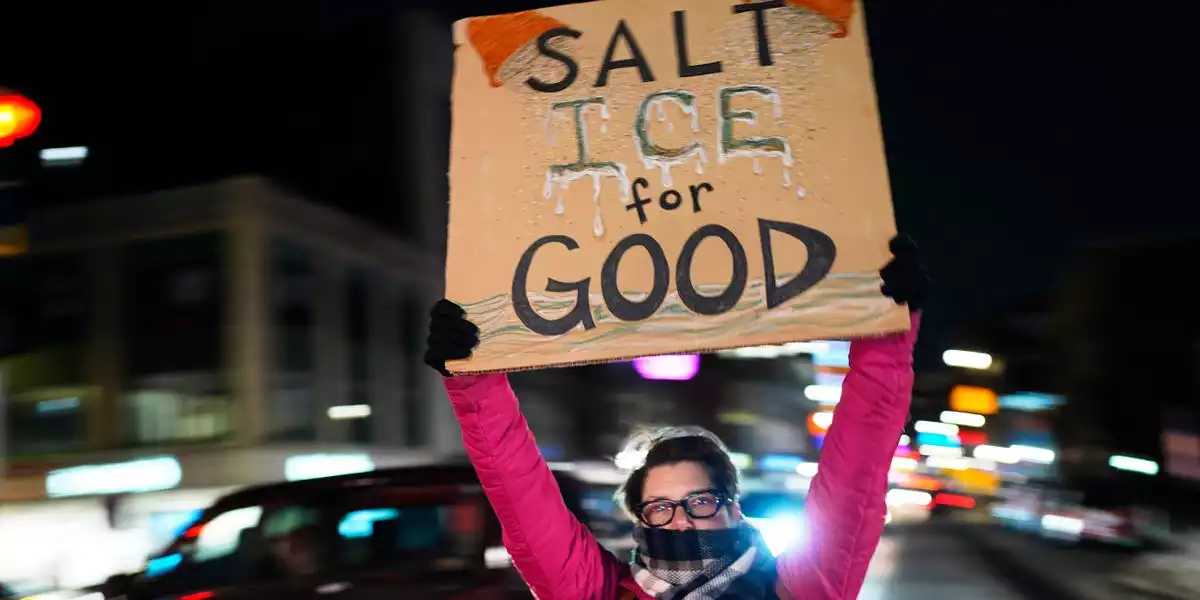

Main Street Activism: Portland’s Small Businesses Redraw the Lines of Stakeholder Capitalism
In the heart of Portland, Maine, a new chapter in American business activism is unfolding. Small-business owners—typically the quiet backbone of local economies—have stepped into the national spotlight, wielding overt anti-ICE messaging and transforming their storefronts into platforms for protest. “No ICE” signs, coordinated closures on demonstration days, and the sale of cause-driven merchandise to fund immigrant legal aid have become the new normal for this cluster of retailers. The move is striking not merely for its symbolism but for its operational audacity: these are not Fortune 500 titans, but neighborhood shops, now running a real-time experiment in the economics of social responsibility.
The Digital Wildfire: Reputation, Revenue, and the Algorithmic Battleground
The backlash was as immediate as it was algorithmically amplified. Within hours, a digital campaign of review-bombing swept through platforms like Google Maps and Yelp, dragging average ratings into the gutter and surfacing negative sentiment to anyone searching for a latte or a loaf of bread. For at least one retailer, the impact was catastrophic—a verified 91 percent drop in revenue during a key holiday weekend, a figure that reverberates through local supply chains and signals a broader demand shock.
This episode exposes the precariousness of digital reputation in an era where consumer platforms double as political battlegrounds. Algorithms, designed to surface the most “relevant” content, can rapidly escalate local controversies into national flashpoints. For small businesses lacking sophisticated digital-risk infrastructure, the velocity of reputational harm outpaces the slow grind of traditional crisis management. In this new reality, a single day’s activism can trigger a cascade of economic consequences, while the platforms themselves act as both judge and jury.
Labor, Immigration, and the Economics of Social Volatility
Portland’s hospitality and retail sectors already teeter on the edge of labor shortages, squeezed by demographic shifts and the lingering effects of pandemic-era churn. In this context, any stance—protective or hostile—toward immigrant workers becomes a high-stakes wager. Actions perceived as antagonistic to immigration enforcement can foster loyalty among staff but risk regulatory scrutiny, from I-9 audits to E-Verify compliance checks. Conversely, overt support for immigrant rights may alienate certain customer segments, but it also fortifies operational resiliency by stabilizing a workforce that is, for many businesses, existentially irreplaceable.
The microeconomics of this moment are instructive. A 91 percent sales drop, if echoed across other merchants, is not merely a blip—it is a high-frequency indicator of how sociopolitical turbulence can throttle discretionary spending. For economists and policymakers, such data offer a granular, real-time lens on how cultural conflict translates into regional GDP fluctuations and tax-revenue volatility.
Technology, Civic Innovation, and the Architecture of Modern Activism
Beneath the surface, a technological subtext is taking shape. Review-bombing is not just a PR problem; it is a case study in how sentiment-classification algorithms and moderation delays can inflict real P&L damage. The absence of predictive social-listening tools leaves businesses reactive, scrambling to contain the fallout rather than shaping the narrative.
Yet, innovation is not confined to the digital trenches. The distribution of multilingual constitutional-rights cards to immigrant staff and customers signals the emergence of a new civic-tech niche: lightweight, open-source platforms for legal literacy and incident reporting. Venture and philanthropic capital are likely to converge here, seeking SaaS solutions that blend know-your-rights content with location-based alerts and anonymized data collection.
Meanwhile, the rapid deployment of anti-ICE merchandise—leveraging print-on-demand and social-media microtargeting—exemplifies the rise of “cause-commerce.” These pop-up product lines can generate five- to six-figure sums in days, bypassing traditional nonprofit fundraising cycles and embedding activism into the very fabric of retail.
The Broader Canvas: ESG, Brand Activism, and the Road Ahead
Portland’s experiment is being watched closely, not only by local competitors but by national brands and investors attuned to the shifting sands of ESG (Environmental, Social, and Governance) expectations. The episode echoes historical precedents—Starbucks’ implicit-bias training closures, Patagonia’s public land campaigns, Ben & Jerry’s unapologetic policy stances—where short-term boycotts gave way to long-term brand loyalty, provided the activism was coherent and sustained.
As the 2024 U.S. election cycle intensifies, immigration will remain a polarizing force, amplifying the stakes for businesses caught in the crossfire of regulatory whiplash and consumer activism. The lesson from Portland is clear: the intersection of commerce, technology, and social policy is no longer theoretical. It is a lived reality, demanding that even the smallest enterprises institutionalize rapid-response frameworks, invest in data-driven reputation management, and craft stakeholder narratives that can withstand the volatility of the moment.
For those able to adapt, volatility is not merely a risk—it is a crucible for durable competitive advantage. The future of Main Street, and perhaps of American business itself, is being written in real time on the streets of Portland.


 By
By
 By
By
 By
By
 By
By

 By
By
 By
By

 By
By