


The Anatomy of a Battery Crisis: Foldables Face Their Defining Test
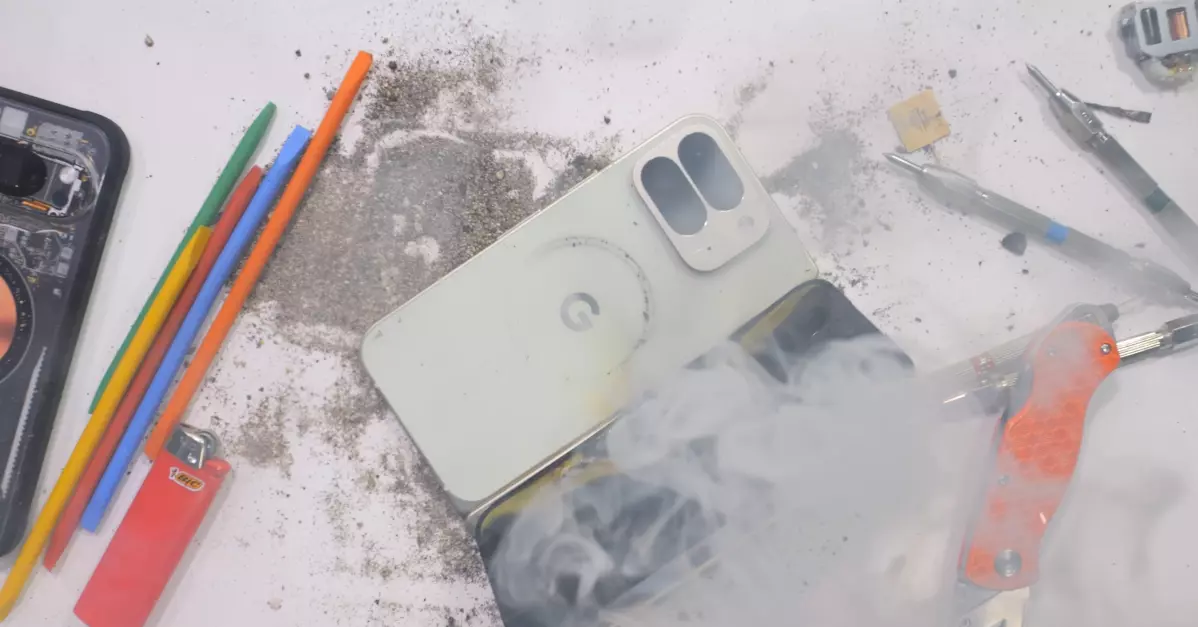
The spectacle of Google’s Pixel 10 Pro Fold catching fire during a viral durability test has ricocheted across the tech world, igniting more than just a lithium-ion cell. It has exposed the intricate, often invisible, fault lines running beneath the surface of next-generation smartphones—where ambition for ever-sleeker, AI-powered devices collides with the unforgiving physics of battery chemistry and mechanical engineering. As the foldable form factor edges from novelty to flagship, this episode is a crucible for the entire industry.
Engineering at the Edge: Battery Design Meets Mechanical Reality
Foldable smartphones represent a radical rethinking of device architecture. Their batteries, unlike those in traditional slabs, are split into ultra-thin, multi-segment packs that snake through dual housings. This design, while enabling the magic of a folding display, also introduces new vulnerabilities:
- Mechanical Flex and Tighter Packaging: Each bend and twist amplifies the risk of internal swelling and puncture, especially when the device is pushed beyond its intended limits—as it was in the viral stress test.
- Thermal Runaway Cascade: The incident followed a textbook lithium-ion failure: a breached separator led to an internal short, triggering a rapid temperature spike and, ultimately, a fiery venting event.
Despite compliance with industry standards like UN 38.3 and IEC 62133, the margin for error narrows dramatically in foldables. Current mitigation strategies—graphite or ceramic coatings and layered battery-management systems—are approaching their physical limits. While solid-state or semi-solid battery chemistries promise a leap in thermal stability, these innovations remain years away from mainstream adoption.
Compounding the challenge is the hinge mechanism. Even with IP68 ingress protection claims, the test revealed dust infiltration at the hinge—a latent threat that can propagate microcracks through ultra-thin glass and flex cables. For enterprise buyers, whose total cost of ownership calculations hinge on durability, such weaknesses are more than cosmetic.
Market Reverberations: Confidence, Competition, and Regulatory Reckoning
Foldables account for less than 2% of global smartphone shipments but punch far above their weight in revenue, driving over 10% of premium-segment growth. For Google, the Pixel line is not just a hardware play but a strategic gateway to its AI ecosystem. Any hint of safety risk threatens to erode both margins and the broader narrative of innovation.
- Warranty and Quality Costs: Publicized battery incidents, even if triggered under extreme conditions, force manufacturers to raise warranty reserves—impacting profitability and channel dynamics, from carrier subsidies to insurance premiums.
- Regulatory Pressures: In the post-Galaxy Note 7 era, authorities like the U.S. CPSC and European regulators are quick to act. New battery regulations will soon mandate real-time state-of-health reporting and traceability, pushing OEMs toward smarter battery management and more sustainable design.
Competitively, the stakes are escalating. Samsung, having survived its own battery crisis, now touts its risk management as a differentiator. Google’s stumble, however isolated, becomes fodder for rivals in carrier negotiations and enterprise bids. Meanwhile, Apple’s rumored foldable entry looms, with the Cupertino giant likely to set a new bar for reliability—or, at the very least, benefit from competitors’ missteps.
Strategic Imperatives: From Crisis Response to Long-Term Moats
The Pixel 10 Pro Fold incident is less a singular failure than a signal flare for the industry. The path forward demands a holistic, cross-disciplinary approach:
- Immediate Actions: Deploy software and battery-management patches to cap charge thresholds under abnormal flexing, and communicate testing protocols transparently to rebuild trust.
- Medium-Term Innovation: Accelerate co-development of solid-electrolyte batteries with suppliers, aiming for a 30% improvement in thermal tolerance tailored to foldable geometries.
- Long-Term Engineering: Rethink hinge architecture—incorporating dust-ejecting micro-channels and magnetically sealed cable pathways—to align with next-generation durability standards.
Risk management must also evolve. Proactive engagement with regulators and carriers can preempt costly flight restrictions, while expanding failure analysis to include influencer-style stress tests will ensure that viral moments do not become existential threats. Messaging, too, must shift: emphasizing end-to-end safety—spanning cell chemistry, mechanical containment, and AI-driven thermal management—will be key to reassuring both enterprise and consumer markets.
For investors and boards, battery safety is no longer a compliance checkbox but a strategic lever. Allocating R&D capital to interdisciplinary teams—blending materials science, mechanical engineering, and data analytics—will be essential to building a durable competitive moat as foldables scale.
The Pixel 10 Pro Fold fire is unlikely to trigger an immediate recall, but it crystallizes a deeper truth: the race to deliver thinner, smarter, more flexible devices is running up against the hard limits of legacy battery technology. Those who seize this moment to rethink safety, accelerate battery innovation, and reimagine device architecture will not only weather the storm—they will define the future of the premium smartphone market.

 By
By
 By
By

 By
By
 By
By
 By
By

 By
By







