


A New Maritime Epoch: The Philippines’ Frigate Leap and the Indo-Pacific’s Shifting Balance
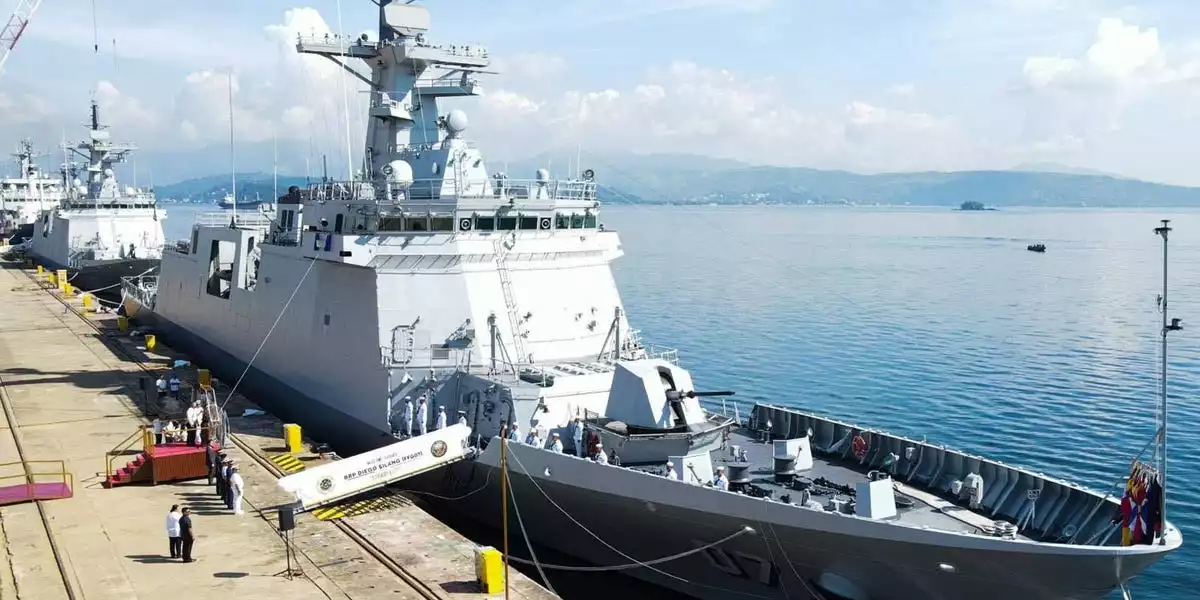
The Philippine Navy’s recent $550 million order for two HDF-3200 hybrid guided-missile frigates from South Korea’s HD Hyundai Heavy Industries signals a watershed moment in Southeast Asian naval modernization. The incoming BRP Miguel Malvar and BRP Diego Silang are not merely new hulls—they represent a profound recalibration of Manila’s deterrence posture in the contested South China Sea, and a harbinger of deeper industrial and technological transformation across the archipelago.
Frigates as Force Multipliers: Technology, Architecture, and Integration
The HDF-3200 platform is a leap beyond the Philippine Navy’s traditional surface fleet. These vessels, equipped with 16-cell vertical launch systems (VLS) capable of deploying VL MICA surface-to-air missiles and SSM-700K C-Star anti-ship missiles, mark the Navy’s first foray into layered, beyond-line-of-sight defense. The hybrid propulsion system, open-architecture combat management, and flexible mission bays are not only about performance—they are about future-proofing.
- Sensor Fusion and ISR Synergy: The integration of AESA radars and advanced electro-optical suites dovetails with Manila’s ambitions for a maritime ISR (intelligence, surveillance, reconnaissance) network, including satellites and high-altitude drones. For the first time, the Philippine Navy will possess a viable sensor-to-shooter loop, extending its reach well beyond the horizon.
- Plug-and-Fight Interoperability: Data-fusion protocols, quietly modeled on NATO standards, lay the groundwork for seamless operations with U.S., Australian, and Japanese task forces. This is not just about hardware; it’s about embedding the Philippines within a broader Indo-Pacific security architecture.
The offset package from Hyundai—rumored to include shipyard process transfer to Subic Bay—signals Manila’s intent to ascend the regional naval production value chain. Early exposure to VLS, CMS coding, and weapons integration opens doors for local software and tech firms, nudging the Philippine tech sector toward defense innovation.
Economic Stimulus, Industrial Rebalancing, and the South Korean Playbook
Manila’s defense procurement is unfolding against a backdrop of cooling household consumption and elevated interest rates. By front-loading capital goods purchases, the government injects fiscal stimulus without stoking wage inflation—a deft macroeconomic maneuver. For South Korea, the deal is a textbook application of its export strategy: concessional financing, training packages, and local assembly, echoing its recent successes in Poland and elsewhere.
- Supply Chain Diversification: By anchoring maintenance and partial assembly in the Philippines, Hyundai not only hedges against bottlenecks at home but also seeds local MRO (maintenance, repair, overhaul) capabilities. This could position Subic Bay as a future hub for allied fleet support across the first island chain.
- Semiconductor and Component Security: The advanced seekers and radar modules in the frigates’ missile systems rely on sub-6 GHz GaN chips—a sector where South Korea is rapidly scaling. Any disruption in global chip supply, whether from U.S. export controls or Chinese rare-earth gambits, will reverberate through these high-tech weapons, linking naval modernization to the geopolitics of semiconductors.
Strategic Calculus: Deterrence, Escalation, and the New Rules of Engagement
The arrival of vertical-launch-capable frigates fundamentally alters the strategic equation in the South China Sea. These ships raise the cost of coercion for the PLA Navy, introducing a credible, if ambiguous, deterrent without directly threatening the Chinese mainland. The Philippine Archipelagic Defense Concept—anchored in missiles, ISR, and multinational exercises—mirrors the U.S. Pacific Deterrence Initiative’s emphasis on distributed lethality and expeditionary basing.
- Escalation Dynamics: More capable Philippine ships complicate Beijing’s calculus for “grey-zone” tactics such as water-cannoning or ramming. The risk calculus shifts: a misstep at sea could now escalate rapidly, spilling into cyberspace or triggering economic retaliation.
- Maritime Security and Economic Stability: Enhanced naval reach not only protects sovereignty but also secures vital subsea cables and future energy infrastructure—critical for the Philippines’ digital and energy transformation. Meanwhile, a more robust navy may help stabilize war-risk insurance premiums for commercial shipping, indirectly supporting regional trade flows.
Boardroom Implications: Capital, Talent, and the ESG Paradigm
For decision-makers, the ripple effects are manifold:
- Capital Allocation: Firms with exposure to shipbuilding, electronics, or maritime services should anticipate increased demand for defense procurement and training, with civilian spillover.
- Technology Partnerships: The open-standards architecture invites early engagement by AI, cybersecurity, and predictive maintenance providers—before proprietary ecosystems lock in.
- Geostrategic Hedging: Multinationals must reassess supply-chain resilience in light of potential escalation, but also recognize that a stronger Philippine deterrent may reduce the likelihood of disruption.
- Talent and ESG: Expect a surge in STEM scholarships and R&D initiatives linked to naval tech. While defense spending draws ESG scrutiny, maritime domain awareness also safeguards food security and blue-carbon ecosystems—an emerging narrative for responsible investment.
The HDF-3200 acquisition is more than a procurement milestone; it is a fulcrum for synchronizing technological, economic, and strategic ambitions in the Indo-Pacific. Those who grasp the interplay of chips, ships, and shifting alliances will find themselves well-positioned to navigate—and shape—the region’s evolving security-technology landscape.

 By
By
 By
By
 By
By
 By
By
 By
By


 By
By







