

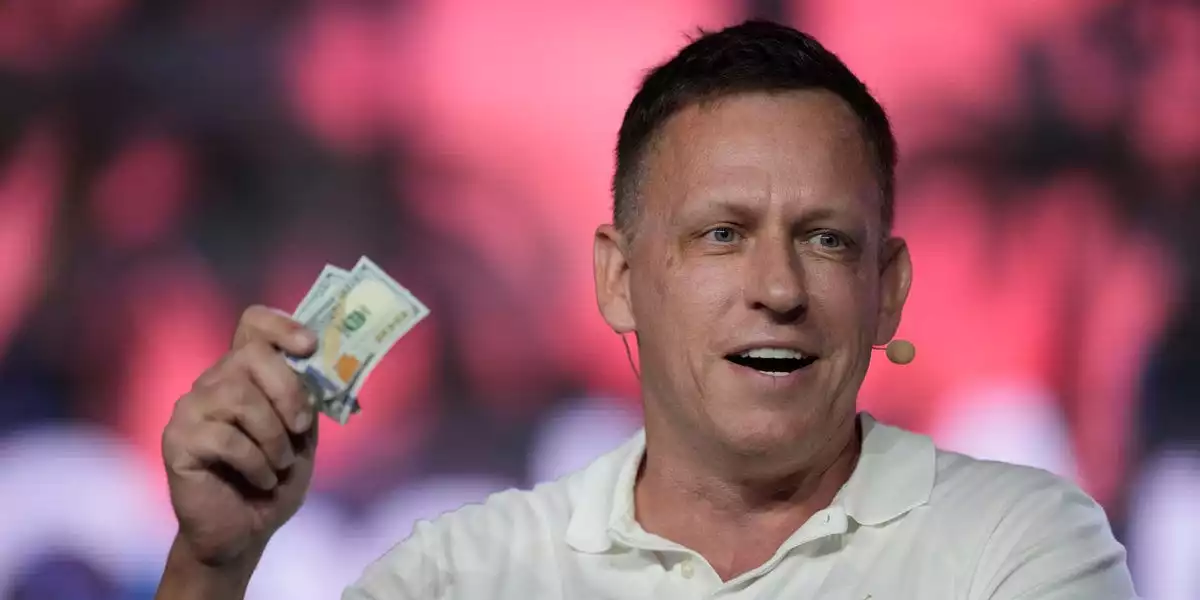

Thiel’s Tactical Shift: Political Capital as Venture Strategy
Peter Thiel, the PayPal co-founder and perennial Silicon Valley iconoclast, has reemerged on the political finance scene with a distinctly surgical approach. After a conspicuous two-year absence following the 2022 midterms—where his high-profile bets on Senate candidates Blake Masters and J.D. Vance yielded mixed returns—Thiel’s latest move is less about spectacle and more about precision. In February, he quietly funneled $852,200 through House Speaker Mike Johnson’s “Grow the Majority” committee. Nearly 90 percent of those funds were rapidly redeployed into a mosaic of competitive House races, key state GOP organizations, and national Republican campaign arms.
This is not a return to the old playbook. Thiel’s new posture eschews the high-variance, media-saturated contests of the Senate and White House in favor of a diversified, venture-style allocation across dozens of House districts. The strategy echoes his earliest instincts as a venture capitalist: spread risk, maximize optionality, and seek asymmetric upside. Each $7,000 tranche to 29 individual House members is a seed-stage bet on the future regulatory environment—a portfolio designed for resilience rather than notoriety.
The Legislative Lever: Where Tech Policy Is Forged
Thiel’s recalibration is not merely financial; it is fundamentally strategic. In the current climate, the House of Representatives—not the presidency—wields disproportionate influence over the regulatory fate of America’s most dynamic sectors. Congressional committees are the crucible where AI oversight, export controls, cryptocurrency frameworks, and defense appropriations are hammered out. For Thiel, whose investment portfolio spans Palantir, Anduril, Varda, and a constellation of AI ventures, the locus of power is clear: committee chairs and subcommittee gatekeepers, not the bully pulpit.
- AI and Dual-Use Technology: The past two years have witnessed a surge of venture capital into defense-tech and frontier AI start-ups. As bipartisan anxiety over technological rivalry with China intensifies, Congress has become the primary arena for debates over export controls, quantum cryptography, and procurement pipelines. Thiel’s targeted donations are a calculated hedge—an inexpensive insurance premium to safeguard the incentives and budgetary flows underpinning these sectors.
- Crypto and Decentralized Finance: With the GOP House leadership favoring a lighter regulatory touch on digital assets, Thiel’s support for select candidates positions him to influence the shape of stablecoin and token-issuance legislation. Palantir’s expanding footprint in compliance analytics only deepens the strategic logic.
- Antitrust and Content Moderation: Republican priorities have shifted from sweeping antitrust actions to a more nuanced skepticism of content moderation by tech giants. This pivot favors emergent, decentralized business models—precisely the kind of innovation Thiel has long championed.
The Broader Signal: Implications for Tech and Policy
Thiel’s tactical pivot is more than a personal recalibration; it is a signal to a new generation of tech financiers. His move may embolden other “tech contrarians”—from AI luminaries to crypto billionaires—to bypass traditional PACs and invest directly in granular legislative battles. The result could be a fragmentation of campaign finance, with capital flowing to where it can exert the most targeted influence.
This strategic realignment is also mirrored in regional economic development. Thiel’s donations to GOP parties in Florida, Texas, Ohio, and Arizona parallel his personal migration from California and the rise of “red-state tech corridors.” These states are now locked in competition for semiconductor fabs, data-center credits, and defense innovation hubs—an economic geography increasingly shaped by legislative incentives.
On immigration, Thiel’s stance is characteristically nuanced. While the GOP at large remains gridlocked on broader immigration reform, there is momentum within the House for targeted “startup visa” and STEM carve-outs—essential for maintaining America’s edge in AI talent. Thiel, himself an immigrant, has consistently advocated for such specialized pathways.
Navigating the New Political Terrain: Guidance for Leaders and Investors
For technology executives, the message is clear: the next wave of regulation will be forged in committee rooms, not on the campaign trail. Monitoring leadership changes on the House Energy & Commerce and Armed Services committees will be essential, as these bodies will shape the AI regulatory landscape through 2025 and beyond. Defense-tech scale-ups should align their product roadmaps with accelerated procurement pathways, anticipating sustained appropriations growth irrespective of presidential outcomes.
Enterprise strategists should reassess geographic capital allocation models, as GOP-led states are poised to offer continued incentives for advanced manufacturing and energy-intensive infrastructure. Meanwhile, a more targeted antitrust environment may open temporary windows for strategic M&A among smaller AI firms.
For investors, Thiel’s pivot from macro to micro political investing is a leading indicator: the next legislative cycle will be defined by incremental, sector-specific policy shifts rather than sweeping ideological overhauls. This environment favors bottom-up equity selection and rewards those attuned to the nuances of campaign finance as a barometer of policy risk.
Thiel’s reentry—measured, methodical, and unmistakably strategic—signals a new era in the intersection of technology, capital, and politics. It is an era that demands agility, foresight, and a granular understanding of the legislative levers that will shape the future of innovation.

 By
By

 By
By
 By
By
 By
By


 By
By







