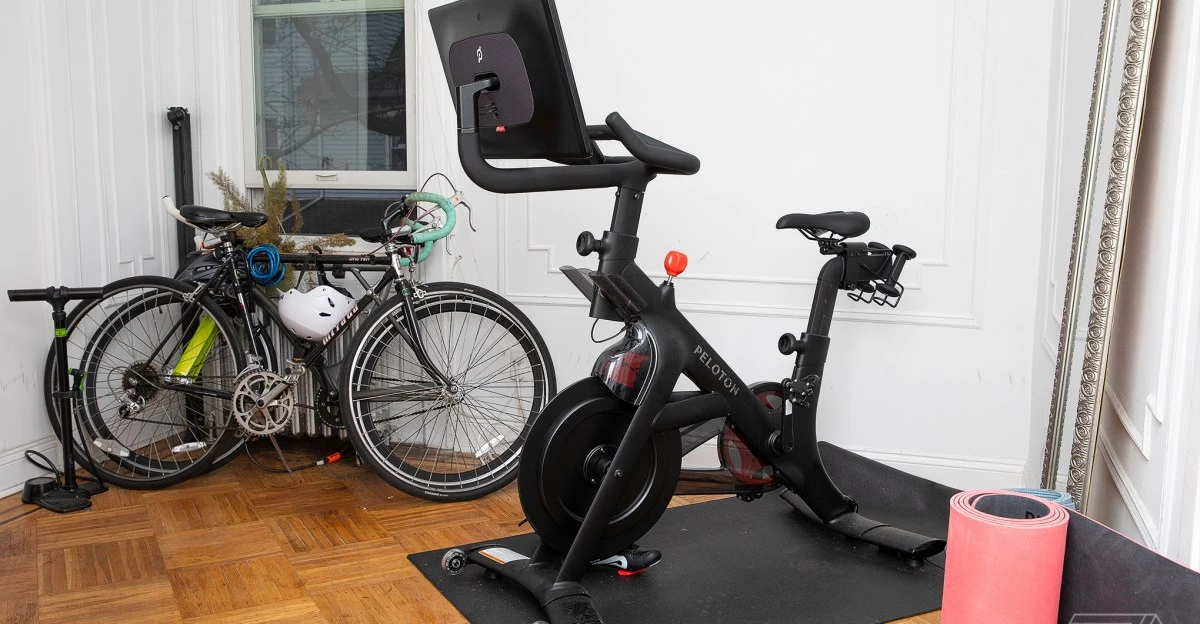

When Hardware Ambitions Meet the Realities of Connected Fitness
Peloton’s latest voluntary recall—encompassing over 800,000 first-generation Bike Plus units—arrives at a pivotal juncture for the company and the broader connected fitness landscape. The recall, triggered by seat-post failures that have resulted in documented injuries, casts a sharp light on the intricate interplay between industrial design, digital innovation, and the unforgiving expectations of a maturing market. As Peloton urges owners to self-install redesigned seat posts, the episode raises urgent questions about reliability, risk, and the evolving economics of hardware-centric platforms.
Anatomy of a Recall: From Metallurgy to User Experience
The technical roots of Peloton’s recall trace to a subtle but consequential flaw in the cast-aluminum seat post. Unlike its predecessor, the Bike Plus model features a more complex casting to accommodate electronic height-tracking sensors—a design divergence that introduced new stress points at the saddle rail clamp. Early diagnostics suggest that the failure mode is classic cyclic fatigue, exacerbated by the high-torque, off-saddle riding positions championed in Peloton’s “power zones.”
This is not merely a story of metallurgy gone awry. The decision to ship a component-level remedy, rather than swap out entire bikes, reflects both confidence and calculation. By isolating the fix to the seat post, Peloton minimizes logistical and environmental costs, but also transfers the risk—and responsibility—of installation to its customers. It’s a move that signals faith in the product’s overall integrity, yet subtly shifts the narrative from corporate accountability to consumer self-sufficiency.
Financial Reverberations and the Shifting SaaS Narrative
The direct financial impact of the recall—estimated at $45–55 per unit—translates to a gross outlay in the range of $37–46 million. While not existential for a company of Peloton’s scale, the timing is inauspicious. The outlay lands in a quarter already pressured by tepid hardware demand and the company’s ongoing transition from hardware sales to high-margin subscription revenues.
Peloton’s recurring recalls threaten to undermine its strategic repositioning as a “connected-fitness SaaS” provider. With roughly 40% of platform annual recurring revenue (ARR) tied to Bike Plus subscriptions, any delay in remedying hardware faults risks elongating churn windows and eroding digital revenue streams. In the eyes of capital markets, the specter of repeated quality lapses may evoke parallels to the early days of Tesla’s Autopilot recalls—inviting a recall-adjusted discount and raising Peloton’s cost of capital at a time when scale-up investments in AI-driven coaching and global expansion are paramount.
Regulatory Winds and the Competitive Chessboard
The recall arrives amid heightened regulatory scrutiny of smart-home fitness devices. The U.S. Consumer Product Safety Commission (CPSC) is increasingly proactive, mirroring the assertiveness seen in the autonomous vehicle sector. For Peloton and its peers, this signals a future where design validation and safety reporting are no longer afterthoughts but front-line imperatives. The risk calculus now extends beyond mechanical reliability to encompass the digital features—sensors, AI-driven coaching, and user data—that define the modern fitness experience.
Competitively, the recall erodes one of Peloton’s historical moats: its reputation for premium industrial design. As software-led ecosystems like Apple Fitness+ and Lululemon’s Mirror gain traction, hardware missteps risk nudging high-value users toward equipment-agnostic platforms. Meanwhile, rivals such as NordicTrack and Echelon must scrutinize their own quality assurance regimes, lest the contagion of consumer doubt spread across the category.
Strategic Lessons for the Era of Hybrid Business Models
The Peloton episode offers a cautionary tale for any technology firm straddling the hardware-software divide. Reliability metrics—mean time between failures, field-failure rates—must be treated as board-level KPIs, not merely engineering footnotes. Investors and activists alike are likely to demand transparency reminiscent of automotive industry standards.
Moreover, the recall underscores the necessity of business model agility. Decoupling high-capex hardware cycles from the rapid iteration of software services can buffer against the volatility of physical product risks. For Peloton, the future may hinge less on the perfection of its next bike, and more on the stickiness of its AI-powered coaching and the resilience of its subscription ecosystem.
As the connected fitness sector matures, operational excellence will be measured not just in innovation, but in the choreography of design, digital engagement, and regulatory foresight. In this new era, a fractured seat post is more than a mechanical failure—it is a fissure that tests the very foundations of trust, strategy, and brand narrative.

 By
By
 By
By


 By
By
 By
By
 By
By
 By
By