

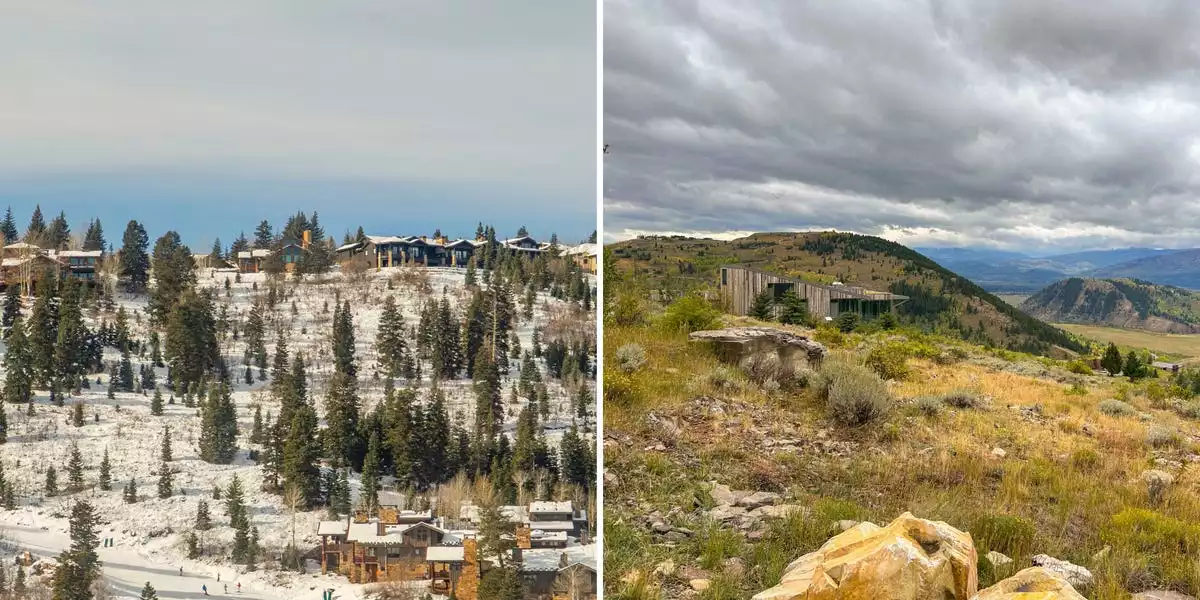

Divergent Destinies: Park City and Jackson Hole at the Crossroads of Wealth, Work, and Innovation
The Intermountain West, long celebrated for its alpine vistas and rarefied air, is now a crucible for a new American experiment—one where capital, connectivity, and community are being reimagined in real time. Park City, Utah, and Jackson Hole, Wyoming, stand as emblematic opposites in this unfolding narrative: two mountain towns whose shared allure belies sharply divergent economic and technological trajectories.
The New Geography of Wealth: Scarcity, Liquidity, and Inequality
The past half-decade has rewritten the playbook for high-altitude real estate. Fueled by pandemic-era monetary policy and a tidal wave of fiscal transfers, the ultra-wealthy have turned their gaze—and their balance sheets—toward the Rockies. Both Park City and Jackson Hole have seen property values soar, but the underlying market dynamics diverge in telling ways.
- Jackson Hole is the archetype of scarcity economics. With 97% of Teton County locked in public hands, every available parcel becomes a collector’s item, a store of wealth as much as a home. The result: a local Gini coefficient rivaling Monaco’s, and a top 1% whose earnings outstrip the bottom 99% by a factor of 142. Here, the economy is less an engine of innovation than a fortress of legacy wealth and exclusivity.
- Park City, by contrast, is leveraging its proximity to Salt Lake City’s “Silicon Slopes” to cultivate a more diversified, tech-forward ecosystem. While inequality persists, the presence of tech-sector wages and a growing professional class has helped reinforce public services and municipal resilience. The city’s zoning flexibility and brownfield opportunities near the Jordanelle corridor invite a broader spectrum of development—workforce housing, mixed-use tech campuses, and more.
For institutional investors, these distinctions matter. Park City offers a “growth plus yield” profile, while Jackson Hole is a pure play on capital preservation through engineered scarcity. Blending both approaches may prove a prudent hedge as the national housing market cools.
Talent, Technology, and the Amenity Arms Race
Remote work has redrawn the map of desirability. Senior engineers and executives, newly liberated from urban commutes, are seeking “quality-of-life arbitrage”—and Park City is capitalizing. With one-hour access to a major international airport and robust fiber connectivity, it has become a magnet for remote-first talent and venture capital, echoing Boulder’s startup renaissance a decade ago.
- Park City’s flywheel: Venture capital from Silicon Slopes spills into local coworking spaces, fueling meet-ups, angel syndicates, and a virtuous cycle of startup formation. The city’s infrastructure—both digital and physical—translates lifestyle into a structural recruiting advantage.
- Jackson Hole’s constraints: Limited broadband redundancy and a smaller permanent workforce cap its appeal for tech firms. The town’s economic gravity is rooted in its natural beauty and luxury brand, not in a clustering of innovation.
The next wave of opportunity lies in the interplay between technology and place. PropTech and construction-tech startups can pilot modular, climate-resilient builds in Park City’s permissive environment before scaling nationwide. Meanwhile, telecom operators eye Jackson Hole’s broadband gaps as a greenfield for low-latency 5G and satellite backhaul—an ESG-friendly alternative to trenching fiber through federal lands.
Policy, Risk, and the Battle for Community Fabric
As these towns ascend the luxury ladder, social tensions simmer beneath the surface. Service-worker displacement, NIMBY activism, and the specter of Aspen-style “hollowing out” loom large. Policymakers are responding with a toolkit of short-term rental caps, transfer taxes, and inclusionary zoning—yet the efficacy of these interventions remains uncertain.
- Climate volatility is the wild card. Snowpack variability and wildfire smoke threaten the very amenities underpinning property valuations. Insurers are already re-pricing risk, and self-insured captives may soon become mandatory for high-end developments.
- Social license is at risk. Widening inequality could slow development timelines, inject political risk, and erode the community fabric that made these towns desirable in the first place.
Forward-looking municipalities are experimenting with public-private partnerships—P3 broadband projects, green bonds for transit, equity-sharing housing models—to balance growth with resilience. Early engagement in these initiatives, as Fabled Sky Research notes, may be the key to securing both preferential entitlements and reputational goodwill.
The Polycentric Future: Beyond the Mountain Town Archetype
Park City and Jackson Hole are not alone. Bozeman, Bend, and Truckee are watching—and borrowing liberally from the Park City playbook. The rise of a regional network of amenity-rich tech towns could diffuse talent, moderate price spikes, and reposition the Intermountain West as a polycentric innovation corridor.
For executives and investors, the lesson is clear: the choices made in these enclaves over the next 24 to 36 months will determine whether they mature into sustainable, innovation-driven communities or ossify as exclusive preserves of the ultra-rich. The intersection of natural capital, human capital, and bold municipal policy is where the next chapter of American prosperity will be written.

 By
By
 By
By
 By
By
 By
By



 By
By







