


A high-profile resignation exposes the fault lines in defense-linked AI
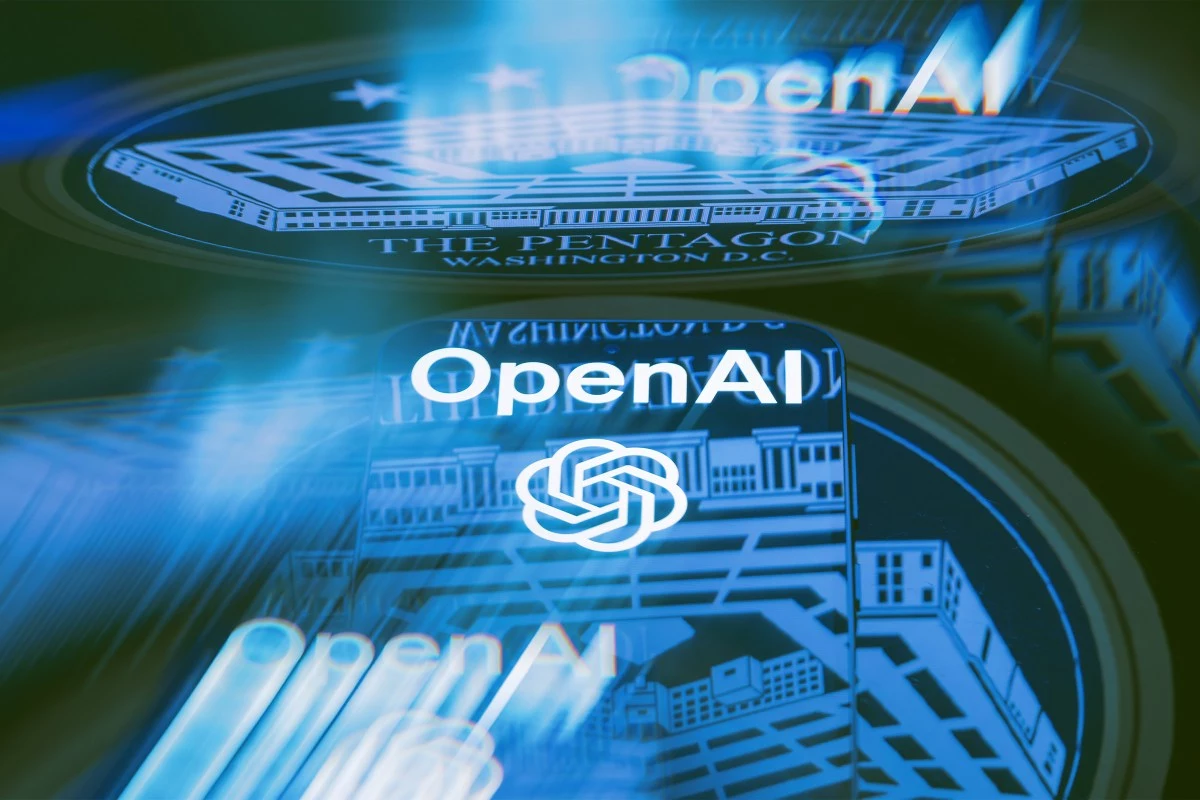
Caitlin Kalinowski’s resignation from OpenAI lands as more than a personnel change; it is a signal event in the accelerating collision between frontier AI, robotics, and national security procurement. As a senior hardware and robotics leader, Kalinowski sits close to the “dual-use” core of modern AI—where the same advances that enable safer factories, better assistive devices, and more capable research tools can also be repurposed for surveillance and weaponization.
Her stated objections—mass domestic surveillance without judicial oversight and lethal autonomous systems without meaningful human intervention—crystallize the ethical anxieties that have hovered around defense partnerships for years, now sharpened by the scale and generality of today’s models and robotics stacks. The controversy is amplified by OpenAI’s initial framing of the Pentagon agreement as serving “all lawful purposes,” language that may be legally tidy yet socially combustible. In the public mind, “lawful” does not automatically translate to “legitimate,” especially where civil liberties and automated force are concerned.
Just as consequential is what the resignation implies internally: that the governance mechanisms meant to adjudicate high-stakes deployments may not be perceived as credible by the very engineers and executives building the systems. In an industry where trust is an input to innovation—affecting hiring, partnerships, and adoption—this kind of rupture becomes a strategic variable, not merely a cultural one.
Dual-use robotics and the governance gap: why this debate is technically different now
The OpenAI–U.S. Department of Defense agreement spotlights a reality that many technology leaders privately acknowledge: advanced AI hardware and robotics are inherently dual-use. Once a platform can perceive, plan, and act in the physical world—especially at scale—its downstream applications become difficult to constrain through intent alone.
Several technical dynamics make today’s moment distinct:
- General-purpose capability: Modern AI systems are increasingly adaptable across domains. A perception stack optimized for navigation can be repurposed for target identification; a coordination system for warehouse robots can be adapted for contested logistics.
- Deployment velocity: Software-defined systems can be updated rapidly, meaning safeguards must be resilient not only at launch but across continuous iteration.
- Opacity and accountability: As autonomy increases, post-hoc explanations and auditability become harder—raising the stakes for upfront constraints, logging, and oversight.
Kalinowski’s critique points to a broader governance void: the absence of widely accepted, enforceable standards for domestic surveillance boundaries, human-in-the-loop requirements, and fail-safe behavior in autonomous systems. Contractual language matters, but so do implementation details—technical controls, audit trails, red-team protocols, and independent review. Without these, firms risk two failures at once: engineering failure in the field and legitimacy failure in the public sphere.
OpenAI CEO Sam Altman’s reported commitment to tighter safeguards—explicitly forbidding domestic surveillance and autonomous weaponry—reads as an attempt to translate ethical intent into contractual constraint. The open question for customers, employees, and regulators is whether those safeguards will be verifiable, enforceable, and durable under evolving mission requirements.
Competitive positioning: Anthropic’s refusal, OpenAI’s recalibration, and a bifurcating market
The competitive subtext is impossible to miss. Anthropic, OpenAI’s principal rival, reportedly declined similar U.S. military contracts based on ethical red lines—only to be labeled a “supply chain risk” by the Pentagon. That characterization illustrates how quickly ethical posture can be reframed as operational vulnerability in a national security context.
At the same time, the market appears to be registering reputational signals. The summary notes customer migration toward Anthropic’s Claude, including momentum in app-store rankings—an imperfect proxy, but a visible one. In AI, where switching costs can be lower than in traditional enterprise software and where brand trust influences procurement committees, reputational drift can translate into measurable revenue impact.
This sets up a plausible near-term bifurcation in the AI ecosystem:
- Defense-aligned platforms may optimize for classified environments, bespoke controls, and government procurement pathways—potentially benefiting from scale, funding stability, and strategic entrenchment.
- Morally constrained platforms may differentiate through stricter use policies, auditability, and governance-first product design—appealing to sectors sensitive to legitimacy and liability, such as healthcare, finance, education, and civil administration.
Neither path is cost-free. Defense alignment can trigger consumer backlash and talent attrition; strict refusal can invite exclusion from government supply chains and geopolitical pressure. The strategic challenge is not merely choosing a lane, but building a portfolio and governance model that can withstand scrutiny from customers, employees, regulators, and the public simultaneously.
Talent activism and the new board-level risk: when engineers become stakeholders
The open letter signed by more than 1,000 employees across OpenAI and Google underscores a structural shift: internal stakeholder activism is now a force multiplier in AI governance. In a labor market defined by scarce, high-leverage technical talent, resignations and coordinated dissent are not symbolic; they can slow roadmaps, complicate recruiting, and raise the cost of execution.
For boards and executives, the lesson is that defense-related AI strategy can no longer be treated as a narrow business development decision. It is a multi-constituency risk assessment spanning:
- Talent retention and hiring velocity
- Enterprise customer trust and procurement risk
- Regulatory exposure and future compliance obligations
- Geopolitical leverage, including supply-chain inclusion or exclusion
- Brand equity across consumer and commercial segments
The most durable response is likely institutional rather than rhetorical: independent oversight structures, clear product segmentation between commercial and defense-grade offerings, and technical guardrails that are auditable in practice—not just promised in principle. As AI becomes a core instrument of state power, companies will face intensifying pressure to participate. The firms that endure will be those that can articulate—and operationalize—where participation ends, how constraints are enforced, and who gets to verify that those limits are real.

 By
By
 By
By

 By
By
 By
By
 By
By
 By
By








