


The Rise of Conversational Intranets: OpenAI’s Bid to Redefine Enterprise Knowledge Work
In the evolving theater of enterprise technology, OpenAI’s latest move—unveiling “Company Knowledge” for ChatGPT’s Business, Enterprise, and Education tiers—signals a decisive leap beyond the era of generic chatbots. This is not just another AI assistant. It is a federated, contextually aware, and citation-rich retrieval engine, one that promises to dissolve the boundaries between siloed repositories and the collective memory of the modern organization.
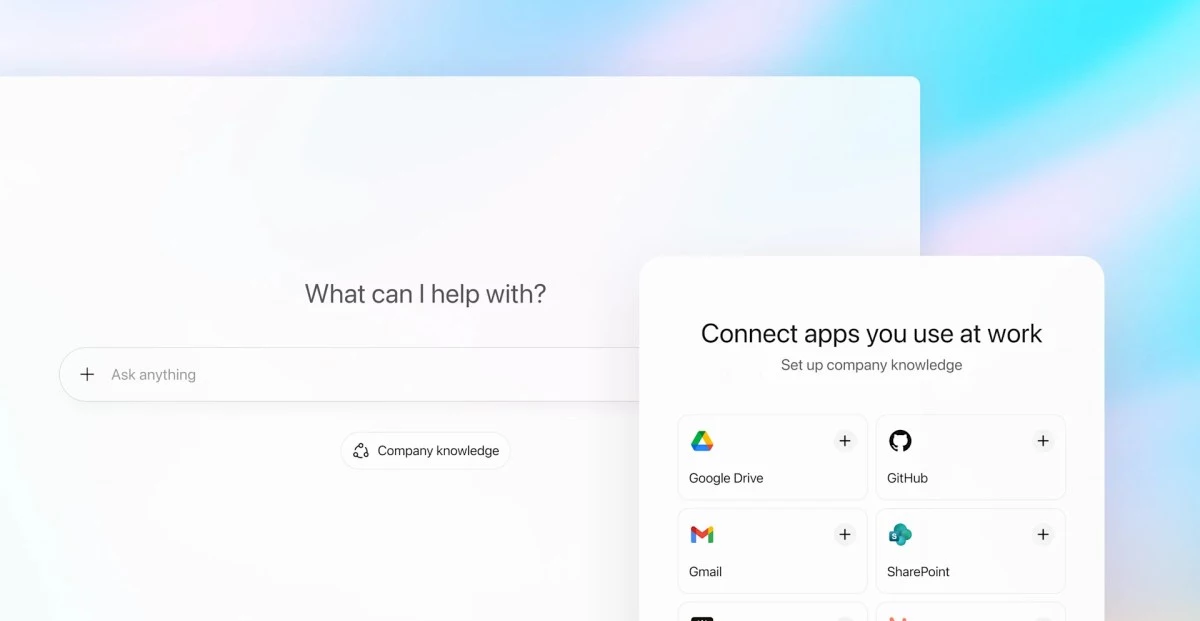
At its core, “Company Knowledge” transforms ChatGPT into a living, breathing intranet—one that can parse Slack threads, SharePoint wikis, Google Drive folders, and GitHub repositories, then return answers in natural language, all with the provenance and auditability demanded by the enterprise. The implications for productivity, software economics, and the very architecture of organizational memory are profound.
Retrieval-Augmented Generation and the End of Siloed Knowledge
The technical heart of this offering is a sophisticated Retrieval-Augmented Generation (RAG) pipeline, supercharged by a fine-tuned GPT-5 model. Unlike traditional search, which merely indexes and regurgitates, this architecture enables the model to “think while it searches.” It reasons, retrieves, and regenerates, minimizing hallucinations and supporting long-context queries without ballooning costs.
Key differentiators include:
- Federated Connectors: By authenticating via native APIs rather than bulk data uploads, OpenAI sidesteps many data-residency headaches and narrows the attack surface—a marked departure from legacy knowledge-base imports.
- Citations as Trust Anchors: Every answer is traceable to its source, a feature that preempts enterprise demands for auditable AI and sets the stage for granular policy controls and regulatory compliance.
- GPT-5 Reserved for Enterprise: OpenAI’s strategic decision to keep its most advanced weights exclusive to high-value enterprise clients mirrors the segmentation seen in the hardware world, sharpening its competitive edge.
This is not merely a technical upgrade. It is a reimagining of how organizations access, validate, and act upon their own institutional knowledge.
Economic Leverage and the New Productivity Paradigm
The economic rationale for “Company Knowledge” is compelling. Knowledge workers, particularly in professional services, spend up to a third of their week hunting for documents or piecing together institutional memory. Automating even half of this time translates into a substantial uplift in billable capacity or the opportunity to reallocate headcount to higher-value tasks.
Consider the downstream effects:
- Software Spend Optimization: By collapsing the need for separate intranet search, collaboration, and knowledge-management tools, enterprises could free up 5–10% of their digital workplace budgets. Vendors will now vie to recapture this capital with premium AI add-ons.
- Wage Inflation Hedge: In a labor market defined by scarcity and rising compensation, AI-powered search offers a buffer—augmenting staff without expanding payroll, a proposition that resonates with CFOs navigating economic volatility.
- Organizational Memory Re-Platforming: As AI concierges flatten knowledge silos, traditional intranets and information gatekeeping roles face existential pressure. The locus of value shifts toward prompt engineering and corpus stewardship, heralding a new class of knowledge professionals.
The ripple effects extend to the competitive landscape. OpenAI’s cross-cloud retrieval subtly courts enterprises outside Microsoft’s orbit, even as it deepens its own enterprise ARR. Integration with platforms like GitHub hints at a unified knowledge experience that could disrupt niche DevOps vendors and reshape software development workflows.
Governance, Compliance, and the Road Ahead
With great power comes great scrutiny. The federated nature of “Company Knowledge” invites rigorous examination from regulators across the EU, India, and the U.S.—particularly around data flow, encryption-in-use, and retention policies. The Education tier, in particular, surfaces FERPA and student privacy concerns, likely spawning a new ecosystem of LLM data-redaction tools.
Forward-looking organizations will need to:
- Audit and Tag High-Value Documents: Preparing corpora for LLM ingestion is now a strategic imperative.
- Pilot Narrow Deployments: Early experiments in sales engineering or customer support can build the case for broader adoption and inform governance frameworks.
- Upskill Middle Management: As the nature of information stewardship changes, so too must the competencies of those who curate and orchestrate insights.
The competitive tremors are already being felt. Enterprise search vendors like Elastic and Algolia may become acquisition targets as hyperscalers and systems integrators seek to secure retrieval IP and customer bases. Meanwhile, finance departments may find themselves liberated from spreadsheet consolidation, as conversational AI enables scenario modeling at the speed of thought.
OpenAI’s “Company Knowledge” is not just an incremental product launch; it is a harbinger of a new era in enterprise cognition. For decision-makers, the mandate is clear: experiment early, govern wisely, and prepare for a world where the boundaries between human memory and machine intelligence grow ever more porous. The organizations that rise to this challenge will not merely deploy AI—they will compound its strategic advantage, shaping the future of knowledge work itself.

 By
By
 By
By
 By
By

 By
By
 By
By
 By
By
 By
By







