


A Silicon Valley reality check on AI and the myth of the shorter workweek
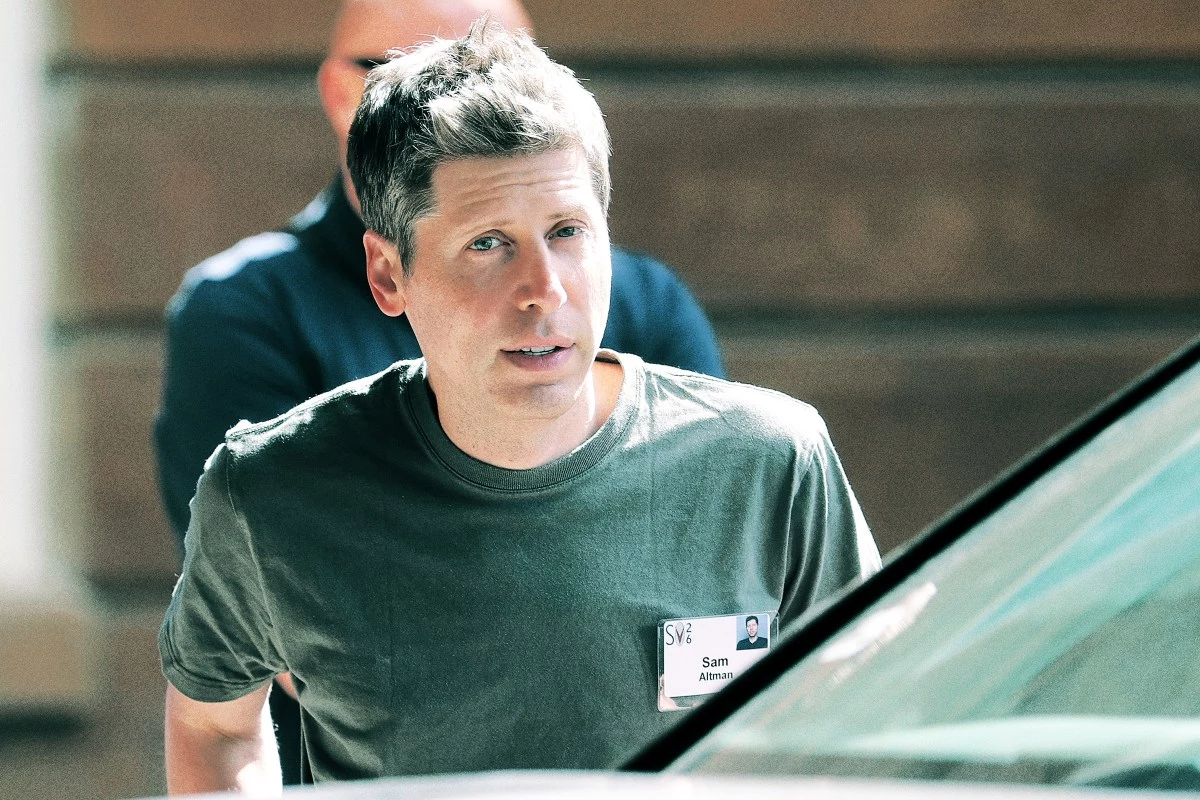
Sam Altman’s recent remarks on the “Relentless” podcast land with unusual bluntness for an industry that has long marketed automation as a gateway to leisure. Rather than forecasting a future of dramatically reduced hours—whether the four-day week or the once-futuristic “four-hour workweek” ideal—Altman argues that advanced AI will more likely intensify work. The implication is not that AI fails to raise productivity, but that productivity gains tend to be reinvested into higher expectations, tighter deadlines, and expanded scope, not reclaimed time.
This is a meaningful pivot in the public narrative around AI and work-life balance. For years, the dominant promise from technology leaders has been that smarter tools would liberate people from drudgery and create space for creativity, family, and self-directed pursuits. Altman’s framing suggests a different equilibrium: workers may produce more and even feel satisfaction in higher output, while simultaneously experiencing burnout, stress, and job-displacement anxiety—especially as organizations attempt to do more with leaner teams.
For business and technology audiences, the significance lies less in whether one executive is “right,” and more in what his view reveals about the prevailing executive mindset: AI is being operationalized primarily as a productivity engine, not a societal mechanism for redistributing time.
Why AI productivity often expands the workday instead of shrinking it
The tension Altman highlights is a modern version of a long-observed phenomenon: efficiency rarely translates cleanly into fewer working hours. Instead, it often creates new categories of work—some visible, many hidden—while raising the ceiling on what organizations consider “normal” output.
Several dynamics are converging:
- The productivity paradox, updated for generative AI: Even when AI accelerates tasks, organizations frequently respond by increasing throughput targets. The “saved time” becomes capacity for additional projects, more reporting, more customer touchpoints, or faster iteration cycles.
- AI orchestration becomes a job in itself: Knowledge workers increasingly spend time on prompt design, tool selection, workflow integration, and output verification. In practice, AI shifts effort from drafting to supervising, validating, and contextualizing—work that can be cognitively demanding and difficult to measure.
- Marginal tasks multiply: Each automation layer introduces adjacent responsibilities: data wrangling, model monitoring, compliance checks, security reviews, and stakeholder alignment. The result is not always less work, but different work, often with higher accountability.
- Always-on expectations scale faster than headcount: AI-enabled responsiveness can quietly reset norms—shorter turnaround times, more frequent updates, and broader availability—creating an ambient pressure that lengthens the perceived workday even if official hours remain unchanged.
Altman’s forecast resonates because it matches how many AI deployments are currently framed inside companies: as a way to compress cycle times, reduce staffing needs, and expand output per employee. In that environment, the “shorter workweek” becomes not a natural outcome of AI, but a deliberate policy choice—one that competes directly with quarterly performance incentives.
Labor-market pressure points: output inflation, wage tension, and job anxiety
Altman’s comments also intersect with a more structural question: who captures the gains from AI productivity—workers, shareholders, or customers? If AI raises output expectations without reducing hours, the distributional consequences become central.
Key labor-market implications embedded in this moment include:
- Compensation may decouple further from effort and time. As AI changes what “good performance” looks like, organizations may reward outcomes while implicitly demanding more availability and intensity. This can strain the psychological contract between employer and employee, particularly where performance metrics update in real time.
- Polarization risk increases. Roles that are strongly complemented by AI—those combining domain expertise, judgment, and cross-functional influence—may see rising leverage. Meanwhile, mid-skill roles vulnerable to automation or task unbundling may face displacement or wage compression.
- Downsizing plus AI can amplify workload stress. If teams shrink while AI tools expand capacity, remaining employees may inherit broader responsibilities: more projects, more oversight, more exception handling. That combination can elevate burnout risk even in “high-performing” environments.
- Reskilling may not keep pace with adoption. Historically, technology waves created new job categories downstream. Today’s AI transformation is unusually fast, globally accessible, and capital-intensive—conditions that can compress the time available for labor markets and education systems to adapt.
This is where the debate over AI and work-life balance becomes inseparable from governance. Without mechanisms that encourage shared gains—through labor standards, benefits design, or productivity-linked time reductions—AI’s default trajectory may be to optimize for output, not well-being.
What business leaders and policymakers can do now to avoid an AI-driven burnout cycle
Altman’s view does not have to become destiny. But it does suggest that achieving better work-life balance in an AI economy will require intentional design—inside organizations and across policy frameworks.
Practical strategies that align productivity with sustainability include:
- Run workload audits alongside AI rollouts. Track not only time saved, but time reallocated—especially the growth of validation, coordination, and exception-handling work.
- Instrument “burnout signals” as rigorously as KPIs. Real-time dashboards can integrate utilization, after-hours activity, meeting load, and attrition risk indicators, making workforce strain visible before it becomes a retention crisis.
- Pilot reduced-hour models where AI impact is measurable. Four-day week experiments can be structured in innovation-centric units, tracking:
– output quality and defect rates
– cycle time and customer satisfaction
– employee engagement and retention
– creativity proxies (new initiatives, experimentation velocity)
- Create internal AI governance that includes wellness. An “AI ethics and wellness” council can set guardrails around always-on expectations, surveillance risks, and performance metric inflation.
- Engage policymakers early. Public-private collaboration can focus on reskilling pathways and incentives—such as tax credits or procurement preferences—for firms that demonstrate stable or reduced working hours while maintaining productivity gains.
The larger macro context matters, too. With interest rates, geopolitical fragmentation, and supply-chain volatility constraining risk appetite, many executives will prioritize measurable productivity over speculative quality-of-life improvements. At the same time, tightening AI regulation and ESG scrutiny may push companies to prove that AI-driven efficiency is not coming at the expense of worker health and social trust.
Altman’s intervention is notable because it reframes the AI future as a management choice rather than a technological inevitability: AI can either accelerate a culture of relentless output, or it can underwrite a more sustainable model of work—depending on what leaders decide to optimize for, measure, and reward.

 By
By
 By
By


 By
By

 By
By
 By
By







