

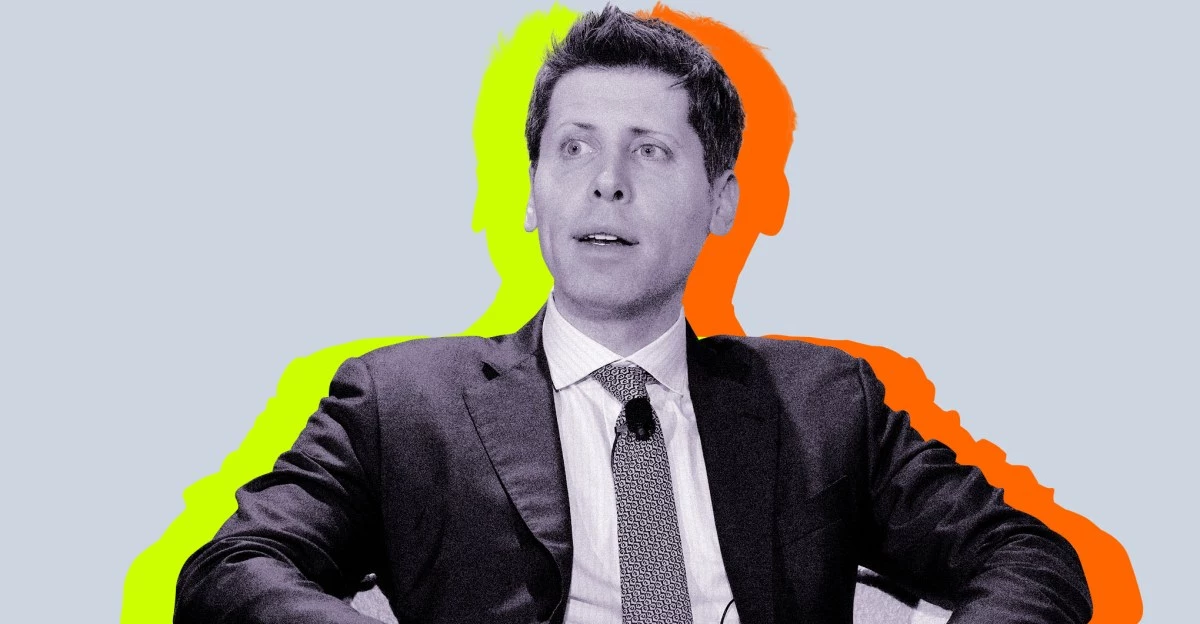

Shadows and Spotlight: The Carlson–Altman Interview and the Suchir Balaji Controversy
The recent televised clash between Tucker Carlson and Sam Altman, CEO of OpenAI, has sent tremors through Silicon Valley’s corridors and beyond. Carlson’s incendiary suggestion—that Suchir Balaji, a former OpenAI researcher whose death was officially ruled a suicide, was in fact murdered to protect corporate secrets—has reignited debates that cut to the core of the generative AI revolution: ethics, accountability, and the precarious fate of whistle-blowers in high-stakes tech. Altman, for his part, dismissed the allegations as “strange” and unfounded, citing official police findings. Yet, the controversy has proven too potent to be contained by mere denials.
Copyright, Whistle-Blowers, and the Erosion of Trust
At the heart of this episode lies a set of ethical and technological flashpoints. Suchir Balaji’s critiques—centered on the alleged ingestion of copyrighted material by large language models—strike at the very economic engine of generative AI. The sector’s reliance on vast, often opaque, data sets has already drawn the ire of publishers and creators, as seen in lawsuits like *New York Times v. OpenAI* and the tightening grip of the EU AI Act. The risk of retroactive liability looms, threatening to upend business models and force a reckoning over the provenance of training data.
Balaji’s position as a would-be whistle-blower highlights a structural vulnerability: the absence of robust, industry-wide protocols to protect dissenting voices. In an environment where research cycles are compressed and products are commercialized at breakneck speed, those who raise alarms do so at considerable personal and professional risk. The lack of formalized whistle-blower channels leaves researchers exposed, navigating a minefield of legal ambiguity and reputational peril.
The public’s willingness to entertain conspiracy theories—amplified by Carlson’s platform—reflects a deeper malaise: eroding trust in the governance of AI giants. For companies whose products are built on probabilistic outputs and data opacity, trust is not a soft asset but a material one. The specter of foul play, however unfounded, signals a crisis of confidence that cannot be ignored.
Legal, Financial, and Cultural Reverberations
The implications extend far beyond the courtroom or the cable news cycle. Should courts find merit in claims of mass copyright infringement, the resulting statutory damages could force a wholesale reconfiguration of AI development. Licensing and data-cleanroom approaches would become the norm, raising barriers to entry and consolidating power among incumbents with the resources to negotiate deep catalog deals.
Legal narratives that entwine intellectual property harm with allegations of retaliation against researchers are particularly potent, broadening the scope for class-action litigation. Plaintiffs’ attorneys now possess a compelling storyline—one that could shape the trajectory of future lawsuits and settlements.
Financial markets are already responding. Directors-and-officers insurance carriers are recalibrating risk models, and the mere whiff of controversy is raising ESG risk scores, with direct implications for cost of capital. For late-stage AI startups contemplating IPOs, unresolved governance issues may invite SEC scrutiny and complicate disclosures around contingent liabilities.
On the talent front, the stakes are equally high. Elite AI researchers are increasingly values-driven, and prolonged controversy risks catalyzing a “reputational brain drain.” Organizations with transparent safety boards and robust governance—such as those modeled on Anthropic’s LLM frameworks—stand to attract the next generation of innovators, while others may find themselves on the losing end of a global talent war.
Strategic Imperatives in an Era of Scrutiny
For industry stakeholders, the message is clear: governance architecture must evolve. Independent ethics boards with real investigative authority—akin to audit committees mandated by Sarbanes-Oxley—are fast becoming a necessity. Proactive, third-party-monitored whistle-blower channels could preempt regulatory mandates and dampen the spread of conspiratorial narratives.
Data provenance, too, is under the microscope. Enterprise customers are expected to demand detailed “nutrition labels” for training data, insisting on chain-of-custody documentation before committing to long-term AI-as-a-service contracts. The ability to demonstrate traceability and compliance will become a key differentiator in a crowded market.
Crisis-simulation exercises must now account for the asymmetric amplification of reputational shocks, particularly those fueled by high-profile influencers and political actors. The capacity to respond swiftly and transparently to such events will be a litmus test for organizational resilience.
The road ahead points toward regulatory acceleration, with bipartisan momentum in the U.S. for whistle-blower protections tailored to AI R&D. Rising compliance and litigation costs will likely drive market consolidation, favoring those who can set transparent standards for data governance and employee protection. Investors, for their part, will increasingly discount firms lacking demonstrable governance depth, driving a bifurcation in AI company valuations.
The Carlson–Altman exchange is not merely a spectacle of accusation and denial. It is a clarion call for systemic reform—an urgent reminder that in the age of generative AI, trust, transparency, and accountability are not luxuries, but the very foundations upon which the future of the industry will be built.

 By
By
 By
By

 By
By
 By
By
 By
By

 By
By







