


The New Geography of Shelter: How Off-Grid Living Is Rewriting the Rules of Real Estate and Technology
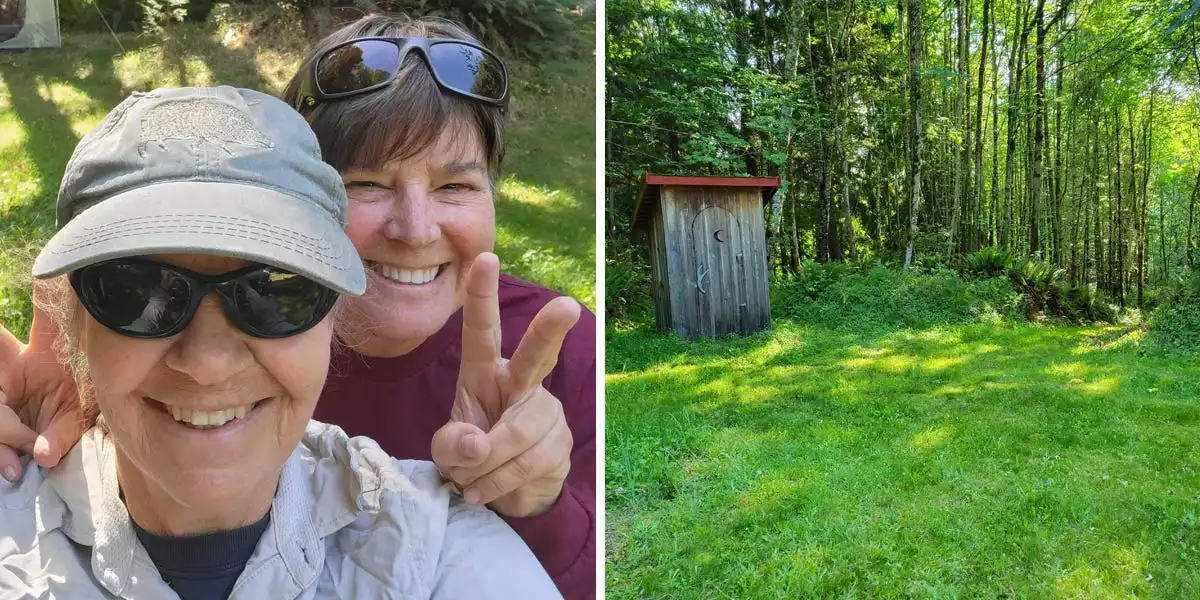
When two Arizona professionals swapped the ornate promise of a $500,000 Victorian in Port Townsend for a $225,000 off-grid compound—comprised of raw land, a 20-foot Airstream, and a modular suite of renewable systems—they weren’t just making a personal choice. Their move crystallizes a quiet revolution in American shelter: the convergence of affordability pressures, technological empowerment, and a new ethos of “seasonal nomadism” made possible by digital work. This is not merely a fringe movement; it’s a tectonic shift, redrawing the boundaries for real-estate developers, technology manufacturers, and financiers alike.
Distributed Infrastructure: The Consumerization of Utility
At the heart of this transformation is the maturation of distributed infrastructure. Once the domain of hobbyists and survivalists, plug-and-play solar kits now retail for under $2 per watt, inviting even the non-technical into the fold of energy independence. The economics are compelling: payback periods have compressed to under five years, outpacing the cost of conventional campground hookups and municipal utilities.
Water, too, has entered the era of micro-capture. Rain-harvesting systems, paired with portable filtration, shift water economics from ongoing municipal fees to a one-time capital investment—now as low as $0.60 per gallon of storage. These systems are increasingly bundled as retail “infrastructure stacks,” with OEMs racing to integrate solar, battery, and water modules under a unified user experience. The analogy to the smartphone app store is apt: whoever controls the interface and aftermarket services will capture annuity-like revenues as off-grid living scales.
Notably, the humble travel trailer—once a depreciating asset—has found new life as a mobile, appreciating capital good. Models like the Airstream Basecamp, equipped with Starlink antennas and LiFePO4 batteries, are blurring the lines between recreation and residency. As supply chains tighten and tech sophistication rises, these vehicles may soon be reclassified as compliant primary residences, prompting regulatory and insurance innovation.
Market Elasticity and the Rise of “Land-Only” Investment
The economics of land acquisition are shifting. Improved lots near Port Townsend command $150–$200 per square foot, but raw, utility-free acreage remains available at a 60–70% discount. This isn’t just a cost-saving play—it’s an option on the future. As rural broadband and micro-grid solutions proliferate, these parcels gain latent value, transforming from speculative assets into viable, infrastructure-light homesteads.
Financing, traditionally a stumbling block for land-only deals, is being reimagined. Private lenders and fintech platforms are stepping into the white space left by conventional mortgages, offering higher-yield, shorter-duration instruments—an attractive proposition in a rising-rate environment. Expect to see the securitization of off-grid asset portfolios, combining land notes, RV loans, and equipment leases, much as we saw in the early days of residential solar ABS markets.
Cultural and Strategic Implications: From Lifestyle to Data Economy
The normalization of hybrid work has decoupled income from geography, enabling knowledge workers to arbitrage lifestyle—earning urban salaries while living in lower-cost, high-nature settings. This “seasonal nomadism” is not just a hedge against housing costs; it’s a diversified climate strategy, allowing individuals to mitigate exposure to wildfire and drought by relocating seasonally.
This new mode of living generates a rich exhaust of data: solar yield, water consumption, GPS movement patterns. Aggregated and anonymized, such telemetry is a goldmine for utilities forecasting distributed energy, outdoor retailers planning inventory, and insurers refining risk models for wildfire zones. The hardware sale is just the beginning; the real value lies in the data and services ecosystem that springs up around these modular dwellings.
Strategic Opportunities: Where Capital, Technology, and Policy Intersect
- Real-Estate and Hospitality: Watch for the rise of “raw-land plus amenity subscription” models—private equity-backed tracts offering leased pads, solar hookups, and shared waste services on seasonal contracts. Traditional resorts may feel the pinch as affluent nomads opt for lower-overhead, nature-rich alternatives.
- Technology Vendors: The next frontier is battery chemistry—solid-state and sodium-ion innovations, bundled with IoT monitoring, will define ecosystem winners. Edge-computing providers should target ultra-low-power gateways for bandwidth-constrained, off-grid clusters.
- Financial Services: Securitization of off-grid portfolios and the design of parametric insurance products for modular properties represent greenfield opportunities.
- Policy and Regulation: Counties seeking property-tax revenue may relax zoning for high-value mobile dwellings, while water-rights legislation will drive demand for compliance technology.
For developers, prototyping mixed-use parcels with shared micro-grid capacity and fiber backhaul is the way forward. Hardware OEMs must prioritize interoperable APIs and data services, while investors should monitor raw-land appreciation in peri-urban corridors as a derivative play on both housing scarcity and the outdoor economy. Policy teams would do well to engage early with local planners to shape the evolving definitions of permissible dwellings.
The Port Townsend case is not an outlier—it is a harbinger. As capital, technology, and consumer preference intersect, the very definition of shelter, infrastructure, and asset value is being rewritten. Those who see the multi-sector chessboard will surface growth vectors invisible to incumbents rooted in legacy models. The future of living, it seems, is modular, mobile, and data-rich—an addressable market limited only by the imagination.

 By
By

 By
By
 By
By
 By
By
 By
By

 By
By
 By
By


 By
By








