


The High-Stakes Debate Shaping AI’s Regulatory Future
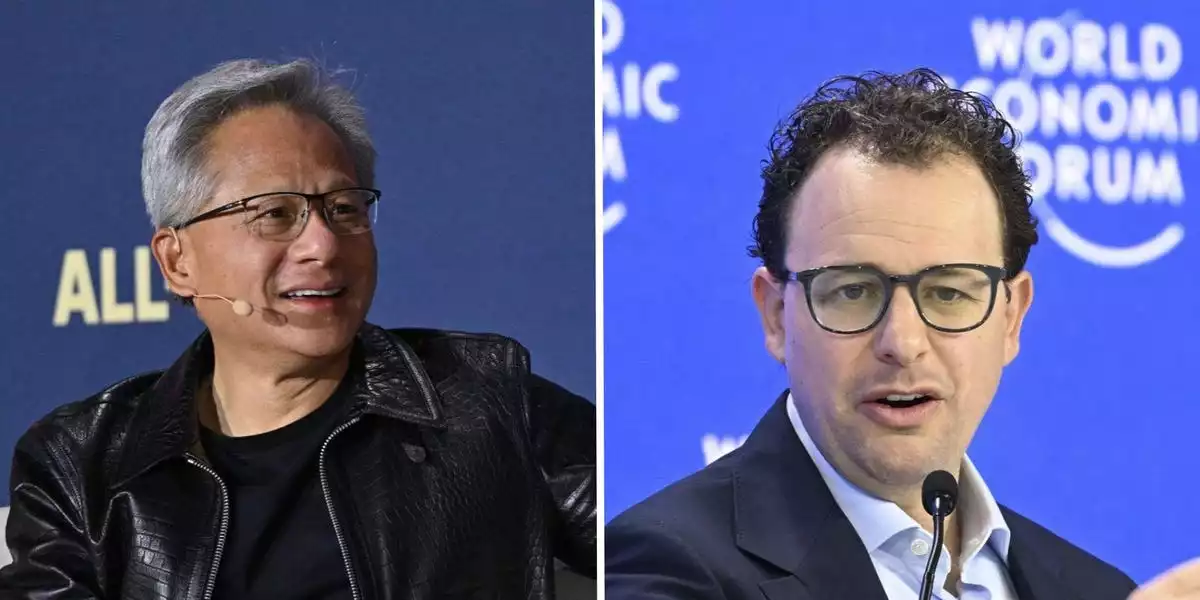
A recent and unusually public exchange between Nvidia’s Jensen Huang and Anthropic’s Dario Amodei has crystallized a pivotal struggle at the heart of artificial intelligence’s next chapter. Ostensibly about model safety, the dispute is, in truth, a contest for control—over regulatory architecture, compute access, and ultimately, the economic rents of an industry that is fast becoming the backbone of modern enterprise. The stakes are not merely technical; they are existential for the firms and nations vying to define the rules of AI’s ascent.
Huang, whose company’s GPUs have become the currency of AI progress, warns that the “responsible scaling” standards championed by Anthropic risk entrenching regulatory capture, stifling the very innovation that has propelled the sector’s meteoric rise. Amodei, in turn, frames these standards as a necessary bulwark against a dangerous race to the bottom on safety, insisting that collaboration—not monopoly—is the goal. Yet beneath this rhetoric lies a collision of business models: Nvidia’s fortunes rise with every new AI workload, while Anthropic’s value proposition rests on its ability to differentiate through stewardship and trust.
Compute Bottlenecks, Model Governance, and Market Incentives
The economics of compute have never been more consequential. Nvidia’s GPUs remain the critical bottleneck for global model training and inference, and a permissive regulatory climate maximizes both demand and data-center spending—fueling Nvidia’s staggering $80 billion annualized run-rate in data centers. Anthropic’s advocacy for “responsible scaling,” by contrast, implicitly accepts constraints: thresholds on model capabilities, rigorous evaluations, and potential slowdowns in aggregate GPU demand. Such measures could raise barriers to entry, favoring well-capitalized labs with deep safety benches and, perhaps, an inside track on regulatory compliance.
The governance of AI models is rapidly evolving. Amodei’s call for U.S. security agencies to evaluate advanced models echoes the growing momentum behind “compute governance” proposals, such as the UK’s AI Safety Institute and the U.S. NIST’s AISIC initiative. Should these ideas take hold, a licensing regime could effectively gatekeep access to the most powerful training runs, measured in exascale FLOPs. Huang’s vision, by contrast, is rooted in the ethos of open hardware and voluntary best practices—a model that recalls how Nvidia’s CUDA platform became industry standard without the need for prescriptive regulation.
This divergence is not merely philosophical. Hardware vendors like Nvidia and AMD are incentivized to maximize volume, while foundation-model labs—Anthropic, OpenAI, Google DeepMind—seek to monetize quality, differentiation, and control. The result is a policy debate that is as much about business models as it is about public safety.
Regulatory Capture, Innovation Commons, and Investor Calculus
The specter of regulatory capture looms large. If thresholds for model evaluation or licensing are set just above the reach of startups, incumbents will consolidate their lead, and venture funding for challenger labs could dry up. Conversely, if guardrails are too lax, the risk of catastrophic externalities—ranging from bio-threat design to autonomous cyber-offense—could provoke reactionary bans, undermining the entire sector.
Investors, ever attuned to uncertainty, are hedging their bets. Capital is flowing into both compute infrastructure (as evidenced by Nvidia’s $2 trillion-plus market capitalization) and alignment-focused labs like Anthropic, which recently surpassed an $18 billion post-money valuation. Major cloud providers—Amazon Web Services, Google Cloud, Microsoft Azure—are executing dual strategies: securing GPU supply while co-funding alignment research, aiming to remain resilient regardless of the regulatory trajectory.
Three plausible scenarios are emerging on the regulatory horizon:
- Licensing Regime: National-level AI model licenses, tied to compute thresholds, could emerge in the U.S. and UK, moderating GPU demand but shifting it toward accredited “sovereign AI” facilities.
- Market-Driven Standards: Industry consortia may set voluntary benchmarks, adopted by regulators in a “comply-or-explain” framework, preserving growth while making alignment a premium service.
- Regulatory Fragmentation: Divergent regional rules could create compliance silos, bifurcating supply chains and complicating cross-border model deployment.
Strategic Imperatives in a Politicized AI Landscape
For enterprises and policymakers, the implications are profound. The intensifying debate over model safety demands that boardrooms treat GPU procurement and compliance staffing as equally critical. Early adoption of rigorous evaluation, red-team audits, and transparency reporting can transform safety into a competitive moat, preempting future regulation and enhancing brand trust. Meanwhile, close attention to government signals—whether in the form of subsidies for “trusted AI clouds” or new chip export controls—will be essential in navigating shifting cost curves and vendor relationships.
The Huang–Amodei exchange is not merely a clash of personalities, but a harbinger of the policy theater that will define AI economics for years to come. Those who can read the incentive structures beneath the surface—and position themselves accordingly—will be best equipped to turn regulatory uncertainty into strategic advantage.

 By
By
 By
By

 By
By
 By
By


 By
By







