
When Energy, Regulation, and Silicon Collide: The Tectonics of Global AI Leadership
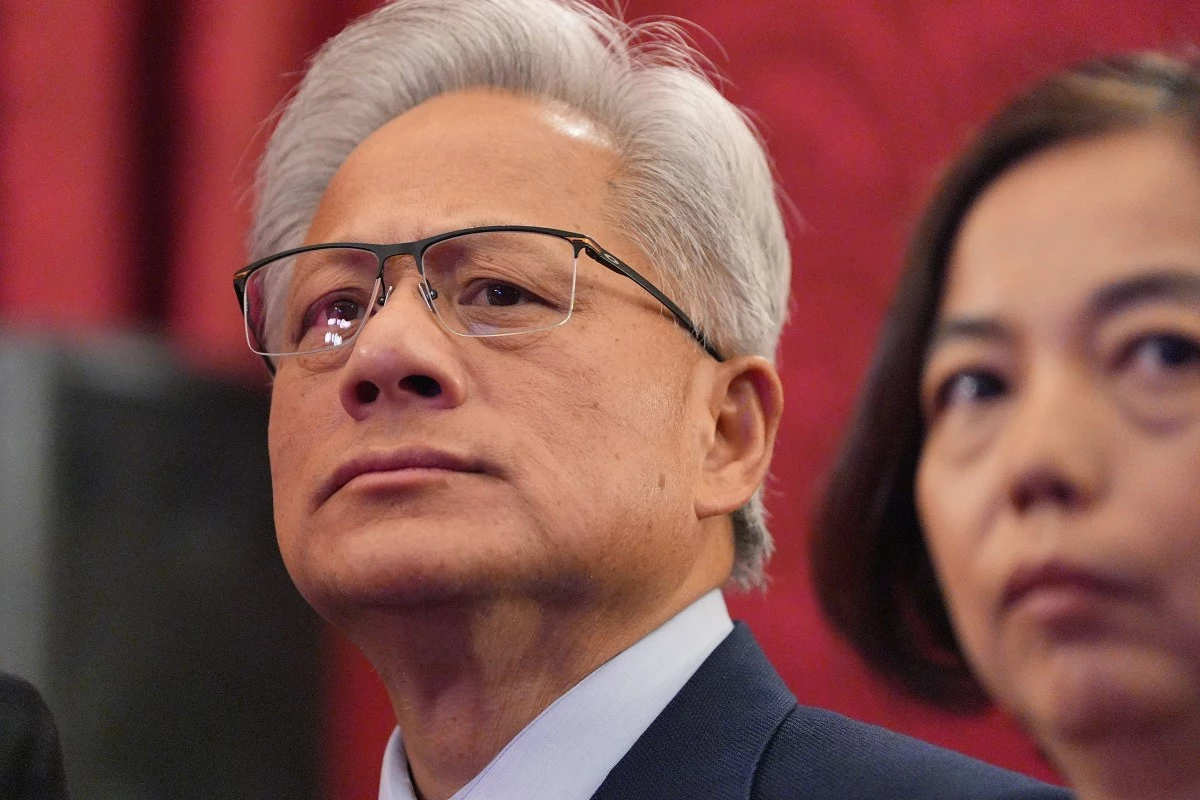
Jensen Huang’s recent pronouncement—that “China is going to win the AI race”—lands less as a lament and more as a clarion call. For years, the narrative of Western AI dominance was undergirded by algorithmic breakthroughs, deep pools of talent, and the gravitational pull of Silicon Valley’s venture capital. But as the Nvidia CEO’s pivot makes clear, the center of gravity is shifting. The determinants of AI supremacy are no longer just code and capital, but the sinews of infrastructure: energy, regulatory velocity, and supply-chain sovereignty.
The New Physics of AI: Energy as the Ultimate Constraint
The AI revolution, once thought to be a contest of clever software, is now defined by the brute realities of physics and industrial scale. China’s state-directed expansion of its power grid—especially in renewables-rich provinces—has driven electricity costs for hyperscale data centers to below 5 cents per kilowatt-hour, undercutting U.S. averages by as much as 45%. This is not merely a matter of cheaper bills; it is a structural advantage that turns compute into a commodity, much like oil in the twentieth century.
- Grid Elasticity as Strategic Asset: By 2025, China is projected to add over 200 GW of renewable capacity, enough to power multiple “hyperscale triangles”—clusters where compute, transmission, and cooling are co-located at unprecedented scale.
- Regulatory Green-Lanes: Beijing’s “green-lane” approvals for data center construction stand in stark contrast to the West’s protracted environmental and privacy reviews, which can stretch into years. The result: a time-to-deployment advantage that mirrors China’s earlier fintech leapfrogging, where Alipay and WeChat Pay outpaced Western rivals by exploiting regulatory whitespace.
This confluence of cheap, abundant energy and rapid regulatory clearance is not a temporary anomaly. It is the foundation of a new competitive order—one that rewards nations able to align their industrial, environmental, and digital strategies.
Silicon Nationalism and the Fracturing of the Global Tech Stack
Export controls, once seen as a tool to preserve Western technological primacy, have had an unintended consequence: they have catalyzed China’s domestic accelerator ecosystem. Companies like Biren and Huawei Ascend are now fielding AI chips that, while perhaps a generation behind TSMC’s bleeding edge, are “good enough” for most enterprise use cases—especially when paired with software-driven efficiency gains.
- Foundry Bifurcation: While TSMC and Samsung maintain a lead in process technology, China’s SMIC has reached quasi-7nm nodes on deep ultraviolet (DUV) lines, signaling a strategic acceptance of “acceptable lag”—not the latest, but sufficient for scaled deployment.
- Capital Markets Resilience: Despite U.S. restrictions, venture capital continues to pour into Chinese AI startups, buoyed by city-level subsidies that can cover up to 30% of capital expenditures for GPU clusters.
The implication for global enterprises is clear: the era of monolithic, U.S.-centric AI stacks is ending. By 2026 or 2027, Chinese end-to-end AI solutions—encompassing silicon, frameworks, and cloud infrastructure—will achieve functional parity for most business applications. Interoperability and export-control compliance are no longer technical afterthoughts, but board-level imperatives.
Strategic Inflection Points for Global Technology Leaders
For executives navigating this new terrain, the rules of engagement are being rewritten. Compute arbitrage—shifting AI workloads to jurisdictions with optimal energy and regulatory profiles—will become standard practice. Dual-compute strategies, balancing sovereign-compliant deployments in the West with cost-optimized training in Asia or Middle Eastern energy hubs, are already emerging.
- Energy Strategy as Digital Strategy: Chief Information Officers and Chief Sustainability Officers must jointly own AI deployment budgets, exploring long-term renewable power purchase agreements, on-site microgrids, and participation in emerging “compute-for-carbon” trading schemes.
- Geopolitical Risk Re-Pricing: Insurance, project finance, and M&A models must now account for volatility around semiconductor sanctions, data flow restrictions, and potential retaliatory measures on critical minerals.
- Policy Engagement as Differentiator: Companies that proactively shape pragmatic AI governance—balancing safety with deployment velocity—will tilt the regulatory playing field in their favor.
The imperative is not simply to comply, but to anticipate: to scenario-plan for a world where access to U.S. GPUs is no longer guaranteed, to localize energy economics, and to invest in open standards that preserve negotiating power across both U.S. and Chinese tech ecosystems.
Huang’s diagnosis is not a concession of defeat, but a recognition that AI leadership will accrue to those who treat it as an energy-industrial complex—requiring not just technical prowess, but holistic, geopolitical stewardship. For Western enterprises, the window to recalibrate is narrowing. The race is no longer to the swiftest coder, but to the most adaptable strategist.

 By
By
 By
By

 By
By
 By
By
 By
By