


The Contested Future of Work: AI’s Dual-Edged Promise
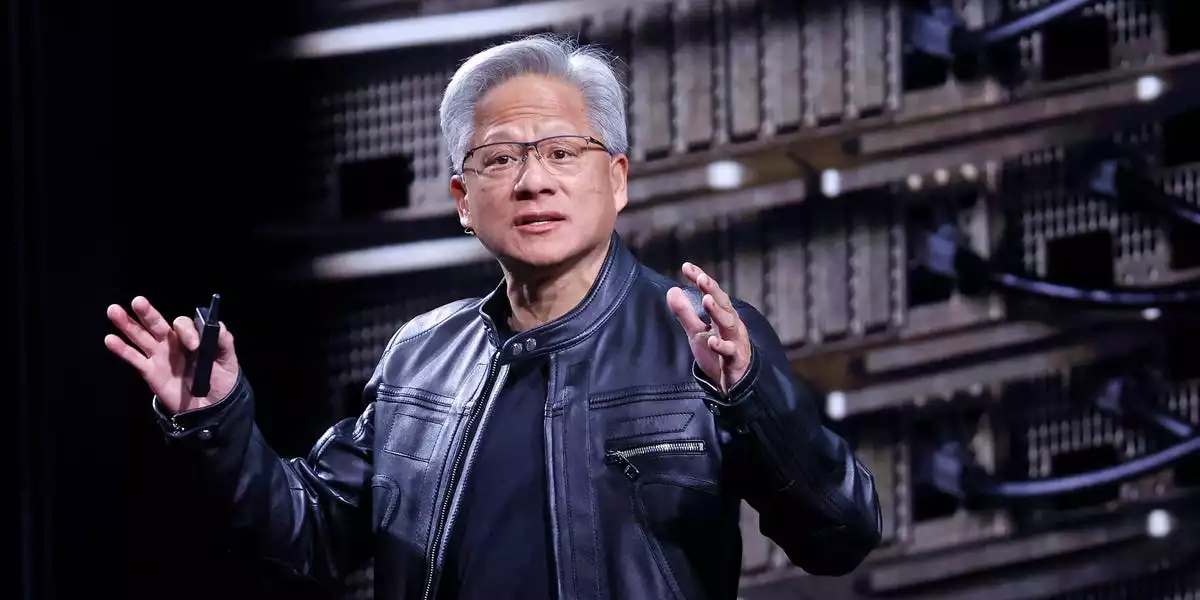
As artificial intelligence surges from the realm of speculative fiction into the core of global commerce, the debate over its impact on labor has reached a fever pitch. Nvidia’s Jensen Huang, whose company sits at the epicenter of this technological revolution, projects a vision of AI as a net creator—reshaping, not erasing, the workforce. Yet, this optimism is met with skepticism from academics and rival technologists who warn of a coming wave of white-collar displacement. The tension encapsulates a pivotal moment: AI’s adoption is not just rapid, but exponentially so, forcing institutions to confront a future that is arriving faster than their capacity to adapt.
The Technological Catalysts Accelerating Workforce Transformation
Three vectors are converging to accelerate AI’s impact on the labor market:
- Foundation-Model Accessibility: The democratization of large-scale language and vision models—once the exclusive domain of hyperscalers—has been catalyzed by plummeting costs and the proliferation of “model-as-a-service” APIs. This has compressed deployment timelines, ensuring that the effects of AI are no longer confined to a technical elite. The result: horizontal disruption across industries, with routine tasks increasingly susceptible to automation.
- Prompt Engineering as a New Cognitive Skill: Huang’s emphasis on “prompt mastery” reframes AI from a mysterious black box to a collaborative tool. Much as spreadsheet literacy once transformed accounting, the ability to strategically orchestrate AI models is emerging as a critical workplace competency. Human-in-the-loop workflows—where employees guide and audit AI outputs—are poised to become the norm, not the exception.
- The Compute Bottleneck and Silicon Arms Race: Despite the hype, the pace of AI’s labor impact is still tethered to the availability of high-performance compute. Nvidia’s GPU roadmap, alongside the rise of specialized chips and neuromorphic hardware, underscores a new kind of scarcity. Organizations that secure preferential access to silicon, or innovate around model efficiency, will set the tempo for workforce transformation.
Economic Ripples: Productivity, Polarization, and Regional Disparities
The economic implications of AI diffusion are as complex as they are profound:
- Productivity Gains vs. Wage Stagnation: History offers a cautionary tale—previous automation waves delivered productivity spikes without commensurate wage growth. Without deliberate value-sharing mechanisms, such as skills stipends or equity incentives, AI risks deepening this divide.
- The Skill Barbell and Emergent Roles: Demand will surge for high-cognition “AI conductors”—prompt engineers, auditors, and orchestrators—while mid-skill, routine analysts face compression. Yet, new micro-entrepreneurial niches are emerging: AI-augmented creators, synthetic-data brokers, and others who thrive on the long tail of innovation, echoing the gig economy’s post-2008 expansion.
- Regional Winners and Losers: Digital infrastructure and labor flexibility will determine who reaps AI’s dividends. Advanced economies like the Nordics and Singapore are well-positioned, while emerging markets risk a “services cliff” as entry-level BPO roles automate faster than reskilling pipelines can adapt.
Strategic Imperatives for Enterprises Navigating the AI Epoch
For business leaders, the AI era demands a radical rethinking of talent, governance, and operating models:
- Human Capital Re-Design: Enterprises must treat AI training as a capital investment, not an expense. Cross-functional “skill transformation offices” should rotate employees through immersive programs, democratizing access to prompt libraries and internal model marketplaces.
- Governance and Risk Management: With regulatory frameworks tightening globally, from the EU AI Act to U.S. executive orders, proactive compliance is non-negotiable. Model provenance ledgers—tracing the lineage of data and algorithms—are fast becoming board-level KPIs.
- Operating-Model Innovation: The shift from functional silos to outcome-based pods, where AI agents handle routine orchestration, will liberate human teams for strategic exploration. Measuring productivity through a “centaur KPI stack”—capturing the synergy of human-AI collaboration—will surface gains invisible to traditional metrics.
The Broader Canvas: Geopolitics, Energy, and the Shape of Tomorrow’s Enterprise
AI’s labor impact does not unfold in a vacuum. Supply-chain geopolitics, particularly export controls on advanced chips, are inflating global GPU premiums and driving data center near-shoring. The energy footprint of AI inference is projected to add 3–4% to U.S. electricity demand by 2030, compelling executives to negotiate green-energy contracts and model carbon-adjusted ROI. Meanwhile, venture capital is flowing downstream—from model development to orchestration layers, where integration risk is lower and valuations more reasonable.
Over the next decade, the contours of the workforce will be redrawn. In the short term, expect a proliferation of “AI copilots” embedded in enterprise software, with labor negotiations increasingly focused on algorithmic transparency. Within three to five years, automation could subsume up to half of entry-level analytical tasks, making proactive career-ladder redesign an existential imperative. Looking further ahead, a bifurcated AI landscape—regulated models for critical functions and open models for creative domains—will test the agility of enterprises and policymakers alike.
For those willing to institutionalize adaptive talent models, robust governance, and strategic capital deployment, AI’s uncertainty becomes not a threat, but a source of durable competitive advantage. The future of work, it seems, will be shaped less by the inevitability of technology than by the choices leaders make today.

 By
By
 By
By

 By
By
 By
By
 By
By

 By
By







