

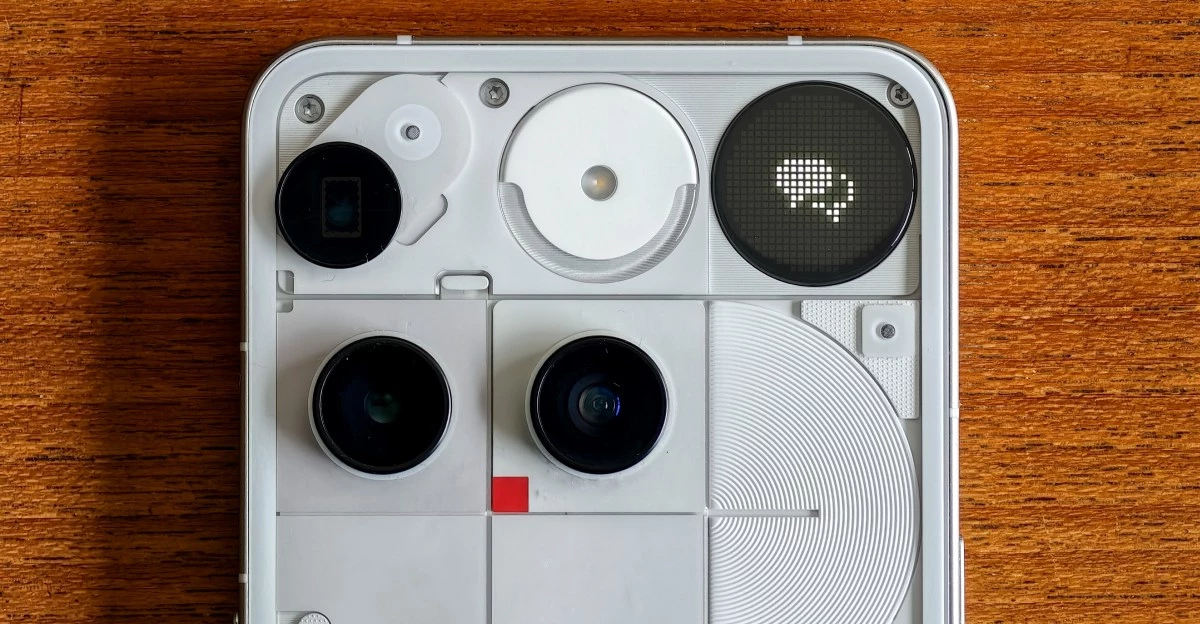

A New Contender in the AI-First Device Arena
The London-based hardware upstart Nothing has just vaulted itself into rarefied air, closing a $200 million Series C round that values the company at $1.3 billion. This is not merely a windfall for a promising phone maker—it is a declaration of intent. With founder Carl Pei at the helm, Nothing is channeling its fresh capital into the creation of an “AI-native” operating system, one that aspires to transcend the boundaries of phones and wearables, reaching into smart glasses, automotive dashboards, and even humanoid robotics. The ambition is unmistakable: to build a context-aware, hyper-personalized OS that redefines the consumer edge, challenging the app-centric paradigms that have long dominated the industry.
The Edge-AI Thesis: Shifting Intelligence from Cloud to Device
The technological inflection point underpinning Nothing’s strategy is the migration of AI workloads from the cloud to the device itself. This is not a mere technical nuance—it is a tectonic shift. The latest mobile chipsets from Qualcomm, MediaTek, Apple, and Samsung are posting exponential gains in performance per watt, making it plausible that, within two to three years, consumer devices will run real-time generative models with tens of billions of parameters.
This edge-AI convergence is more than a feat of engineering; it is a strategic lever. By localizing inference, Nothing can offer not just performance but privacy—sidestepping regulatory headwinds like the EU AI Act, which scrutinizes cross-border data flows. The company’s vision of federated personalization, where learning happens on-device and data remains local, could become a compliance feature that European consumers and regulators alike find compelling.
Yet, the technical thesis is only as strong as the ecosystem that supports it. An AI-native OS must entice developers with robust SDKs, attractive revenue shares, and open distribution channels. Nothing’s leaner balance sheet, compared to Apple or Google, hints at a likely embrace of open-source kernels, layered with proprietary AI services—a model reminiscent of Tesla’s software stack, rather than the walled gardens of iOS.
Navigating Capital, Competition, and Regulatory Crosscurrents
This $200 million raise is remarkable not just for its size, but for its timing. Hardware venture capital has rarely been tighter since 2016, and investors are no longer betting on devices alone—they are underwriting platforms, recurring service revenues, and, potentially, the licensing of AI OS technology to third-party manufacturers. The expectation is clear: Nothing must achieve healthy blended margins, or risk the dilution that has plagued so many hardware hopefuls.
Supply chain dynamics add another layer of complexity. While Nothing’s assembly currently centers on Shenzhen, the shifting winds of European “technological sovereignty” could make partial on-shoring both a political and economic imperative. Subsidies under the EU Chips Act may soon extend to system integrators, allowing Nothing to burnish a “Designed in London—Built in Europe” narrative while offsetting bill-of-materials costs.
The competitive landscape is formidable:
- Apple is deepening its integration with on-device generative AI and immersive hardware like Vision Pro, fortifying its ecosystem moats.
- Google and Samsung are layering AI overlays atop Android, but remain hamstrung by fragmentation.
- Emerging players—including the much-rumored Jony Ive + OpenAI collaboration—are exploring radical new modalities, such as screen-free, ambient intelligence.
Nothing’s differentiation lies in its brand-led minimalism, transparent industrial design, and its promise of openness and privacy. This “Apple-lite” positioning, if executed with precision, could attract a generation of users disillusioned by closed ecosystems and privacy trade-offs.
Strategic Horizons and the Next Cycle of Device Innovation
The broader industry context is defined by regulatory flux, shifting consumer sentiment, and the relentless search for step-change utility. The EU’s Digital Markets Act is prying open distribution layers long monopolized by incumbents, while lengthening device replacement cycles mean only truly transformative features—like offline AI copilots—will motivate upgrades.
Nothing’s strategic options are multifaceted:
- Ecosystem partnerships with telcos and automotive OEMs could embed the AI OS in new verticals, from edge-computing-enabled phones to EV dashboards.
- Service-layer monetization—including encrypted personal-data vaults and curated marketplaces for fine-tuned AI models—offers paths to recurring revenue without incurring the backlash of ad-driven models.
- Risk mitigation will require early investment in IP fencing, creative financing structures, and a proactive approach to regulatory and open-source threats.
The stakes could not be higher. Edge-AI silicon delays, regulatory demands for explainability, or the rise of credible open-source competitors could all derail the vision. Yet, the opportunity is equally profound: to redefine not just what devices do, but how, where, and by whom intelligence is executed.
In this unfolding drama, the infusion of capital into Nothing is a signal—one that validates the thesis that the next era of device innovation will be determined less by form factor than by the architecture of intelligence itself. For investors, technologists, and consumers alike, the edge is no longer a periphery. It is the new center of gravity.

 By
By
 By
By
 By
By
 By
By
 By
By
 By
By









