


Redefining Portable Gaming: The Switch 2’s Technological Leap
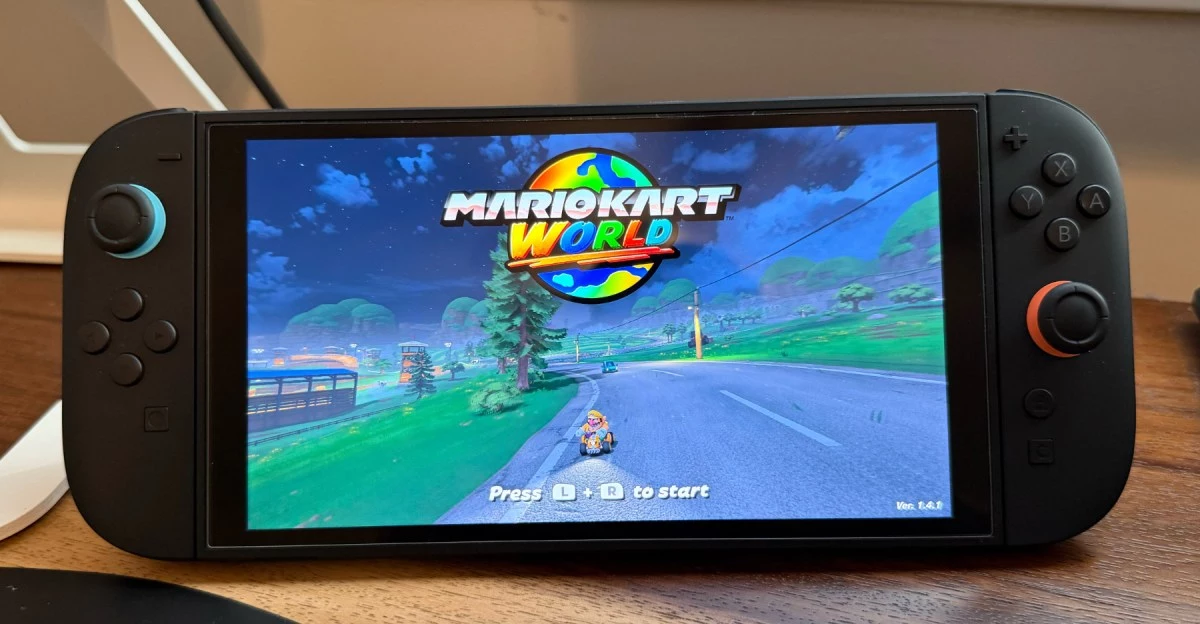
Nintendo’s unveiling of the Switch 2 marks a watershed moment in the evolution of hybrid gaming. At $449.99, the device is not merely an iteration but a bold reimagination, boasting a 7.9-inch 120 Hz 1080p display and 4K docked output. These are not incremental upgrades—they are statements of intent, signaling Nintendo’s ambition to close the technical chasm between its own hardware and the flagship offerings from Sony and Microsoft.
The heart of the Switch 2 is a custom system-on-chip, likely an NVIDIA Ada-Lite or Ampere-refresh, inferred from its support for DLSS-class upscaling and plausible real-time ray tracing. This leap in silicon transforms the handheld, enabling visual fidelity and performance that were once the exclusive domain of stationary consoles. The 120 Hz refresh rate, a first for mass-market gaming tablets, elevates the experience, reducing motion blur and setting a new baseline for portable play. In this arena, competitors like Valve’s Steam Deck and ASUS’s ROG Ally are now forced to differentiate on software openness, as Nintendo claims the mantle of display supremacy.
Yet, ambition is tempered by practical constraints. The inclusion of only 256 GB eMMC storage—misaligned with the ballooning size of AAA game downloads—signals a strategic reluctance to absorb NAND costs during a period of price volatility. The onus shifts to consumers, who must invest in microSD Express cards to unlock the device’s full potential. This calculated trade-off preserves Nintendo’s margins but risks friction among a digital-first audience.
Backward compatibility, however, is a masterstroke. By preserving the vast Switch software library and layering in GameCube classics via Nintendo Switch Online, Nintendo not only reduces generational friction but also enhances the value proposition of its subscription service—subtly encroaching on the territory staked out by Sony’s PS Plus Classics and Microsoft’s Game Pass.
Strategic Calculus: Pricing, Partnerships, and the Subscription Flywheel
The Switch 2’s pricing strategy is uncharacteristically assertive. At just $50 below the PlayStation 5 Digital Edition’s holiday price, Nintendo is signaling a shift away from its traditional value-console identity. This premium positioning is a direct reflection of supply-chain realities—tariff references hint at higher landed costs in the U.S., costs that Nintendo is choosing to pass through rather than absorb.
Supply chain timing further underscores Nintendo’s cautious pragmatism. The staggered North American launch, a consequence of advanced packaging shortages and freight volatility, reflects a preference for operational stability over headline-grabbing simultaneity. This conservative approach may constrain holiday season volumes but ensures a smoother ramp-up and mitigates the risk of stockouts.
Perhaps most consequential is Nintendo’s renewed courtship of third-party developers. Early demos of franchises like Final Fantasy VII Remake Intergrade—long absent from the Switch ecosystem—signal a restoration of developer confidence. This diversification reduces Nintendo’s historical overreliance on first-party intellectual property and positions the Switch 2 as a more attractive platform for AAA publishers. The expansion of Nintendo Switch Online, now featuring a GameCube tier, further entrenches the company in the lucrative “content annuity” model, driving up average revenue per user and aligning Nintendo with the digital subscription paradigm that has become central to Sony’s and Microsoft’s strategies.
Competitive Ripples and Subtle Industry Shifts
The Switch 2’s hardware advances do more than just fortify Nintendo’s own position—they send ripples across the broader consumer electronics landscape. By doubling down on the hybrid form factor, Nintendo validates a design philosophy that may influence the trajectory of Apple’s rumored gaming-centric iPad and embolden Lenovo and HP’s experiments in detachable PC gaming. The suspected deepening of the NVIDIA partnership could also revive the vision of “NVIDIA gaming in the living room,” positioning the Switch 2 as both a standalone console and a potential edge node in NVIDIA’s cloud gaming ecosystem.
Retail strategy, too, is evolving. The inclusion of Mario Kart World as a bundled title hints at a “platform as event” merchandising model, reminiscent of smartphone carrier bundles. This approach not only enhances perceived value but may also blunt the impact of the second-hand market, a persistent challenge for hardware manufacturers.
Nintendo’s public acknowledgment of tariffs and the implied shift of final assembly outside China mirror broader industry moves to hedge geopolitical risk—a subtle but telling signal of the new realities facing global supply chains.
Navigating Risks and the Road Ahead
Despite its strengths, the Switch 2 is not without vulnerabilities. The reliance on microSD Express for storage expansion risks echoing the Wii U’s external drive narrative, potentially dampening digital adoption unless price parity with conventional microSD cards is achieved. The strategic focus on Switch 2 development, while necessary, raises the specter of a content drought for the 125-million-unit legacy base—a delicate balancing act as Nintendo manages the transition.
For decision-makers across the industry, the Switch 2’s launch is more than a product release—it is an inflection point. Publishers must recalibrate their roadmaps, as porting to the new hardware now approaches the cost profile of current-gen consoles. Component vendors and supply chain partners should anticipate elevated demand, with an eye toward a potential OLED refresh that could further shift the competitive landscape. The expansion of Nintendo’s subscription ecosystem, meanwhile, offers a template for cross-industry collaboration in digital content and identity management.
As the dust settles, the Switch 2 stands as a testament to Nintendo’s ability to reinvent itself while preserving its core identity. The race for living-room mindshare is tighter than ever, and the lessons of this launch will reverberate far beyond the world of gaming—reshaping expectations for what portable hardware can achieve and how digital ecosystems can drive enduring value.

 By
By
 By
By


 By
By

 By
By
 By
By







