

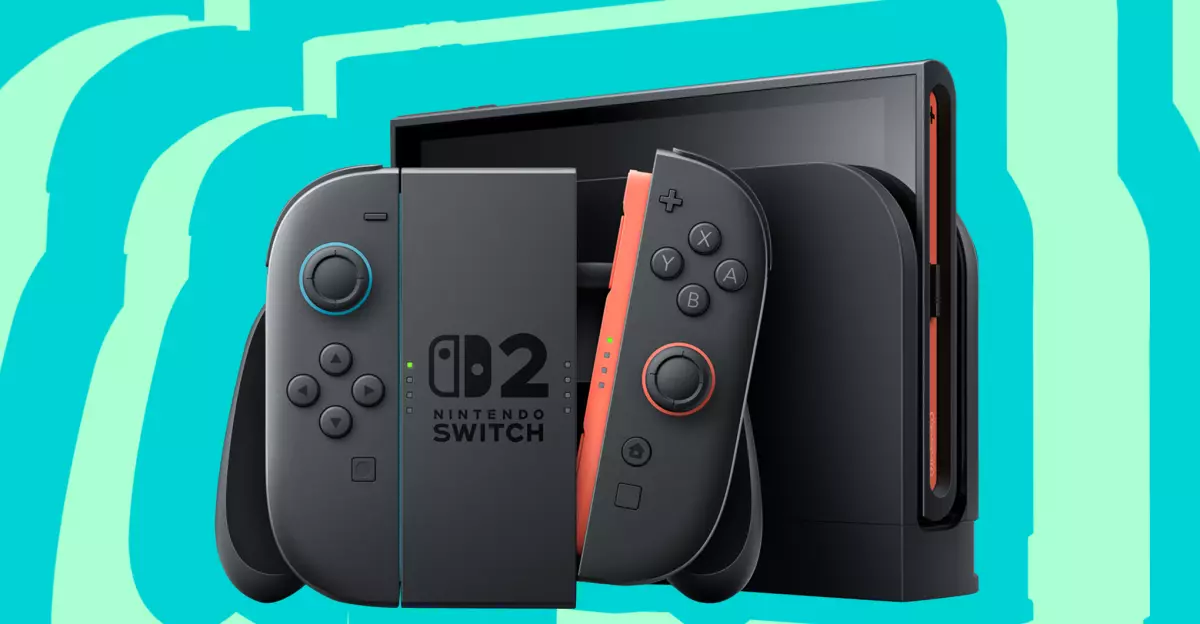

Nintendo’s Calculated Bet: The Switch 2’s Third-Party Renaissance
As the curtain rises on Nintendo’s July 31st Direct, the industry’s gaze sharpens—not on the familiar spectacle of first-party showstoppers, but on a subtler, more strategic overture. This 25-minute broadcast, focused squarely on third-party software for both the enduring Switch and its freshly minted successor, the Switch 2, signals a pivotal recalibration of Nintendo’s platform strategy. The showcase, eschewing the gravitational pull of Metroid Prime 4 and other in-house titans, instead foregrounds a curated parade of AAA back-catalogue ports (notably Cyberpunk 2077), long-anticipated indie sequels like Hollow Knight: Silksong, and tantalizing rumors of Persona 3 Reload and a new Animal Crossing. The message is unambiguous: Nintendo’s next era will not be defined solely by its own IP, but by its ability to attract, enable, and amplify the world’s most ambitious third-party creators.
Hybrid Hardware, Lower Friction: The Switch 2’s Technological Pivot
The Switch 2’s technical underpinnings represent a rare convergence of ambition and pragmatism. Early developer accounts confirm the adoption of an Nvidia Ada Lovelace-based SoC, complete with DLSS-style upscaling—a leap that narrows the visual-fidelity gap with PlayStation 5 and Xbox Series X, yet preserves the system’s hallmark portability. This architectural evolution is more than a spec-sheet upgrade; it’s a strategic maneuver to entice AAA publishers who, until now, have viewed Nintendo hardware as a charming but limiting outlier.
- Efficient Porting Economics: The arrival of Cyberpunk 2077, a title once thought too resource-intensive for Nintendo’s ecosystem, is a watershed. The port’s feasibility signals to studios that the Switch 2 is “good enough” for incremental optimization, not full-scale rebuilds. This reduces development friction, accelerates catalogue growth, and erodes the two-year lag that has historically separated Nintendo’s library from its rivals.
- AI-Driven Upscaling: Generative AI and Nvidia’s advanced SDK stack are poised to streamline porting pipelines further, enabling rapid texture regeneration and asset upscaling. This technological synergy could quietly become a force multiplier for both Nintendo and its partners.
Strategic Sequencing: IP Recycling, Market Timing, and the Transmedia Effect
Nintendo’s decision to sideline Metroid Prime 4 and other first-party juggernauts is not reticence; it’s choreography. By ceding the July Direct to third-party partners, Nintendo elongates the engagement arc for its own exclusives—Mario Kart World, Donkey Kong Bananza—while allowing external studios to bask in the spotlight. This sequencing maximizes engagement peaks, stretches revenue tails across fiscal quarters, and insulates the company’s P&L from the volatility of AAA development cycles.
- IP Recycling as Revenue Stabilizer: Ports like Persona 3 Reload and other legacy titles are more than nostalgia plays; they are high-margin, low-risk revenue engines. Historical attach-rate data suggests that “deluxe” reissues on Switch routinely outsell their original incarnations by over 20%, providing a financial cushion against the unpredictable economics of new IP.
- Transmedia Flywheel: The $1.36 billion box office haul of the Mario movie has validated Nintendo’s IP beyond the console. Expect future Directs to serve as launchpads for game-to-screen adaptations, catalyzing cross-platform marketing and reinforcing brand ubiquity.
Navigating Competitive Currents and Supply-Chain Realities
Nintendo’s timing is as meticulous as its content curation. The Direct lands as global discretionary spending shows signs of renewal—OECD forecasts 2.7% growth for advanced economies in 2024, with inflation on the wane. A robust holiday pipeline positions Nintendo to capture pent-up demand ahead of Sony’s anticipated PS5 Pro reveal.
- Supply-Chain Stability: Early teardowns indicate the Switch 2’s Bill of Materials is roughly 18% higher than its predecessor, yet mature 5nm node pricing and normalized component lead times (sub-12 weeks) mitigate the risk of stock-outs and margin compression.
- Competitive Implications: Sony faces incremental share loss in the sub-$400 console segment, while cloud-first players like Amazon Luna and Nvidia GeForce NOW may seek distribution partnerships—though Nintendo’s licensing rigidity remains a formidable barrier.
The July Direct is less an isolated event than a masterclass in strategic layering: proprietary IP as hardware driver, pragmatic technical upgrades to woo external studios, and a disciplined release cadence attuned to macroeconomic inflection points. For publishers, suppliers, and investors, these signals are clear—Nintendo’s hybrid gaming ecosystem is poised not merely to endure, but to expand, inviting a new wave of software innovation and cross-media synergy as the industry charts its course through 2025 and beyond.

 By
By
 By
By

 By
By
 By
By

 By
By
 By
By







