


A quieter contest beneath the waves reshapes North Atlantic security
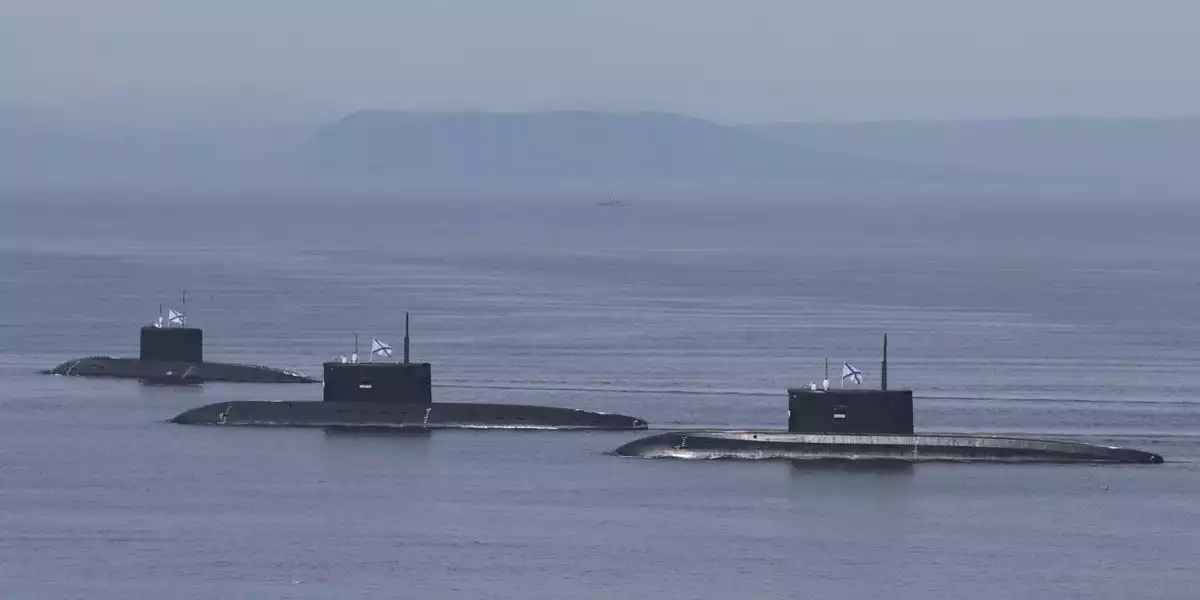
NATO’s decision to more than double anti-submarine warfare (ASW) operations across the North Atlantic and Arctic over the past two to three years is best understood as a return to a familiar Cold War geometry—updated for a digitized battlespace. The catalyst is a measurable rise in Russian submarine activity linked to the Northern Fleet in Murmansk, reportedly fielding dozens of attack-capable platforms. For NATO planners, the concern is not simply presence; it is access—the ability of Russian submarines to move from protected bastions into the open Atlantic where they can threaten sea lines of communication, naval forces, and critical infrastructure.
At the center of this operational logic sits the GIUK gap (Greenland–Iceland–United Kingdom), a maritime chokepoint that functions as both a gateway and a filter. Submarines transiting through the gap can disappear into deeper waters, where acoustic conditions, oceanography, and sheer distance make tracking harder and response timelines tighter. That shift—from constrained passage to open-ocean ambiguity—creates the strategic pressure NATO is trying to relieve through tempo, coverage, and layered detection.
NATO’s expanded posture is therefore less about dramatic confrontation and more about persistent undersea domain awareness (UDA): the ability to detect, classify, track, and—if necessary—hold at risk submarines operating across vast, harsh environments.
From patrols to platforms: the technology stack behind modern ASW
The most consequential development is not any single ship or aircraft, but the emergence of networked, sensor-driven ASW as a force multiplier. NATO’s toolkit now blends traditional naval assets with increasingly data-centric capabilities:
- Maritime patrol aircraft such as the P-8 Poseidon, valued for wide-area search, rapid repositioning, and sensor fusion
- Frigates and surface combatants equipped for ASW escort and barrier operations
- Attack submarines used for covert tracking and deterrence signaling
- Helicopters with dipping sonars, enabling localized detection in complex littoral or ice-edge conditions
- Exercises and operational frameworks—including large-scale drills like Arctic Dolphin 26—that validate readiness, interoperability, and tactics under realistic conditions
What ties these elements together is the accelerating role of AI-enhanced signal processing, distributed sensor webs (including sonobuoys and unmanned underwater systems), and resilient communications. In the Arctic and North Atlantic, where weather, sea state, and electromagnetic constraints can degrade performance, the competitive edge increasingly comes from edge computing, robust data links, and the ability to fuse imperfect signals into actionable tracks.
For defense and dual-use technology markets, this shift points to rising demand in several areas:
- Acoustic analytics and machine learning for classification in noisy environments
- Autonomous underwater vehicles (AUVs) for persistent sensing and inspection
- Satellite-enabled maritime domain awareness, especially in high latitudes
- Interoperability standards that allow allied navies to share tracks, cues, and targeting-quality data securely
Just as importantly, NATO’s operational tempo helps justify accelerated procurement cycles and common standards—an industrial signal that ASW modernization is moving from niche priority to sustained budget line.
Alliance expansion meets Arctic economics: deterrence with commercial gravity
The accession of Finland and Sweden has expanded NATO’s Arctic footprint to seven Arctic member states, altering both geography and governance. Beyond additional territory and basing options, the new members bring capabilities that matter in the high north—ice-capable operations, advanced sensing, and experience operating in demanding northern conditions. NATO’s Joint Force Command Norfolk and the launch of “Arctic Sentry” reflect an effort to institutionalize readiness and intelligence-sharing across what were previously more fragmented national operating areas.
Yet the Arctic is not only a military theater. It is increasingly an economic proposition shaped by climate change and resource demand. The retreat of sea ice is sharpening interest in:
- New shipping corridors that can reduce Asia–Europe transit times by as much as 30% under favorable conditions
- Under-ice hydrocarbons and critical minerals—including nickel, cobalt, and rare earths—central to energy security and battery supply chains
- Port and logistics investments across Norway, Iceland, and Greenland, alongside new requirements for mapping, communications, and search-and-rescue capacity
This is where geopolitics becomes macroeconomics. If Arctic routes mature, they will reshape insurance models, fleet design, port infrastructure, and supply-chain risk management. But the same conditions that make the region commercially attractive—remoteness, volatility, limited infrastructure—also make it security-sensitive. NATO’s increased ASW activity can be read as an attempt to ensure that emerging Arctic commerce does not develop in a strategic vacuum.
Undersea cables, Sino-Russian alignment, and the ESG dimension of high-north strategy
One of the most strategically underappreciated linkages is the relationship between ASW and undersea cable security. Roughly 95% of intercontinental data traffic travels via subsea cables. As NATO improves its ability to map and monitor submarine transits, it also strengthens the practical foundations for detecting anomalous activity near cable routes—whether from state actors, proxies, or ambiguous “gray zone” operations. This creates a convergence between defense priorities and the needs of cloud providers, telecoms, and critical infrastructure operators—particularly in subsea robotics, anomaly detection, and cyber-physical security.
The broader competitive frame also extends beyond Russia. China’s interest in a “Polar Silk Road”—including port access, resource ventures, and high-latitude reconnaissance—adds a second axis to Arctic strategy. NATO’s posture, viewed through this lens, is not merely reactive; it is a hedge against a future in which Arctic trade, energy, and digital connectivity become arenas of sustained great-power competition.
Finally, the Arctic’s fragility imposes constraints that modern security planning can no longer treat as peripheral. Military activity intersects with environmental risk and indigenous community interests, raising the premium on credible ESG practices and local partnership models. Dual-use deployments—such as sensors that support both maritime security and environmental monitoring—offer one pathway to align deterrence, safety, and sustainability without pretending the trade-offs are simple.
NATO’s intensified North Atlantic and Arctic ASW posture is, at its core, a bet that persistent awareness—not episodic presence—will define deterrence in the undersea domain. For business and technology leaders, the message is equally clear: the high north is becoming a testbed where defense innovation, supply-chain resilience, subsea infrastructure protection, and Arctic economics are converging into a single strategic marketplace.

 By
By
 By
By

 By
By
 By
By

 By
By








