


Arctic Deterrence: NATO’s New Playbook for a Thawing, Contested North
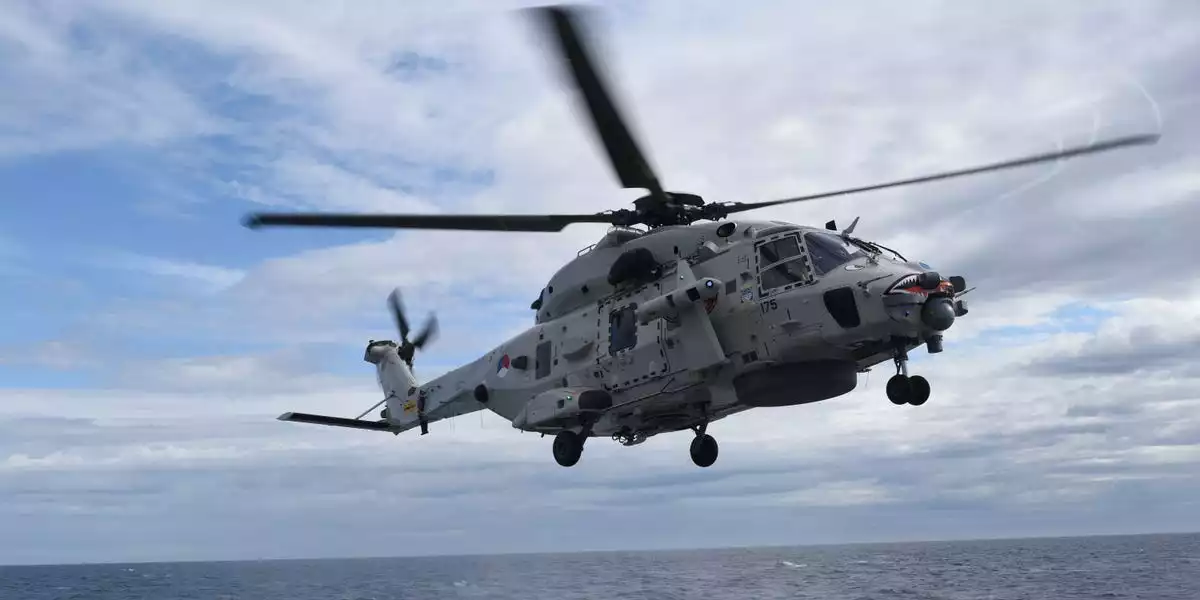
In the icy reaches above the Arctic Circle, the familiar calculus of maritime security is being rewritten. The Standing NATO Maritime Group 1, operating under Dutch command, now threads a persistent presence through frigid waters where Russia’s formidable Northern Fleet—boasting 64 submarines—casts a long, silent shadow. Central to this evolving doctrine is not a new warship, but a helicopter: the NH90, a European joint venture that is quietly redefining the boundaries of anti-submarine warfare (ASW) and, by extension, the future of Arctic security.
The NH90: Edge Analytics and Arctic Resilience
The NH90 naval helicopter is more than a sum of its parts. Developed by a consortium spanning nine nations, its design is a study in modularity and climate adaptation. Reinforced airframes, de-icing rotors, and sensor hardening enable operations in high latitudes where logistics are sparse, and even satellite constellations struggle with latency and coverage. But the NH90’s true significance lies in its digital core.
Key Innovations:
- Sensor Fusion at the Tactical Edge: The NH90’s mission system fuses acoustic, radar, AIS, and electronic support measures (ESM) feeds in near-real time. This marks a decisive shift toward “edge analytics”—processing data onboard, reducing reliance on bandwidth-heavy satellite uplinks, and empowering crews to act on fleeting submarine contacts before they vanish into the polar gloom.
- AI-Enabled Pattern Recognition: Recent software upgrades have introduced machine-learning–assisted acoustic analysis, providing an early glimpse of artificial intelligence operating in contested, data-sparse environments. This is not just a military milestone; it foreshadows AI’s migration into other sectors where robust, real-time anomaly detection is paramount.
- Multi-Domain Interoperability: By integrating seamlessly with P-8 Poseidon maritime patrol aircraft, the NH90 is an anchor in a layered ASW architecture—long-range jets localize, ship-borne helicopters prosecute, and, soon, medium-altitude UAVs will insert new layers of distributed sensing. The future of Arctic defense is manned–unmanned–modular by design.
Strategic and Economic Undercurrents: From Industrial Base to Seabed Cables
The NH90’s deployment is not just a tactical answer to Russian submarines—it is a harbinger of deeper shifts across defense, industry, and the digital economy.
European Defense Re-Industrialization:
- The NH90 program, managed by NH Industries (Airbus, Leonardo, Fokker), exemplifies Europe’s renewed appetite for collaborative defense procurement. Intellectual property, final assembly, and sustainment are distributed across member states, revitalizing the continent’s defense industrial base.
- Rising Arctic tensions are a boon for mid-life upgrades and spare-parts pipelines, particularly for tier-2 suppliers specializing in acoustics, composite rotors, and secure datalink technologies.
Insurance, Energy, and Infrastructure Risk:
- Russian submarine activity is driving up war-risk premiums for Arctic shipping and energy projects, notably LNG ventures in the Barents Sea.
- Perhaps most consequential is the growing recognition that subsea infrastructure—fiber-optic cables, energy pipelines, and soon, commercial data links along the Northern Sea Route—are now frontline assets. Their protection is a new axis of both national security and digital-economy resilience, prompting increased defense spending on ASW and seabed domain awareness (SDA) technologies.
Non-Obvious Connections for Executives:
- Dual-Use Technology: The NH90’s AI-driven acoustic analytics echo predictive maintenance in industrial IoT, with lessons from the Arctic translating into more robust monitoring for oil rigs, subsea drones, and offshore wind turbines.
- Supply-Chain Geopolitics: Critical materials—titanium, rare-earth magnets—trace back to Russia and China. Arctic tensions are accelerating Western efforts to on-shore or “friend-shore” these supply chains, opening green-field opportunities in Scandinavian mining and North American advanced manufacturing.
- Satellite Dependency: The helicopter’s reliance on secure, limited-bandwidth links exposes a broader vulnerability in low-Earth orbit constellations. Expect a surge in demand for multi-path communication architectures, with ramifications for the space and telecom sectors.
The Arctic’s Next Act: Opportunity and Escalation
As climate change opens new navigation windows and the Arctic transitions from a seasonal to a sustained theater, the implications ripple far beyond defense.
Emerging Trends:
- Procurement Acceleration: Nordic helicopter fleets and acoustic sensor upgrades are poised for expedited funding in upcoming EU and NATO budget cycles, favoring modular, software-upgradable platforms.
- Seabed Domain Awareness: Private-sector consortia in subsea mapping, fiber-optic monitoring, and autonomous underwater vehicles (AUVs) stand to benefit from NATO’s push—potentially spawning joint ventures between telecom operators and defense contractors.
- Talent and Technology Convergence: High-latitude operations demand cross-disciplinary expertise—pilots, acoustic analysts, and data engineers fluent in both aviation and maritime domains. Human-machine teaming and cross-credentialing will become strategic differentiators.
- Escalation Pathways: Should Russia escalate to gray-zone sabotage of seabed infrastructure, NATO’s response is likely to include pre-emptive area sanitization flights and a more permanent ASW picket presence. Corporate risk officers would be wise to scenario-test supply-chain disruptions triggered by such moves.
NATO’s Arctic deployment of the NH90 is not merely a tactical maneuver but an inflection point—where climate, technology, and geopolitics converge. For organizations attuned to these signals, the Arctic is not just a frontier of risk, but a crucible of opportunity, innovation, and strategic renewal.

 By
By
 By
By
 By
By

 By
By


 By
By







