


NATO’s Eastern Flank and the Rise of Modular Counter-Drone Systems
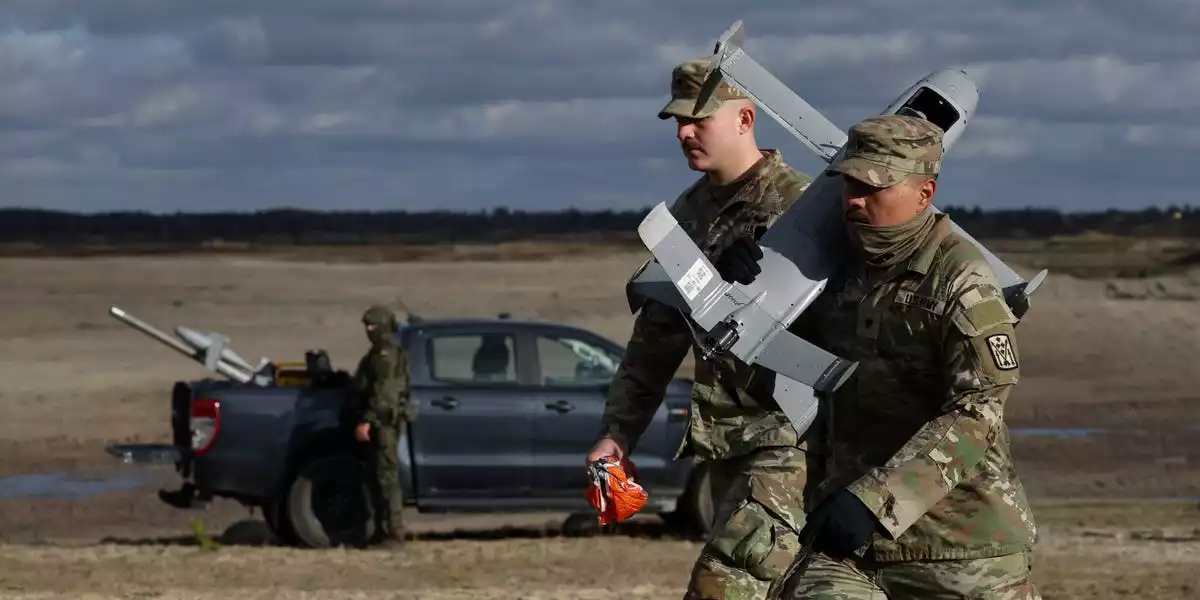
On the broad plains of Eastern Europe, a new kind of arms race is quietly unfolding—not in the form of tanks or fighter jets, but in the silent, algorithmic ballet of drones and their hunters. Recent field exercises by NATO forces, including U.S., Polish, and Romanian units, have spotlighted Merops, an American counter-drone platform whose $15,000 “Surveyor” interceptor is rapidly reconfiguring the economics and tactics of air defense. As the war in Ukraine continues to spill over into neighboring airspace, the integration of Merops into the Alliance’s Eastern Flank Deterrence Line signals a profound shift in how nations defend against the relentless tide of unmanned aerial threats.
The Technological Disruption: Disposable Interceptors and Agile Defense
The Merops system represents a paradigm shift in counter-unmanned aerial systems (C-UAS) technology. Its modular launch architecture—deployable from tripods, trucks, or even naval vessels—evokes the containerized missile revolution, but at a fraction of the cost and scale. At the heart of this system is the Surveyor drone, a semi-autonomous interceptor that leverages AI-assisted target recognition to close the OODA (Observe, Orient, Decide, Act) loop with unprecedented speed, even in the electronic warfare-contested skies of modern conflict zones.
Key technical differentiators include:
- Cost-per-Kill Compression: Where traditional interceptors like Patriot PAC-3 or NASAMS command price tags from $400,000 to several million dollars per shot, Merops democratizes air defense with a two-orders-of-magnitude reduction in marginal cost.
- Parachute-Enabled Reuse: Inspired by commercial spaceflight’s embrace of hardware amortization, the Surveyor’s parachute recovery system allows for multiple redeployments, further driving down lifecycle costs.
- Target-Set Specialization: Merops excels against larger, jet-powered drones—such as the Shahed-class vehicles that have terrorized Ukrainian cities—but remains less effective against the swarms of low-cost, first-person-view (FPV) drones that dominate tactical battlefields.
This segmentation of the drone threat landscape is forcing military planners to rethink the very architecture of layered air defense, carving out new roles for both high- and low-end interceptors.
Economic and Strategic Reverberations: Shifting Cost Curves and Deterrence Posture
The arrival of Merops on NATO’s eastern doorstep is more than a technological milestone—it is a catalyst for economic and strategic realignment. By resetting procurement expectations, the system compels traditional defense contractors to justify the premium on legacy missile systems or pivot toward software-driven, low-hardware-cost offerings. The reliance on mature commercial supply chains for electronics and composites shortens lead times, but also exposes vulnerabilities to semiconductor chokepoints and export controls, especially as geopolitical tensions tighten around advanced chips.
Strategic implications radiate outward:
- Budgetary Flexibility: Eastern European allies, long constrained by limited defense budgets, can now reallocate resources from prohibitively expensive aviation assets to more nimble, layered mosaics of air defense—enhancing readiness without breaching fiscal ceilings.
- Deterrence Signaling: The publicized adoption and training of Merops units broadcasts Alliance resolve, imposing costs on adversaries by forcing them to deploy more sophisticated (and expensive) drones to penetrate defenses.
- Grey-Zone Escalation: The affordability and availability of such interceptors may embolden states to respond more assertively to airspace violations, subtly raising the risk of unintended escalation along NATO’s most volatile borders.
Industry and Policy Signals: The Software-Defined Battlefield
Beneath the surface, the Merops story is emblematic of a broader transformation within the defense sector—a pivot from hardware-centric to software-centric value creation. AI navigation stacks, sensor fusion, and semi-autonomous guidance are no longer futuristic aspirations but operational realities. This shift demands new approaches to secure DevSecOps pipelines and data interoperability across Alliance partners. As Eastern European nations contemplate local co-production or final assembly to hedge against supply chain risks, the echoes of semiconductor and battery nearshoring are unmistakable.
Forward-looking leaders should consider:
- Portfolio Realignment: Modeling air defense architectures where low-cost interceptors handle the lion’s share of drone threats, reserving premium assets for high-value targets.
- R&D Priorities: Integrating directed-energy or high-powered microwave modules to counter the next wave of FPV swarms, ensuring AI robustness against adversarial electronic warfare.
- Interoperability Standards: Harmonizing data links so that modular counter-drone batteries can seamlessly feed targeting data to existing missile and future laser systems, transforming shooters into networked sensors.
As critical infrastructure operators—from energy grids to logistics hubs—evaluate the merits of Merops-style systems for point defense, the boundaries between military and civilian security blur, underscoring the ubiquity of the unmanned threat.
In this new era, where the skies above the Eastern Flank are as contested as the ground below, those who internalize the lessons of modular, software-driven defense will find themselves not only compressing cost curves, but also sustaining strategic advantage in a world where the next threat may be as small as a drone and as swift as an algorithm.


 By
By
 By
By
 By
By

 By
By
 By
By








