
The New Lunar Imperative: America’s Moonshot at a Crossroads
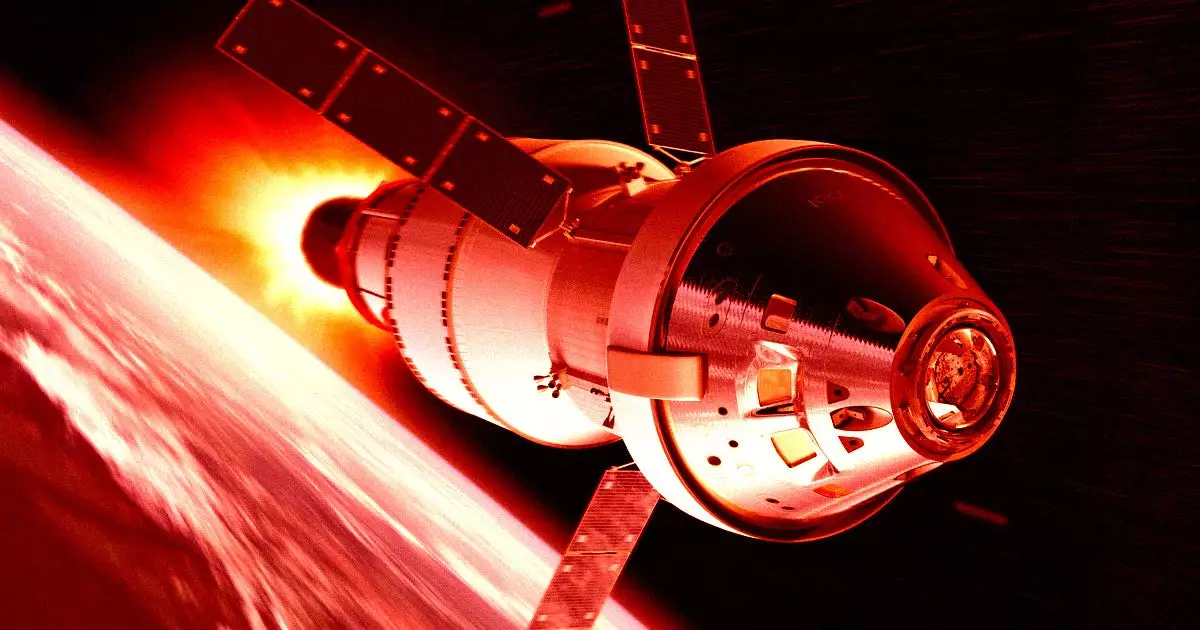
The Moon, once a stage for Cold War spectacle, is again the fulcrum of geopolitical rivalry. But this time, the stakes are not merely symbolic. The intensifying competition between the United States and China over lunar exploration is rapidly morphing into a crucible for technological leadership, economic security, and the very architecture of future space governance. The urgency is palpable: bipartisan anxiety in Washington is mounting, and the specter of China landing astronauts on the lunar surface before the United States is no longer a distant hypothetical—it is a looming possibility.
NASA’s Reckoning: Risk, Resources, and the Strain of Legacy
NASA, long the emblem of American scientific ambition, now finds itself at a moment of profound institutional stress. Acting Administrator Sean Duffy’s recent call to “let safety be the enemy of making progress” signals a remarkable shift. The agency, historically defined by a zero-defect ethos, is flirting with the risk-tolerant, iterative approach that has fueled the commercial space renaissance. This pivot, if institutionalized, could accelerate Artemis hardware development but also strains the agency’s foundational safety culture and exposes it to new political liabilities.
Compounding these pressures is a leadership vacuum and the specter of drastic budget cuts—potentially halving NASA’s Science Directorate in FY-2026. Such a move would do more than delay lunar ambitions; it would undermine the Earth-observation data infrastructure that undergirds climate-risk pricing, insurance models, and ESG reporting. The potential for a mass exodus of senior engineers threatens to compress NASA’s institutional memory at precisely the moment when integration expertise is most critical. Unlike China’s unified, centrally funded lunar roadmap—which offers predictable demand signals and political continuity—NASA’s reliance on continuing resolutions leaves both legacy contractors and startups in a state of capital-conserving limbo.
China’s Ascendancy and the New Rules of Space Engagement
China’s lunar program has quietly, but decisively, closed the gap. Recent successful demonstrations of heavy-lift launchers and lunar landers have consolidated a roadmap that not only rivals, but may soon surpass, the Artemis timeline. The Chinese approach—incremental, vertically integrated, and insulated from the political oscillations that bedevil U.S. space policy—enables tighter design-test loops and a more coherent industrial strategy.
This momentum is not lost on the global stage. Should China achieve the “first footprint,” the gravitational pull of the Artemis Accords could be challenged, amplifying Beijing’s International Lunar Research Station (ILRS) as an alternative governance regime. The cislunar sphere, once a scientific backwater, is now being reframed as strategic high ground for position, navigation, and timing (PNT) resilience and deep-space intelligence, surveillance, and reconnaissance (ISR). The risk: a perceived U.S. lag could catalyze deeper Department of Defense involvement, blurring the lines between civil and military space activities.
Cross-Sectoral Ripples: From Climate Analytics to Talent Wars
The lunar contest is not a closed system; its shockwaves are already reverberating across sectors. A reduction in Earth-science satellite assets will degrade the fidelity of AI models used to forecast extreme weather, injecting actuarial uncertainty into insurance and reinsurance markets. Meanwhile, the Moon’s regolith—rich in helium-3 and rare-earth proxies—has become a focal point for future battery-supply chains and off-planet resource regimes. Early movers will wield disproportionate bargaining power as standards are set for lunar mining and cislunar logistics.
Digital engineering practices—model-based systems, DevSecOps—are gaining currency within NASA as it contemplates a more risk-tolerant culture. These skillsets are not confined to aerospace; they are transferrable to defense, autonomous vehicles, and energy infrastructure, tightening the labor market and elevating compensation benchmarks. A brain drain from NASA, should it occur, will likely enrich the commercial space sector and adjacent deep-tech industries, further blurring public-private boundaries.
Navigating the Lunar Inflection Point
For policymakers, the imperative is clear: stabilize NASA’s leadership, balance the budget portfolio to preserve both lunar and Earth-science priorities, and adopt procurement models that guarantee predictable demand for suppliers. Corporate and technology leaders should anticipate surging demand for autonomous lunar systems, radiation-hardened components, and resilient communications networks, while preparing for potential climate-data scarcity. Investors, meanwhile, would do well to monitor Chinese state-owned contractors for breakthrough milestones and diversify across lunar hardware and climate-data services to hedge against policy volatility.
The lunar timeline is no longer a mere race for prestige; it is a forcing function that will determine which nation writes the rules for off-planet commerce, security, and scientific discovery. Decisive, coordinated action—balancing calculated risk, stable funding, and cross-sectoral collaboration—will be pivotal if the United States is to retain its leadership in the emerging cislunar economy. The Moon, it seems, is once again the mirror in which America must reckon with its ambitions, its anxieties, and its future.

 By
By
 By
By
 By
By
 By
By
 By
By


 By
By