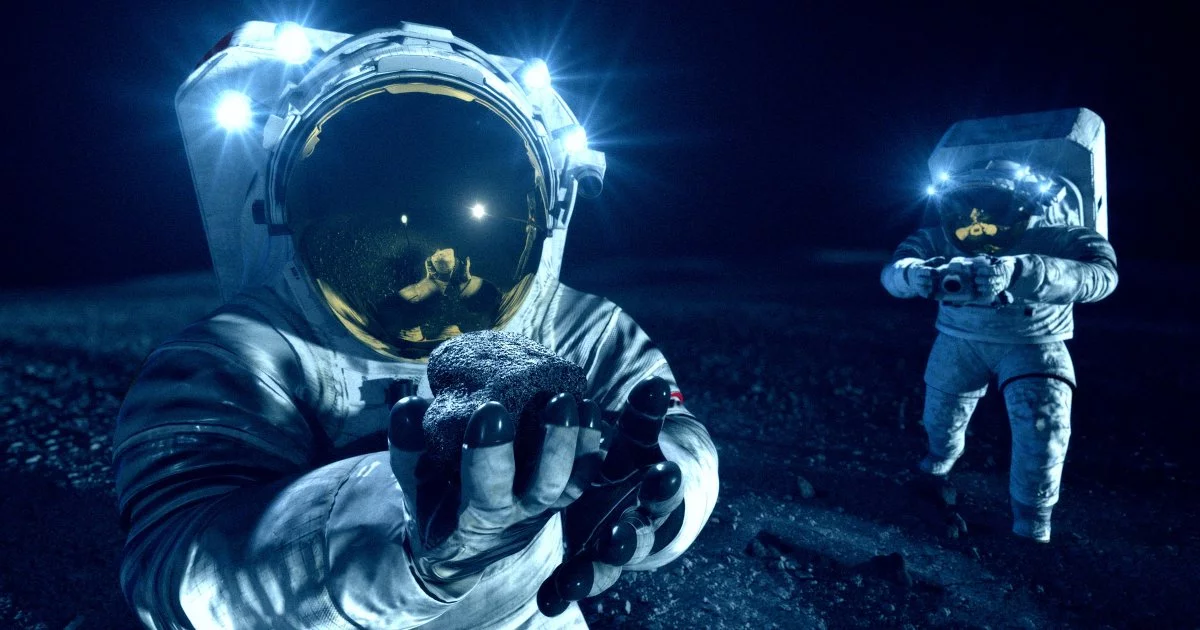

The Next Moonwalk: Engineering the Future of Lunar Mobility
As NASA’s Artemis III mission approaches its defining integration phase, the spotlight has shifted from rockets and landers to a deceptively humble cornerstone of lunar exploration: the extravehicular mobility unit, or EMU. This next-generation spacesuit is more than a garment—it is a cyber-physical exosystem, a crucible where materials science, biomechanics, and digital security intersect under the harshest conditions known to humankind. The selection process, which pits Axiom Space’s $228 million “xEMU” prototype against formidable alternatives from SpaceX and Blue Origin, represents not just a technical decision, but a strategic inflection point for the United States’ lunar ambitions.
Lunar Survival: Materials, Biomechanics, and the Digital Frontier
The Artemis EMU must operate for up to nine hours in a vacuum where temperatures swing by 300°C, cosmic radiation is omnipresent, and the regolith underfoot is more akin to microscopic shards of glass than the sand of Apollo’s era. The xEMU’s multilayer laminate, a first-of-its-kind integration of metamaterials with directional thermal emissivity, acts as a passive radiator—its phase-change salts bleeding off heat with a precision that borders on the miraculous. Additive-manufactured titanium-aluminide joint bearings cut weight by nearly a fifth compared to Apollo-era designs, without sacrificing torque or reliability.
Embedded within the suit are sensor arrays—MEMS accelerometers and fiber Bragg gratings—that provide real-time structural health monitoring. This data, down-linked and parsed by AI, enables predictive maintenance cycles that could mean the difference between mission success and catastrophic failure. The suit is, in effect, a mobile edge-computing node, operating in a high-latency, intermittently connected environment where cybersecurity is no longer theoretical. Recent red-team exercises have exposed vulnerabilities such as inertial-measurement spoofing, highlighting the dual-use risks as lunar assets become both scientific and commercial in nature.
NASA’s attention to human factors is equally rigorous. In one-sixth gravity, the suit’s mass is less oppressive, but its inertia during a fall remains a real danger. Using musculoskeletal simulations borrowed from elite sports science, NASA is modeling every gait cycle and stumble. The “jumping push-up” test—a proxy for fall recovery—has spurred interest in powered hip actuators, drawing on exoskeleton technologies originally developed for military applications. These innovations are not mere enhancements; they are mission-critical, given the ergonomic and safety risks flagged by astronauts like Kate Rubins and Mike Barratt.
Economic Ripples: Supply Chains, Capital, and Commercial Opportunity
The economic implications of NASA’s suit decision radiate far beyond the lunar surface. The agency is catalyzing a $1.2 billion market for next-gen EVA suits, dovetailing with an $8–10 billion total addressable market for cislunar services—ranging from communication relays to in-situ resource utilization. This surge is already reshaping domestic supply chains: advanced-textile hubs in Alabama and Ohio are scaling up to produce exotic fabrics and actuators, often substituting rare-earth elements with domestically sourced alternatives.
The downstream effects are equally profound. Venture investment in “space e-mobility” has surged by 26% quarter-over-quarter since the announcement of NASA’s xEVAS contract, with beneficiaries spanning micro-climate control startups to battery safety innovators. The ripple effects are reminiscent of the Commercial Crew Program, where supplier ecosystems were repriced almost overnight in response to contract awards.
For terrestrial industries, the spillover potential is enormous. Automotive OEMs and Tier-1 suppliers are eyeing pressure-seal technologies for hydrogen fuel-cell enclosures, while hazmat and medical PPE sectors anticipate derivative demand for advanced fabrics and actuators. Strategic IP positioning—particularly around thermo-regulatory textiles—will be decisive, as patent thickets could create new chokepoints in the years ahead.
Standards, Strategy, and the New Lunar Order
The Artemis spacesuit is more than a technical artifact; it is a lever of soft power and standard-setting. As China accelerates its International Lunar Research Station timeline, the successful deployment of an American-designed suit on the Moon will reinforce U.S. leadership in space norms and supply-chain lock-in. ISO committees are fast-tracking guidelines for lunar operations, and whichever suit NASA certifies will shape interface and life-support standards for a generation.
This moment is also a magnet for talent. Artemis milestones are pulling a new wave of engineers from Big Tech into aerospace, just as AI and autonomy become indispensable for human spaceflight. The convergence of these skillsets—fueled by short-cycle innovation in exoskeletal actuation and digital twin environments—will define the next era of lunar exploration.
For organizations attuned to these shifts, the Artemis EMU is not just a suit, but a strategic fulcrum. Whether through targeted R&D, IP acquisition, or partnerships with research leaders like Fabled Sky Research, those who move decisively now will shape the contours of the lunar economy as aspiration gives way to operational reality.

 By
By
 By
By

 By
By
 By
By

 By
By