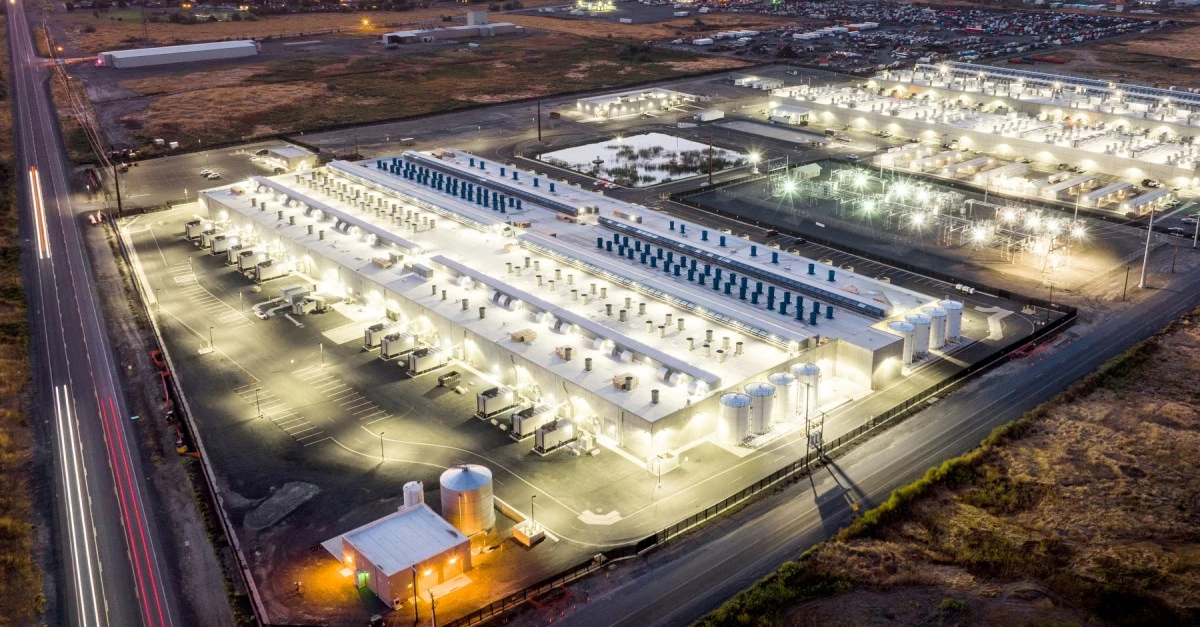

Oregon’s Digital-Agricultural Nexus: When Water Quality Becomes the New Battleground
In the arid expanse of eastern Oregon, a convergence of old and new economies is rewriting the region’s environmental and economic calculus. Morrow County, once defined by its vast agricultural tracts and food processing plants, now finds itself at the epicenter of the hyperscale cloud boom. The arrival of data centers—drawn by cheap land, robust transmission lines, and the promise of renewable energy—has brought with it not only jobs and tax incentives, but also a cascade of unintended consequences, most notably a dramatic rise in nitrate concentrations within the Lower Umatilla Basin aquifer.
The Hidden Mechanics of Nitrate Accumulation
The narrative is not as simple as direct pollution. Amazon’s sprawling server farms, for example, do not inject nitrates into the groundwater. Instead, their voracious appetite for cooling water—tens of millions of gallons annually—amplifies an invisible but potent cycle. Closed-loop evaporative systems, the workhorses of hyperscale cooling, withdraw water, recirculate it, and ultimately discharge concentrated effluent back into municipal systems. In a region where sandy loam soils accelerate vertical seepage, each additional gallon cycled through this loop hastens the migration of pre-existing agricultural nitrates into the aquifer.
This dynamic is compounded by the area’s agricultural legacy. Decades of intensive fertilizer use have left a persistent nitrate reservoir in the soil. Now, as hyperscale data centers ramp up water withdrawals and increase blow-down cycles to manage scaling and corrosion, the region’s groundwater becomes a more efficient vector for these legacy contaminants. The result: nitrate readings as high as 73 ppm—seven times the federal limit—threaten both public health and the region’s economic future.
Economic Incentives, Externalized Costs, and the ESG Reckoning
The economic logic that brought agriculture, food processing, and cloud computing together in Morrow County is, on its face, compelling:
- Agricultural producers benefit from subsidized water.
- Data centers enjoy tax abatements and access to low-cost, renewable-heavy energy.
- Municipalities anticipate job growth and increased tax revenue.
Yet, beneath the surface, the costs are being quietly socialized. Elevated cancer and miscarriage rates are already being observed, and nearly 40% of the county’s population lacks the means to rely on bottled water. The specter of Flint, Michigan, looms large—a community facing environmental crisis with limited resources to respond.
Investors, meanwhile, are recalibrating their risk models. Environmental, Social, and Governance (ESG) frameworks, once focused primarily on carbon metrics, are now incorporating water stewardship. The “S” and “E” pillars are converging: water quality is emerging as a critical basis risk for loan covenants and sustainable-bond frameworks. As the EPA tightens drinking water standards—PFAS today, nitrates tomorrow—the liability calculus for all industrial actors in the region is shifting.
Strategic Inflection Points: From Technology to Policy
The Morrow County case exposes a series of non-obvious, yet urgent, connections:
- Compound-externality clusters: The colocation of agri-processing and AI infrastructure creates a shared reputational and regulatory risk surface, blurring the lines between distinct industries.
- Water-positive pledges: Cloud providers’ commitments are typically volumetric, not quality-adjusted—a loophole that is unlikely to survive the next wave of regulatory scrutiny.
- Inter-industry aquifer competition: With semiconductor fabs also targeting the U.S. interior, the stage is set for a zero-sum contest over water resources—unless cross-sector consortia invest in closed-loop recycling at scale.
Forward-thinking organizations are already sketching a roadmap:
- Next-gen cooling: Transitioning to direct-to-chip or dielectric immersion cooling could slash water draw by up to 95%, aligning with the rapid refresh cycles of AI clusters.
- Shadow pricing: Incorporating a hypothetical surcharge for water quality risk into site-selection models would have flagged Morrow County as a marginal choice.
- Tradable nutrient credits: Supporting state-level nutrient-management credits could turn nitrate abatement into a tradable offset, allowing data center operators to match their groundwater footprint.
- Community resilience funding: Modest dividends, drawn from cloud EBIT margins, could finance household reverse-osmosis systems and long-term health monitoring, securing the social license to operate.
Rethinking Digital Infrastructure in a Water-Constrained World
The episode unfolding in Morrow County signals a pivotal shift for the digital economy: water quality, not just quantity, is fast becoming a gating factor for infrastructure growth. As regulatory scrutiny intensifies and the social costs of externalized pollution mount, the competitive edge will belong to those who move beyond compliance—integrating quality-adjusted water metrics, pioneering cooling technologies, and investing in genuine community resilience. For those watching from afar, the lesson is clear: the future of digital infrastructure will be written not just in code, but in the chemistry of the water beneath our feet.


 By
By
 By
By
 By
By
 By
By

 By
By