
Rethinking the Cosmic Neighborhood: The Milky Way’s Dark-Matter Sheet and Its Technological Reverberations
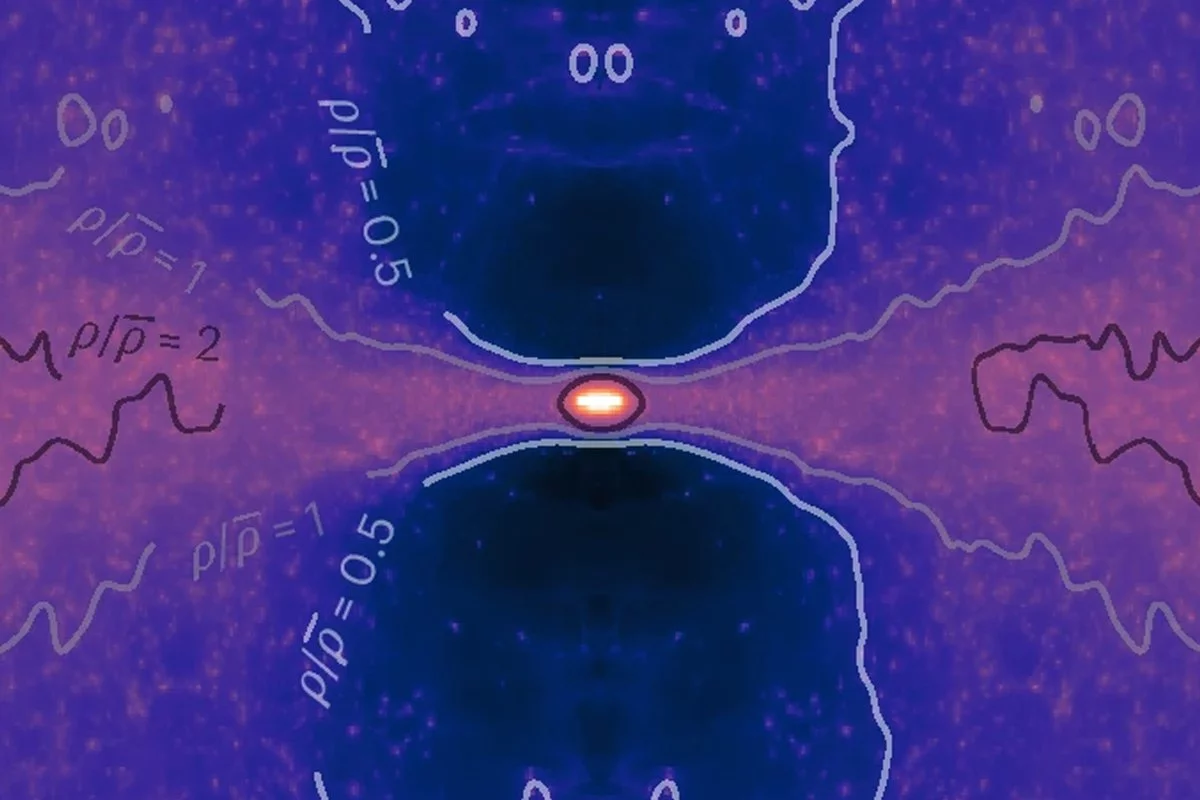
A new study published in *Nature Astronomy* has upended a foundational assumption about our galactic home. Rather than floating in a spherical “halo” of dark matter, the Milky Way may reside within a sprawling, sheet-like structure stretching millions of light-years—a revelation that not only resolves long-standing astrophysical puzzles, but also signals a profound shift in how humanity simulates, senses, and strategizes within complex systems.
The Rise of Planetary-Scale Digital Twins and Data-Driven Cosmology
At the heart of this breakthrough lies a feat of computational ambition: researchers constructed a high-fidelity “virtual twin” of the Local Group—the galactic neighborhood that includes the Milky Way and Andromeda. By fusing cosmic-microwave-background data with N-body simulations on petascale clusters, the team achieved a simulation whose fidelity mirrors the rigor of the most advanced digital twins in industry.
- Ensemble Simulations and Bayesian Forecasting: The methodology—ensemble runs, adjoint methods, and Bayesian parameter sweeps—mirrors the toolkits now powering breakthroughs in weather prediction, financial risk modeling, and materials discovery.
- Exportable Methodology: This planetary-scale digital twin is not an isolated accomplishment. Its architecture, grounded in domain-specific physics and abundant sensor data, is directly exportable to any system where observational constraints and physical laws can be co-simulated: supply chains, energy grids, urban infrastructure.
The implications for data engineering are equally profound. Cleaning and cross-calibrating the deluge of multi-epoch sky surveys required ETL pipelines of a complexity rivaling those in multi-cloud enterprise analytics. With next-generation observatories like the Vera C. Rubin Observatory set to multiply data volumes tenfold, the field is stress-testing the limits of AI-driven feature extraction, edge computing, and lossless compression—technologies whose terrestrial applications are only beginning to be realized.
Sensing the Invisible: From Astrometry to Quantum Sensors
The flat-sheet model of dark matter is more than a theoretical curiosity; it is a clarion call for sensor innovation. Ultra-precise astrometric instruments—successors to Gaia, quantum-enhanced interferometers—are now essential for probing the geometry of our cosmic environment. The spillover effects are tangible:
- Inertial Navigation and Gravitational Sensing: Advances in astrometric precision directly inform the development of next-generation inertial navigation systems, gravitational gradiometers for subsurface exploration, and low-SWaP (size, weight, and power) quantum sensors for autonomous vehicles.
- Space Commercialization: A richer gravitational map, informed by the sheet model, enhances risk models for long-duration space missions. Companies planning lunar logistics, asteroid mining, or cislunar communications can now optimize fuel and station-keeping with unprecedented accuracy.
The validation of a non-spherical dark-matter distribution also tightens the search for candidate particles, accelerating investment in cryogenic detectors, axion haloscopes, and quantum sensing platforms. For venture capitalists and deep-tech strategists, the expanding total addressable market is clear: what was once an academic pursuit is now a commercial frontier.
Strategic Playbooks: Lessons for Business, Technology, and Policy
The convergence of astrophysics, data science, and high-performance computing offers a template for leaders across sectors:
- Digital-Twin Convergence: The Local Group simulation demonstrates that digital-twin fidelity scales with physics-informed models and sensor abundance. Enterprises building twins of supply chains or urban systems should emulate the cosmology playbook: hierarchical resolution, Bayesian ensembles, and hardware-accelerated numerics.
- Edge AI and Data Gravity: Astronomers’ practice of placing compute near telescopes to manage data deluge is a living laboratory for edge AI strategies in manufacturing, retail, and beyond. The dark-sky observatory is now a model for zero-trust data pipelines and federated learning.
- Open Standards and Ecosystem Stickiness: The astrophysics community’s embrace of open metadata and FAIR data principles is a case study for healthcare, fintech, and other regulated industries. Early adopters of such standards will find integration costs lowered and ecosystem loyalty deepened.
The economic and geopolitical ramifications are equally striking. As exascale computing becomes a shared battleground for cosmologists, climatologists, and drug designers, competition for computational resources will intensify. Corporations in aerospace, energy, and infrastructure must now map potential partnerships with national labs on quantum-enhanced sensing. Meanwhile, a validated gravitational cartography of our cosmic neighborhood subtly shifts the narrative for space governance and spectrum allocation—a development not lost on nations vying for cislunar dominance.
What emerges from this dark-matter revelation is not just a new map of the heavens, but a vivid demonstration of how data-rich simulation, open standards, and cross-disciplinary tooling are redrawing the boundaries between fundamental science and commercial opportunity. For those attuned to this convergence, the cosmos is not merely a subject of wonder, but a proving ground for the next wave of technological and economic leadership.

 By
By
 By
By

 By
By
 By
By

 By
By
 By
By