

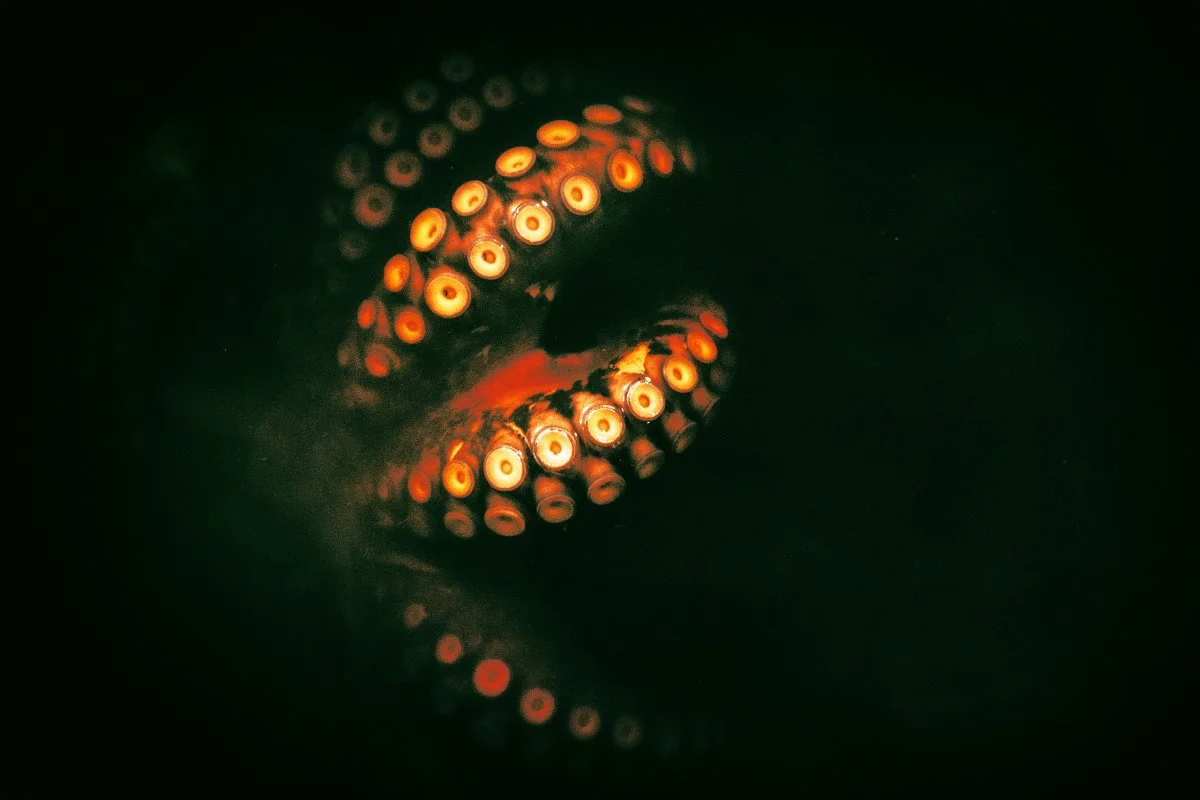

Mexico’s proposed octopus-farming ban signals a new regulatory line on animal sentience
Mexico’s Ecologist Green Party has moved to amend the General Law of Sustainable Fisheries and Aquaculture to prohibit octopus farming nationwide—a targeted intervention with outsized symbolic and commercial weight. If enacted, the measure would shutter the Sisal, Yucatán facility, operated by UNAM in partnership with Moluscos del Mayab, widely described as the only octopus farm in the Western Hemisphere.
What makes this proposal more than a localized policy dispute is the way it crystallizes a broader shift in how regulators, consumers, and investors treat high-cognition marine species. Octopuses occupy a rare position in public consciousness: they are not only a seafood product, but also a widely recognized example of animal intelligence, with sophisticated nervous systems and complex behaviors. That combination is increasingly difficult to reconcile with intensive farming models designed for schooling fish or filter-feeding shellfish.
Investigations cited in the debate point to welfare and viability concerns that are hard to ignore in a modern ESG environment: an average slaughter of 388 octopuses every four months, alongside 52% pre-sale mortality. Reports of crowding-induced cannibalism and stress-linked outcomes underscore a central policy question: whether current aquaculture practices can credibly meet welfare expectations for a solitary, behaviorally complex cephalopod.
The Sisal facility becomes a test case for aquaculture engineering limits
From a business-and-technology perspective, the Sisal operation is not merely a farm; it is an R&D experiment testing whether engineering can substitute for ecology. Octopus aquaculture has long been framed as a solution to wild-catch volatility, but cephalopods expose fundamental constraints in today’s production toolkits.
Key technical friction points include:
- Behavioral incompatibility with density: Octopuses are typically solitary and territorial, making standard scaling logic—more animals per tank, more output—ethically and biologically unstable.
- Inadequate environmental replication: Even advanced recirculating aquaculture systems (RAS), water-quality controls, and automated feeding routines struggle to reproduce the cognitive stimulation, shelter complexity, and spatial dynamics that octopuses appear to require.
- Operational fragility: High mortality rates translate into poor unit economics, unpredictable yields, and reputational exposure—especially when welfare concerns become headline risks rather than internal metrics.
This is where Mexico’s proposal aligns with a growing international pattern. Similar initiatives have surfaced in Chile, Spain, and the United States (including the pending “OCTOPUS Act”). A 2025 EU-UK survey indicating broad public support for banning octopus farming suggests that policymakers may be moving toward a precautionary stance even before parliaments fully codify it. For multinational seafood companies, the implication is clear: octopus farming is becoming a regulatory lightning rod, not a straightforward capacity expansion.
Market and supply-chain impacts: price pressure, coastal livelihoods, and ESG risk
Closing Sisal would remove a nascent supply source from domestic and export channels. On volume alone, it may not reshape global trade flows immediately—but it could widen the price spread for wild-caught octopus, amplifying incentives to fish harder and potentially increasing pressure on marine stocks. That dynamic matters because the policy is framed as a welfare intervention, yet it may indirectly intensify sustainability challenges unless paired with stronger fisheries management.
For Yucatán’s coastal communities, the economic story is equally complex. Regions dependent on fisheries and tourism often face cyclical shocks—weather, fuel costs, seasonal demand, and stock variability. A shutdown could mean job displacement and lost local investment, raising the need for:
- Retraining and redeployment programs tied to marine industries
- Investment in alternative aquaculture with clearer welfare profiles
- Exploration of integrated multi-trophic aquaculture (IMTA) models that pair species such as seaweed and shellfish to mimic ecosystem functions and diversify revenue
For investors and corporate boards, the episode reinforces a fast-emerging category of exposure: “sentient capital” risk—the idea that welfare standards for cognitively complex animals can become material to valuation, access to capital, and brand durability. Seafood retailers and marine-protein companies that cannot demonstrate proactive welfare governance may face:
- Regulatory whiplash across jurisdictions
- Reputational contagion from advocacy campaigns
- Higher costs of compliance, auditing, and supply substitution
Conversely, first movers in certified-high-welfare aquaculture (where feasible) or non-animal seafood may gain a defensible market position as procurement standards tighten.
Innovation spillovers: alternative proteins, AI welfare tech, and blue-economy strategy
The most consequential ripple effects may land in technology investment rather than fisheries policy. As octopus farming becomes politically and ethically constrained, capital and talent are likely to flow toward substitutes that can meet culinary demand without animal welfare liabilities.
Areas positioned to benefit include:
- Cell-based seafood and precision fermentation, aiming to replicate flavor compounds and texture while decoupling supply from animal husbandry
- High-fidelity plant-based proteins engineered for the distinctive chew and mouthfeel associated with octopus dishes
- Sensor and AI-driven welfare monitoring—real-time environmental sensing, computer-vision health analytics, and programmable enrichment systems—tools that could become baseline infrastructure for welfare compliance across aquaculture species, not just cephalopods
There is also a less obvious, strategic thread: cephalopod research has historically contributed to neuroscience and bio-inspired engineering. Techniques developed to understand octopus cognition and neural control can generate spillovers into robotics, neurotechnology, and advanced sensing—an argument for preserving foundational research even if commercial farming is curtailed.
Mexico’s proposed ban, then, is not simply a referendum on one facility in Sisal. It is a signal that the next phase of the blue economy will be shaped as much by ethics, intelligence, and welfare governance as by feed conversion ratios and tank design—and that the winners will be those who treat regulation not as a constraint to evade, but as a product requirement to engineer for.

 By
By
 By
By
 By
By
 By
By

 By
By









