


Meta’s data center robotics push signals a new phase of hyperscale industrialization
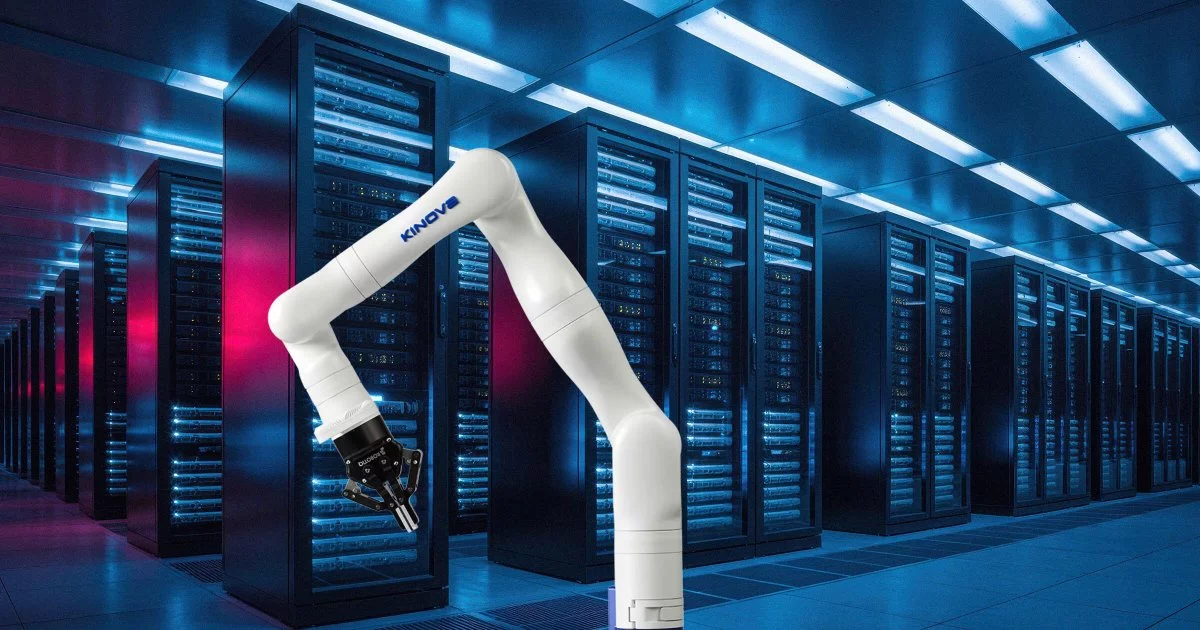
Meta’s reported trials of robotic systems inside its data centers—working with vendors such as ABB, Kinova, and Watney Robotics—mark more than a tactical upgrade to facilities operations. They point to a structural shift in how hyperscale operators treat the data center: less as a staffed “IT workplace” and more as an industrial plant optimized for continuous, software-directed throughput.
Historically, data centers have been framed to local stakeholders as durable employment anchors. Yet the employment curve has long been uneven: construction creates a surge of temporary jobs, while steady-state operations typically require comparatively lean teams. Meta’s apparent ambition to automate a large share of routine “shop-floor” tasks—cable hot-swaps, rack power cycling, and other repetitive interventions—sharpens that reality. If a meaningful portion of hands-on work is absorbed by robotics, the long-term operating model becomes even more capital-led and less labor-intensive.
For the broader business and technology landscape, this is a significant signal: AI-era infrastructure is not only compute-heavy; it is increasingly automation-native. The data center is evolving into a cyber-physical system where telemetry, orchestration software, and mechatronics converge to reduce human touchpoints and compress time-to-repair.
—
From remote hands to “self-healing” facilities: what robotics changes operationally
The operational promise of robotics in data centers is straightforward: reduce latency between detection and action. Modern facilities already generate dense streams of telemetry—temperatures, power draw, fan speeds, error logs, network health, and component status. The missing link has often been physical execution: a human technician must still travel to the rack, identify the component, and perform the task. Robotics aims to close that loop.
Key technical implications stand out:
- Lower mean time to repair (MTTR): Robots can be staged on-site and dispatched immediately, potentially shrinking the gap between alert and remediation. For latency-sensitive applications—AI inference, real-time personalization, edge-adjacent services—incremental uptime improvements can translate into material service quality gains.
- Prescriptive maintenance becomes actionable: Predictive models can flag likely failures, but robotics makes it feasible to act on those predictions at scale—swapping parts, reseating cables, or rebalancing configurations before incidents cascade.
- Modular mechatronics + proprietary orchestration: Partnering with established robotics firms suggests a pragmatic architecture: off-the-shelf manipulators integrated with Meta’s internal control plane. This reduces development time and may create a repeatable pattern the industry can emulate—effectively a robotics-enabled operations layer for hyperscale environments.
- Standardization pressure on hardware layouts: Robotics works best when physical environments are consistent. Over time, widespread adoption could encourage more uniform rack designs, cable management standards, and serviceable component placement—subtle changes that can reshape supplier ecosystems.
Reliability is the headline, but the deeper story is control. Robotics shifts data center operations toward closed-loop autonomy, where software doesn’t just observe infrastructure—it physically reconfigures it.
—
The economic calculus: CapEx intensity rises as labor becomes a smaller lever
Meta’s robotics experiments also illuminate a hard truth about AI infrastructure economics: the biggest cost drivers are increasingly specialized silicon (GPUs/accelerators), high-performance networking, power delivery, and cooling. Labor, while essential, is not the dominant line item in many hyperscale builds. Automating routine operations therefore doesn’t merely cut costs; it reallocates budget and attention toward faster hardware refresh cycles and higher compute density.
This reframes the classic CapEx vs. OpEx discussion:
- OpEx reduction is only part of the ROI story. The larger payoff may come from reduced downtime, fewer human-caused errors, and the ability to operate at higher utilization with tighter service-level objectives.
- Capital intensity becomes a competitive moat. Robotics integration requires upfront investment—engineering, safety systems, facility redesign, and vendor coordination. Operators with massive footprints can amortize these costs across thousands of racks and multiple campuses, reinforcing hyperscale advantage.
- Smaller operators may face a widening gap. Colocation providers and mid-tier cloud platforms could struggle to justify robotics at comparable scale, potentially accelerating consolidation or pushing them toward niche differentiation (specialized compliance, regional proximity, bespoke services).
For investors and policymakers, the message is that the data center’s value proposition is shifting further toward infrastructure productivity—more compute per dollar, more uptime per technician, more automation per square foot.
—
Community expectations, workforce transition, and the politics of incentives
The most sensitive implication is social rather than technical. Many municipalities offer tax abatements, zoning accommodations, and infrastructure support based on projections that include local employment. If construction remains the primary job engine and automation compresses ongoing staffing needs, the gap between expectation and reality can become politically consequential.
Several dynamics are likely to intensify:
- Incentive renegotiation risk: Communities may demand outcome-based frameworks tied to measurable benefits beyond headcount—local procurement, grid upgrades, training pipelines, or shared community services.
- Workforce displacement and role polarization: Routine maintenance roles may shrink, while demand rises for fewer but more specialized positions: robotics technicians, controls engineers, fleet supervisors, safety leads, and data-driven operations analysts.
- Regulatory attention to automation: As automation becomes more visible in critical infrastructure, policymakers may explore staffing requirements, reporting obligations, or incentive structures that explicitly account for labor substitution.
For Meta and its peers, the strategic challenge is maintaining a durable “social license to operate” while pursuing efficiency. A credible engagement model increasingly looks like co-investment in local capability—STEM partnerships, apprenticeship programs, and pathways into higher-skill operational roles—rather than relying on traditional job-count narratives.
Meta’s robotics trials ultimately reflect a broader inflection point: the AI boom is building data centers that behave less like office-adjacent IT facilities and more like autonomous factories—highly instrumented, capital-dense, and optimized for machine-speed intervention. The operators that master this transition will not only run cheaper facilities; they will define the reliability and responsiveness standards that the next decade of cloud and AI services will be judged against.

 By
By
 By
By

 By
By
 By
By
 By
By
 By
By
 By
By







