


When the Sun Roars: Solar Storms and the Fragility of Modern Infrastructure
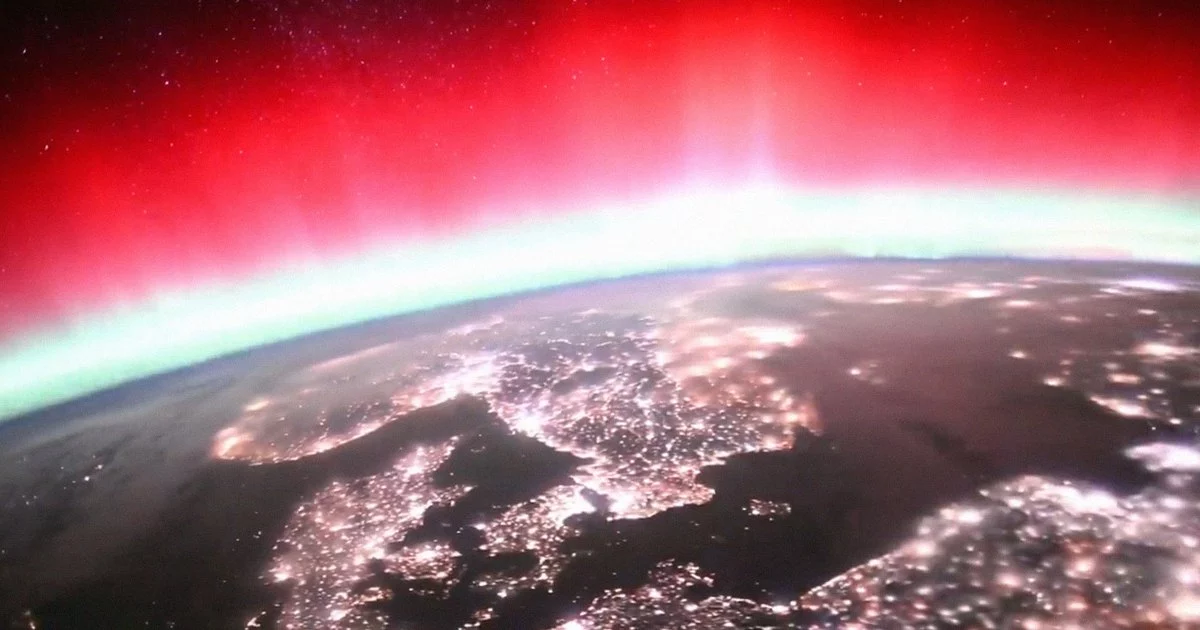
The early hours of this week delivered a rare spectacle: a powerful X-class solar flare unleashed a G4-level geomagnetic storm, painting the skies with auroras that shimmered as far south as California. For many, it was a moment of wonder—captured most dramatically by Japanese astronaut Kimiya Yui aboard the International Space Station, just before his medical evacuation via SpaceX Crew Dragon, a quiet testament to the new era of commercial spaceflight logistics. Yet, behind the beauty lurked a reminder of the profound vulnerabilities woven into the fabric of our interconnected world.
The Solar Storm’s Double-Edged Sword: Awe and Anxiety
The National Oceanic and Atmospheric Administration’s Space Weather Prediction Center was quick to issue warnings: satellites, navigation systems, and terrestrial grids faced heightened risk. Even though this G4 event was less intense than the G5 “extreme” storm that rattled systems in May 2024, its reach and implications were unmistakable. The dual nature of solar activity—its ability to inspire and imperil—has never felt more pronounced.
Satellite Constellations in the Crosshairs
Low-Earth-orbit (LEO) satellite networks—Starlink, OneWeb, Amazon’s Kuiper—are the backbone of global connectivity, but their relative lack of shielding compared to legacy geostationary hardware leaves them acutely exposed. During geomagnetic storms, increased atmospheric drag forces operators to burn through precious station-keeping propellant, shortening satellite lifespans and inflating replacement capital expenditures. The risk of single-event upsets in satellite electronics, already a leading cause of failure, grows non-linearly as the planned 60,000+ LEO satellites approach reality by 2030.
Terrestrial Infrastructure: The Unseen Dominoes
The terrestrial grid, too, remains vulnerable. High-voltage transmission lines are susceptible to geomagnetically induced currents (GICs), and despite partial compliance with North American reliability standards, the risk of cascading blackouts—evocative of Québec’s infamous 1989 outage—remains. The stakes are not merely physical: modern finance, 5G networks, and energy markets all depend on GPS for precision timing. Even fleeting disruptions can ripple through the economy, amplifying losses beyond the realm of hardware.
The Analytics Arms Race
Early warning systems like NOAA’s DSCOVR and ESA/NASA’s Solar Orbiter provided crucial minutes of lead time, but in an era where seconds matter, this is not enough. AI-driven predictive models, trained on multi-spectral solar data, are emerging as strategic assets—differentiators for insurers, satellite operators, and grid managers seeking to outpace the storm.
Economic Reverberations: From Insurance to Agriculture
The G4 storm’s impact was not confined to the skies or the grid. Its economic echoes are already being felt across sectors:
- Insurance and Reinsurance: The satellite insurance market, valued at roughly US$500 million in 2023, is bracing for premium hikes. As the cadence of severe storms rises ahead of the 2025 solar maximum, underwriters are tightening exclusions, echoing the post-NotPetya cyber risk repricing.
- Agriculture and Supply Chains: The May G5 event disrupted GPS-guided planting at the height of the U.S. corn season—a largely underreported blow to yield optimization. Should future storms coincide with critical planting windows, agribusiness margins could face a dual squeeze from both space weather and climate volatility.
- Renewable Energy and Carbon Markets: While auroral conditions can briefly boost solar panel efficiency, inverter electronics remain vulnerable. Owners of clean-power purchase agreements are now scrutinizing force-majeure clauses to protect renewable energy certificate delivery obligations.
Strategic Imperatives for a Solar-Active Future
The path forward demands a recalibration of risk and resilience:
- National Security: Military reliance on space-based assets for missile warning and communications creates incentives for adversaries to exploit geomagnetic chaos. Dual-site hardening and terrestrial backup networks—like eLORAN and fiber-based time transfer—are regaining strategic importance.
- Commercial Space Governance: As satellites drift off-station post-storm, collision risks rise, prompting calls for tighter post-event reporting and automated conjunction avoidance standards.
- ESG and Board-Level Resilience: Rating agencies are factoring “space-weather resilience” into operational risk. Boards slow to adapt may find themselves facing higher capital costs, mirroring the fates of utilities slow to disclose wildfire liabilities.
Non-obvious linkages abound. Quantum-clock networks, poised to supplant GPS for time synchronization, remain reliant on satellite links vulnerable to solar disruption. Undersea cable repeaters—critical to trans-Pacific data routes—are sensitive to geomagnetically induced voltages. Even edge data centers powering generative AI must now account for the increased susceptibility of advanced chips to single-event upsets.
Toward a Culture of Anticipation and Adaptation
The solar cycle is running hotter and faster than NASA’s baseline, with peak activity expected by mid-2025. Executives are urged to:
- Institute 24-month resilience roadmaps—not just episodic reviews.
- Invest in dual-use sensing infrastructure and proprietary warning feeds, akin to commodity traders’ edge in weather data.
- Expand terrestrial redundancies: multi-constellation GNSS receivers, eLORAN augmentation, and advanced grid monitoring.
- Engage with insurers early to negotiate favorable terms for fleets with demonstrable mitigation.
- Leverage public-private partnerships to extend geomagnetic storm lead times, following the successful model of hurricane forecasting.
The G4 storm stands as a harbinger, not an anomaly. As human civilization’s dependence on space-based infrastructure deepens, the ability to contextualize and act on space weather risk will define the next generation of resilient enterprises. Those who treat solar storms as a strategic variable—rather than an unpredictable act of nature—will find themselves not merely surviving, but thriving, in the era of solar volatility.

 By
By
 By
By

 By
By

 By
By
 By
By







