
Unveiling the Deep Earth: How Gravity-Field Intelligence Is Rewriting the Rules of Geoscience and Risk
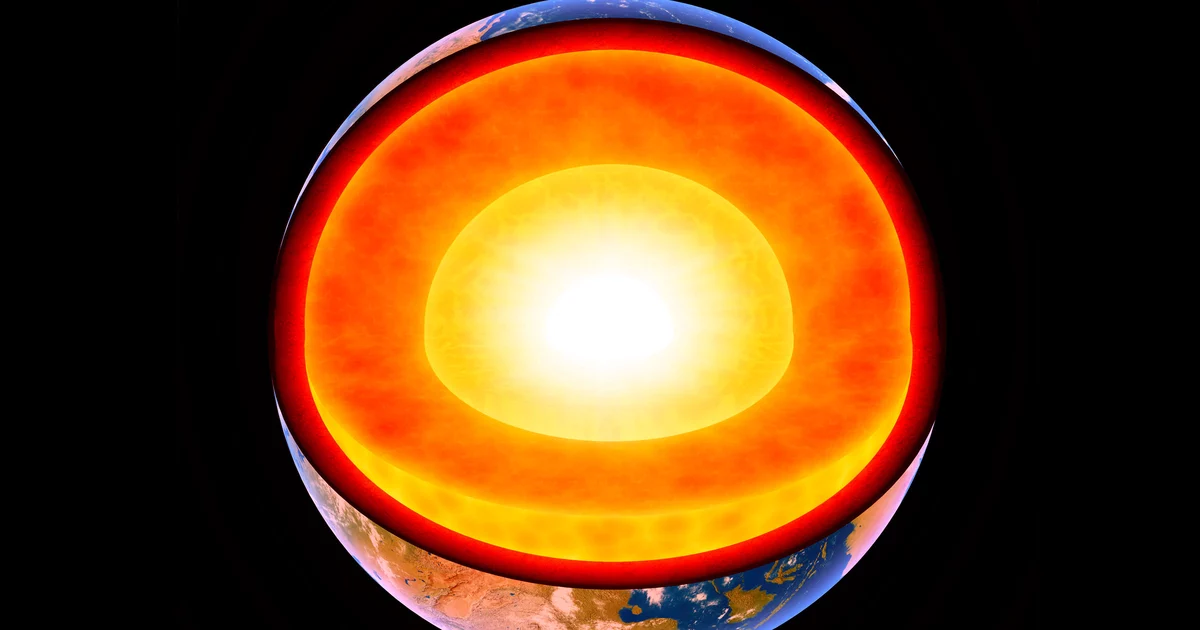
In the shadowy depths where Earth’s molten core meets the solid mantle, a drama of titanic forces plays out, largely unseen and only dimly understood. Yet, a recent breakthrough by a French-led geophysics team—mining two decades of NASA’s GRACE satellite data—has illuminated a seismic shift at this boundary, one that sent ripples through the planet’s magnetic field and, by extension, through the fabric of our digital and physical infrastructure.
What sets this discovery apart is not just its scientific novelty, but its demonstration of how remote gravimetry, once relegated to the margins of climate monitoring, is emerging as a strategic platform technology. The implications reach far beyond academia, touching the worlds of finance, infrastructure, national security, and the rapidly evolving Earth-observation economy.
—
The Hidden Power of Repurposed Satellite Data
The GRACE satellites were never meant to peer into the planet’s core. Their original mission: track the ebb and flow of water across continents, offering policymakers a window into droughts and aquifer depletion. But as the geophysics team sifted through the gravitational minutiae—anomalies measured in fractions of a milligal—they found signals that groundwater alone could not explain. Instead, the data pointed to a dramatic event deep within the Earth: a mineral phase change in lower-mantle perovskite, increasing regional density and sending pressure waves that ultimately perturbed the flow of the liquid core.
This perturbation, in turn, triggered a “geomagnetic jerk” in 2007, a rapid shift in the planet’s magnetic field that peaked off the coast of Africa. While such jerks have been observed before, this is the first time one has been traced to mass movement at the core-mantle boundary using satellite gravimetry. The team now looks to the higher-resolution GRACE-FO mission to validate and extend these findings, potentially mapping rapid core events in near-real time.
The implications for satellite operators and data providers are profound:
- Data Exhaust as Discovery Engine: Archival sensor data, once considered mere byproduct, is now a wellspring of new insights and revenue streams.
- Edge-to-Cloud Analytics: Detecting such subtle gravity shifts demands petaflop-scale computation and advanced AI-driven noise filtering—a showcase for next-generation analytics pipelines.
- Sensor Innovation Loop: The business case for quantum gravimeters and cold-atom interferometers is strengthened, accelerating the roadmap for both space agencies and private micro-satellite builders.
—
Magnetic-Field Volatility: From Scientific Curiosity to Boardroom Variable
The volatility of Earth’s magnetic field is no longer a matter of scientific intrigue alone; it is fast becoming a balance-sheet variable. The infrastructure of modern civilization—power grids, subsea cables, aviation, and low-orbit satellites—depends on geomagnetic stability. Even transient “jerks” can spike transformer failure rates, disrupt aviation routes, and increase satellite drag, tightening the calculus of capital expenditure and insurance.
Boutique reinsurers are already modeling space-weather events with the same rigor as hurricanes. High-frequency gravity data could soon underpin parametric insurance products, hedging geomagnetic-storm risk for data centers, airlines, and energy operators. Meanwhile, understanding mantle convection patterns informs exploration risk for geothermal projects and the hunt for critical minerals—rare earths and nickel—concentrated along mantle plumes.
Key economic and strategic takeaways include:
- Infrastructure Resilience: Gravity-based early-warning systems could become standard for grid operators and insurers by 2025.
- Financial Innovation: Asset managers may one day treat core-flow volatility as a macro hedge, akin to volatility indices in financial markets.
- Resource Exploration: Enhanced models of mantle dynamics will sharpen the competitive edge in the energy transition and mineral exploration.
—
The Geopolitical Stakes: Gravity and Magnetism as Instruments of Power
As nations race to master the deep-Earth domain, gravity and magnetic reference frames are emerging as subtle levers of soft power—akin to GPS in the last century. Real-time monitoring of core flows sharpens the accuracy of submarine navigation and missile guidance, while control over these datasets confers strategic advantage. The European Union’s Copernicus expansion, China’s Tianqiao project, and U.S. private-sector constellations are converging on this new frontier.
For decision-makers, the action items are clear:
- Audit exposure to geomagnetic volatility and integrate gravity-based warning feeds.
- Engage with research consortia for privileged access to high-value datasets.
- Explore investments in quantum-sensor startups and Earth-system modeling ventures.
What began as a geophysical curiosity is now a linchpin in the convergence of remote sensing, AI analytics, and infrastructure risk management. Those who recognize gravity-field intelligence as a core input—rather than a research novelty—will seize early-mover advantages in resilience, innovation, and capital allocation. As the deep Earth yields its secrets, the winners will be those who listen most closely to its subtle, shifting pulse.

 By
By
 By
By

 By
By


 By
By
 By
By