
Mars as the Defining Horizon: Rethinking the Human Spaceflight Roadmap
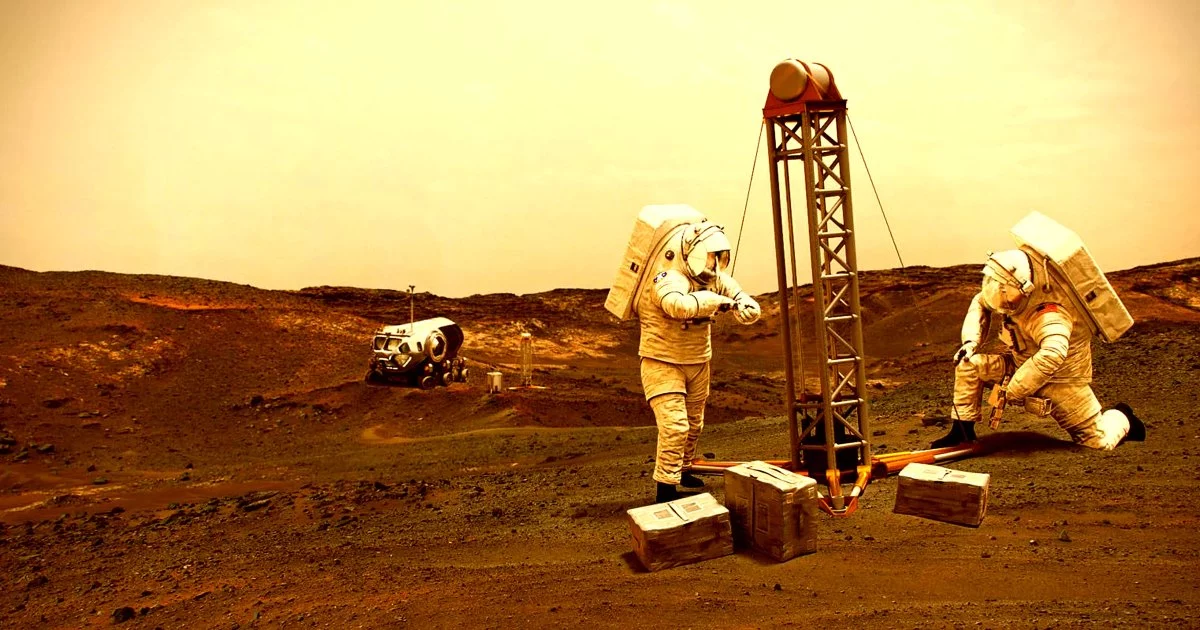
A new consensus report from America’s leading scientists and engineers has thrown the gauntlet down: the United States, it argues, should pivot its human spaceflight ambitions toward Mars, even as NASA’s Artemis program continues to chart a course for the Moon. This is not a call to abandon lunar return, but rather a reframing—Mars as the ultimate proving ground, the place where the existential question of life beyond Earth might finally be answered. The report’s vision is both audacious and pragmatic: begin with a 30-day sortie on the Martian surface, then scale toward missions lasting nearly a year, all while tackling the formidable technological and biological unknowns that still stand in the way.
Mars, in this new calculus, is not merely another destination. It is a crucible for converging technologies—biotech, advanced propulsion, and circular-economy engineering—that will define the next era of exploration and, perhaps, terrestrial industry itself.
The Unforgiving Physics of Mars: Technology Bottlenecks and Breakthroughs
The technical obstacles to Mars are not for the faint of heart. Deep-space radiation—delivering a relentless 0.66 sieverts per year—threatens to breach the lifetime exposure limits of even the most seasoned astronauts. The report highlights two parallel tracks: the heavy, mass-intensive promise of magnetic or superconducting shielding, and the nascent but tantalizing prospect of pharmaceutical radioprotectors. The latter, still at low technology-readiness levels, signals a coming surge in investment at the intersection of biotech and aerospace.
Life-support, too, must leap forward. While the International Space Station recycles about three-quarters of its water and oxygen, a Mars mission will demand closed-loop systems exceeding 95% efficiency—a threshold that will require not just engineering, but biological ingenuity. Synthetic biology, with engineered extremophiles producing critical materials or nutrients, is poised to become a linchpin of both spaceflight and the broader industrial biotech sector.
On the surface, the challenge multiplies. The business case for in-situ resource utilization (ISRU) on the Moon—oxygen, metals, and more—has already seeded a cislunar startup ecosystem. Mars will demand even more: local production of methane and oxygen propellant, water extraction, and regolith-derived construction, all of which could drive dual-use technologies for Earth’s own mining and remote operations industries.
Perhaps most quietly transformative is the emerging planetary-protection tech stack: autonomous, contamination-free sampling, AI-driven biosignature detection, and hardware engineered to sterility standards not yet enshrined in law. Here, edge machine learning and molecular diagnostics will shape new market niches, with first-mover advantages for those who anticipate the regulatory curve.
Capital, Competition, and the Shifting Geopolitics of Space
The economic and strategic implications ripple far beyond the launchpad. Lunar infrastructure—Artemis, Gateway—offers a predictable pipeline for prime contractors and a flourishing SME ecosystem. A Mars-first pivot, by contrast, would redirect capital toward riskier, less mature domains: advanced composites, nuclear thermal propulsion, and biotechnology. This realignment could spark friction, as “cislunar commerce” advocates vie with “Mars science” coalitions for finite federal budgets.
Internationally, any public commitment to a Mars timeline would upend the prestige calculus of human spaceflight, compelling rivals like China and the European Space Agency to clarify their own ambitions. The development of nuclear thermal propulsion, with its dual-use implications, would intersect with evolving export-control regimes and space-security norms, adding another layer of complexity to the geopolitical chessboard.
Within the U.S., NASA’s Artemis Accords partners may seek assurances that lunar objectives will not be sidelined. Meanwhile, venture capital—ever hungry for bold narratives—could inflate the valuations of deep-tech startups positioned at the intersection of habitat systems, radiation medicine, and AI robotics, should a Mars pivot become official.
Cross-Sector Synergies: From Climate Tech to Neurocognitive Resilience
Perhaps most intriguing are the non-obvious linkages that a Mars program could catalyze. Closed-loop life-support R&D dovetails with carbon capture, water recycling, and controlled-environment agriculture—technologies increasingly subsidized under green-industry policies. Mars investment could unlock new co-financing streams from climate funds eager for high-impact, circular-economy solutions.
Insurance and risk markets, too, will be forced to innovate, underwriting the unprecedented hazards of long-duration human missions. Actuarial advances here may spill over into terrestrial pharmaceuticals and extreme-environment industries, from offshore energy to polar logistics. Meanwhile, countermeasures for isolation and radiation-induced neurodegeneration could feed directly into aging-population healthcare and military operations in extreme environments.
The strategic calculus is clear: Mars is no longer a distant abstraction, but the axis around which the next generation of technological convergence will turn. As policy signals shift and technology readiness levels climb, the opportunity for forward-leaning enterprises is not just to participate, but to shape the standards, partnerships, and capital flows that will define humanity’s next great leap.

 By
By
 By
By

 By
By
 By
By

 By
By
 By
By