


Nostalgia Reimagined: The Horizontal Desktop’s Surprising Renaissance
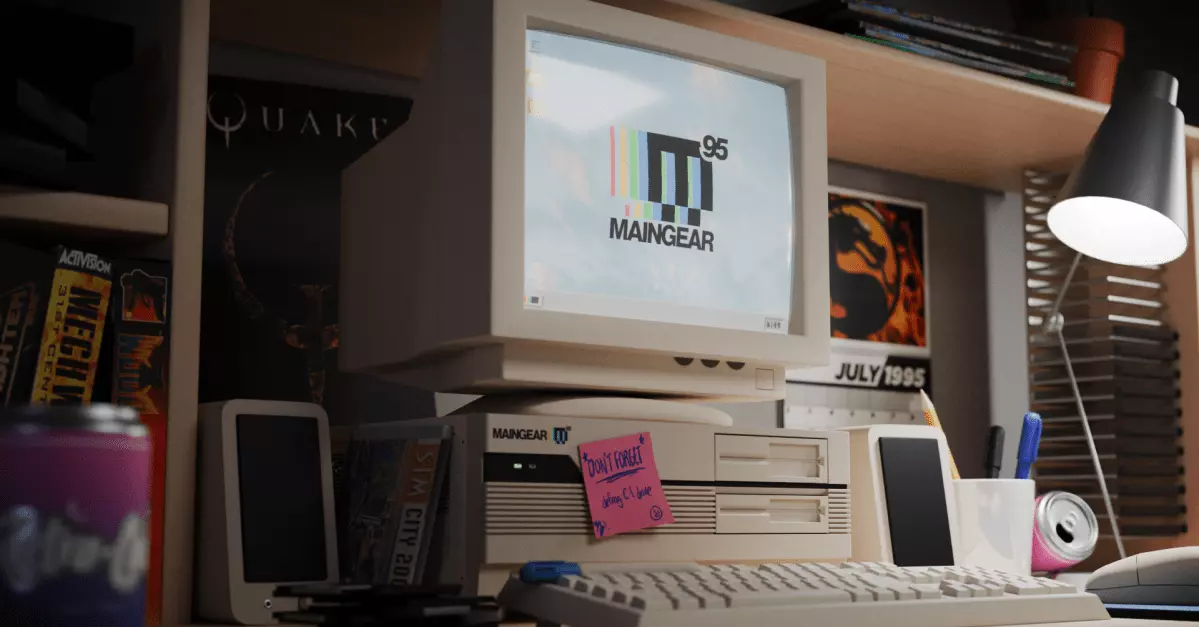
The unveiling of Maingear’s Retro95 is a masterclass in the art of fusing memory with modernity. In a market saturated with RGB-lit towers and glass-paneled monoliths, the Retro95’s horizontal chassis—an unassuming nod to the Windows 95 era—emerges as both a statement and a strategic pivot. This limited-run machine, encased in SilverStone’s FLP01 (a chassis that began life as an April Fool’s parody), is more than a collector’s curio; it’s a blueprint for how the PC industry can leverage nostalgia as a durable, monetizable force.
Beneath its faux floppy bays and beige facade, the Retro95 is unapologetically current. Configurable with AMD’s Ryzen 7 9800X3D, NVIDIA’s RTX 5080 GPU, and up to 96GB of DDR5 memory, it is a wolf in sheep’s clothing—delivering bleeding-edge performance under the guise of retro restraint. The inclusion of a functional 24× DVD-R drive, concealed USB-C and USB-A ports, and Noctua cooling fans further blurs the line between homage and innovation, inviting users to reconsider what “retro” can mean in an era defined by rapid obsolescence.
The New Economics of Emotional Hardware
The Retro95’s release is not merely a technical exercise; it is a calculated response to shifting market dynamics. While global consumer PC shipments remain subdued, the enthusiast segment—driven by gamers, creators, and collectors—has proven remarkably resilient. Maingear’s decision to limit production taps directly into the psychology of scarcity, borrowing tactics from sneaker drops and luxury goods to amplify demand and justify premium pricing.
- Scarcity as Strategy: By announcing that inventory will not be replenished, Maingear transforms each unit into a potential artifact, stoking “fear of missing out” and minimizing inventory risk.
- Nostalgia as Intellectual Property: The appetite for retro hardware now exceeds $1 billion in annual revenue, spanning everything from mini-consoles to mechanical keyboards. The Retro95 extends this phenomenon to full-size desktops, validating nostalgia as a cross-category revenue engine.
- Component Signaling: The choice of flagship AMD and NVIDIA silicon signals that high performance and retro aesthetics are no longer mutually exclusive. This is not a toy for hobbyists; it is a serious machine for discerning users who crave both power and personality.
Beyond the Meme: Agile Productization and Strategic Moats
What sets the Retro95 apart is not just its look, but the speed and savvy with which it has been brought to market. Transforming SilverStone’s April Fool’s joke into a commercial product in less than 18 months exemplifies a new, agile approach to product development—one that listens to the undercurrents of online modding communities and meme culture, then rapidly iterates toward a sellable SKU.
- Crowdsourced Fit: By monitoring forums and enthusiast spaces, companies can identify emergent design tropes and fast-track them into production, minimizing R&D overhead while maximizing cultural resonance.
- Brand Differentiation: As mainstream OEMs commoditize features like RGB lighting and tempered glass, nostalgia-driven industrial design offers boutique builders a defensible moat—one that is difficult for mass producers to replicate at scale.
- Strategic Partnerships: Leveraging relationships with AMD and NVIDIA for flagship components, while framing the product as a scarce collectible, allows Maingear to secure top-tier allocations without overextending supply commitments.
Subtle Shifts and Forward Glimpses
The implications of the Retro95’s design ripple beyond the enthusiast market. Its horizontal form factor, for instance, is tailor-made for AV racks and trading desks—niches where front-facing optical drives and under-monitor placement remain valuable. The inclusion of a DVD-R drive, while seemingly anachronistic, aligns with the needs of air-gapped labs and regulated environments where removable media is still king. Even the sustainability narrative is quietly advanced: by reviving a form factor from the CRT era, the Retro95 encourages the reuse of older furniture and peripherals, subtly appealing to corporate ESG priorities.
Looking ahead, the Retro95’s success is likely to catalyze a wave of “heritage” hardware: beige towers, translucent shells, and CRT-inspired OLED monitors, each blending the familiar with the futuristic. Peripheral makers and software vendors will not be far behind, bundling legacy OS themes and retro game libraries to further monetize the nostalgia dividend.
For decision-makers, the lesson is clear. The future of premium hardware lies not just in raw performance, but in the ability to evoke emotion, tell stories, and create scarcity. Audit the memes, listen to the modders, and be ready to pivot—because yesterday’s punchline may well be tomorrow’s profit center.

 By
By

 By
By
 By
By
 By
By
 By
By
 By
By
 By
By







