


The Anatomy of a Modern Heist: When Legacy Security Fails at the Louvre
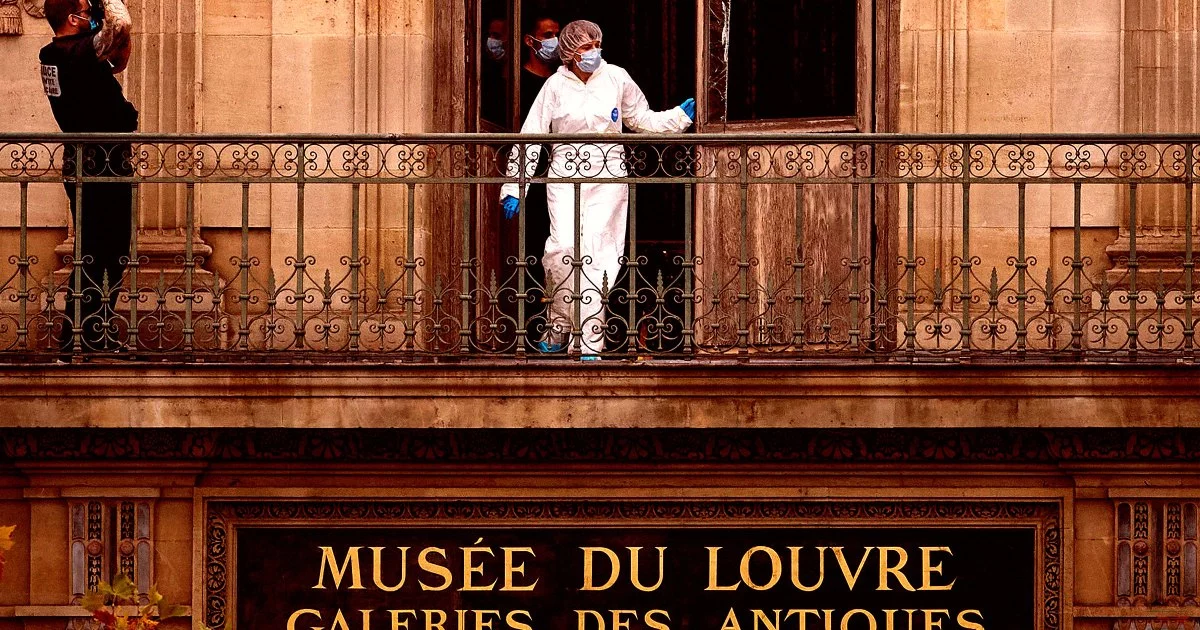
The recent daytime robbery at the Louvre’s Apollo Gallery has sent shockwaves through the worlds of art, security, and governance. Not merely for the audacity of the theft—royal diamond-and-sapphire jewels spirited away in broad daylight—but for the stark light it casts on the vulnerabilities that persist within even the most prestigious institutions. The incident, executed by four local, non-organized criminals, was not the work of masterful hackers or international syndicates. Instead, it was a low-tech, opportunistic strike that succeeded because of systemic neglect—outdated alarms, default passwords, and two-decade-old software. The Louvre, a beacon of cultural heritage, became a case study in the perils of technical debt and insufficient risk management.
Systemic Weaknesses: Where Physical and Digital Worlds Collide
The breach at the Louvre underscores a truth long acknowledged by security professionals but too often ignored at the boardroom level: the boundary between physical and cyber security is porous, and a single neglected control can render the most sophisticated systems moot.
- Physical Access, Digital Blind Spots: Construction-driven rooftop accessibility and a truck-mounted ladder bypassed traditional perimeter defenses, highlighting how physical vulnerabilities can be as critical as digital ones.
- Obsolete Infrastructure: Core systems, including Windows Server 2003 and security software untouched for decades, created an evergreen attack surface. These platforms, long past their end-of-life, receive no security patches, leaving them open to ransomware and data manipulation.
- Default Credentials: The surveillance network’s default password—“Louvre”—was a glaring invitation to tampering. That the thieves did not even need to exploit this digital weakness only amplifies the sense of institutional complacency.
- Ignored Warnings: Audits dating back to 2017 flagged these issues repeatedly, but remediation was deferred, a decision that now carries a price far higher than any budgetary savings.
This convergence of neglected basics—patching, password management, and access controls—demonstrates how low-cost, low-skill attacks can thrive when organizations ignore foundational security hygiene.
Governance, Insurance, and the Cost of Inaction
The Louvre’s predicament is not unique. Across the cultural sector, post-pandemic austerity has led to chronic underinvestment in both cyber and physical security. For an institution with €120 million in annual revenue, the fraction allocated to risk protection is strikingly small—a pattern mirrored in non-profit organizations worldwide.
- Technical Debt as Existential Risk: The persistent use of legacy systems is not merely a technical oversight; it is a governance failure. When boards treat security as a compliance checkbox rather than a strategic imperative, they expose their organizations to reputational and financial ruin.
- Insurance as Enforcer: The global art insurance market, facing annual losses exceeding €6 billion, is responding by tightening underwriting standards. Coverage is now contingent on demonstrable adherence to frameworks like ISO/IEC 27001 and EN 50518. Institutions that fail to modernize face higher premiums or outright exclusion from coverage.
- Regulatory Reckoning: New EU digital-resilience laws (NIS2) classify large museums as “essential entities,” subjecting them to potential penalties of up to 2% of annual turnover for security breaches. The era of voluntary compliance is ending; regulatory and insurance-driven mandates are becoming the norm.
Strategic Imperatives: From Reactive to Proactive Security
The Louvre incident is a clarion call for cultural institutions—and, by extension, all organizations stewarding high-value assets—to rethink their approach to security.
- Unified Security Investment: The days of one-off hardware purchases are waning. Museums and similar entities are shifting toward SaaS-based security models, emphasizing continuous patch management and predictable operating expenses.
- Public-Private Collaboration: Expect increased government co-funding for cyber-infrastructure upgrades, mirroring models used in critical infrastructure sectors. Opportunities abound for leveraging EU Horizon Europe grants and U.S. NEH/IMLS programs.
- Insurance-Driven Benchmarks: Insurers are emerging as de facto regulators, requiring adherence to CIS Controls v8 or ISO standards as a condition of coverage. Cyber-maturity assessments must become integral to enterprise risk management.
- Next-Generation Threat Intelligence: The illicit trade in stolen artifacts is moving to digital frontiers—darknet NFT platforms and blockchain-based provenance records. Monitoring these channels will become essential, with lessons applicable far beyond the museum sector.
Technology vendors, including those at the forefront of AI-assisted video analytics and secure cloud-based operations, now face both an opportunity and a responsibility. They must deliver solutions that are not only robust but also accessible to organizations with limited resources and technical expertise.
The Louvre heist is more than a cautionary tale; it is a vivid reminder that the cost of deferred modernization is measured not just in lost jewels, but in lost trust. For leaders across sectors, the imperative is clear: treat security as a living discipline, continuously funded and governed at the highest level. In an era where trust is the ultimate scarce asset, those who fail to adapt risk irreparable harm—financial, reputational, and cultural.

 By
By
 By
By
 By
By
 By
By

 By
By
 By
By








